




Late Victorian Silver Cutlery
Late victorian silver cutlery brings together sturdy domestic silver and plated ware shaped by Victorian dining habits.
Late Victorian Silver Cutlery
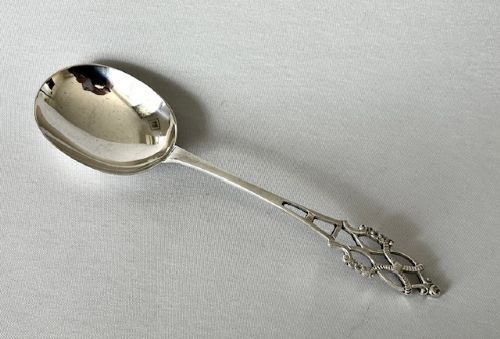
Late victorian silver cutlery encompasses a diverse range of eating and serving utensils from the late nineteenth century, including specific tools for fish, fruit, and seafood alongside standard flatware. Pieces span individual items like butter knives and coffee spoons up to full canteens and fitted boxed sets intended for specific courses or occasions.
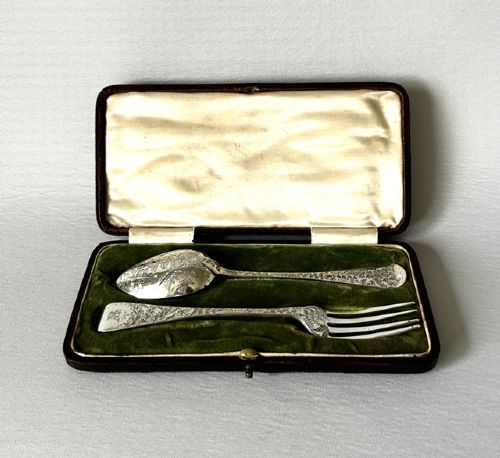
The objects frequently appear in sterling silver or silver plate, sometimes housed in original fitted cases lined with velvet, silk, or leather. Regional manufacturing centres such as Sheffield feature prominently among the surviving items, reflecting the industrial output of the period.
Buyers encounter both functional household sets and decorative specialist tools, including christening sets and hors d'oeuvre forks. The designs bridge traditional Victorian ornamentation and emerging decorative movements of the fin de siècle.
How they were made
Makers utilised sterling silver and silver plate over base metals, combining these with organic handle materials such as horn, mother-of-pearl, and occasionally leather or metal for fitted cases. Metalworking techniques included casting, stamping, and detailed hand engraving on handles and blades.
Specialist items combined multiple materials in a single piece, securing metal forks, spoons, or crackers to natural handles through pins or ferrules. Plating methods of the era applied thin layers of silver to base alloys, while solid sterling pieces often received hallmarks indicating their assay office and year of production.
Hunting and dog engravings decorate several nineteenth-century fish servers, bringing canine companionship directly to the dining table.
What varies in quality
Quality differences emerge in the depth and clarity of the metal engraving, the selection of handle materials like mother-of-pearl or horn, and the integrity of any original fitted box or lining. Higher quality examples maintain crisp detail in chased or engraved foliage and animal motifs rather than relying solely on shallow stamping.
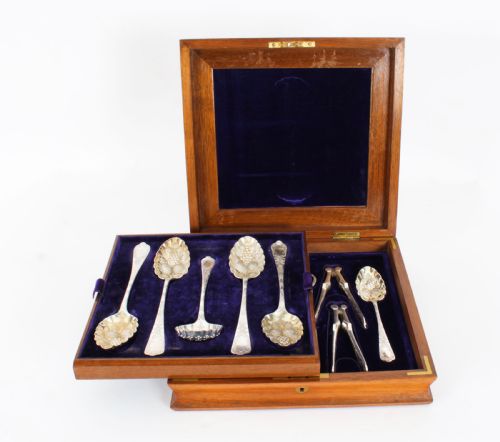
The completeness of a matched set and the presence of original storage cases, whether mahogany, oak, or velvet-lined, influence how a collection remains preserved. Maker marks from established firms and clear assay hallmarks also distinguish standard utility wares from finer production pieces.
Hukin & Heath·John Round·Mappin & Webb
The Late Victorian Silver Cutlery Glossary
- Sterling silver
- A silver alloy containing a specific high proportion of pure silver by weight, standard for quality British plate and flatware.
- Silver plate
- A base metal object coated with a thin layer of silver, widely utilised for larger Victorian canteens and serving sets.
- Hallmark
- Official stamps struck on precious metals indicating the assay office, standard of purity, and year of manufacture.
- Gilt
- A thin application of gold wash over the surface of silver, frequently seen on the bowls of spoons and fruit servers.
- Ferrule
- A metal ring or cap that secures the handle of a knife or fork to its metal prong, blade, or bowl.
Late Victorian Silver Cutlery: Frequently Asked Questions
How do I clean tarnished silver cutlery?
Silver and silver-plated cutlery respond best to gentle polishing with a dedicated cloth rather than harsh abrasive dips that can damage engraving or remove thin plating.
Storing pieces in dry, anti-tarnish lined boxes helps preserve the metal surface between uses.
Are these sets safe for daily dining?
Many Victorian flatware pieces remain fully functional for modern meals, particularly sturdy silver-plated fish sets and butter knives.
Items with organic handles like mother-of-pearl or horn require careful hand washing rather than dishwasher cycles to prevent material separation.
What is the difference between sterling and plate?
Sterling silver contains solid precious metal throughout, usually verified by standard town and purity hallmarks stamped into the metal.
Silver plate consists of a base metal core covered by a layer of silver, which was a common nineteenth-century method for producing large dining sets economically.
Why do some sets have specialised utensils?
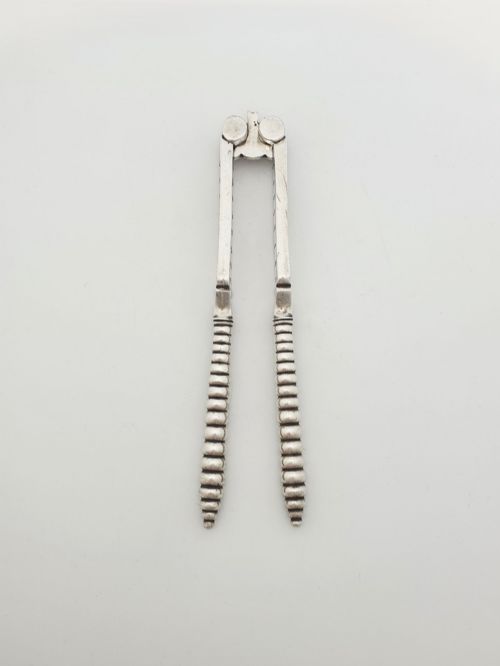
Late Victorian dining involved specific courses and etiquette, requiring dedicated tools like lobster crackers, grape scissors, and fish servers.
These individual utensils were often presented together in fitted wooden or leather-covered canteens lined with silk or velvet.