





Late Georgian Tilt Table
A late georgian tilt table is a versatile British wooden surface built to fold flat against a wall when not in use, offering both practical utility and elegant proportion.
Late Georgian Tilt Table
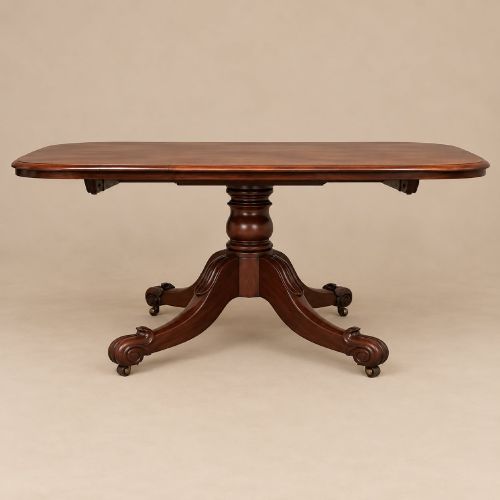
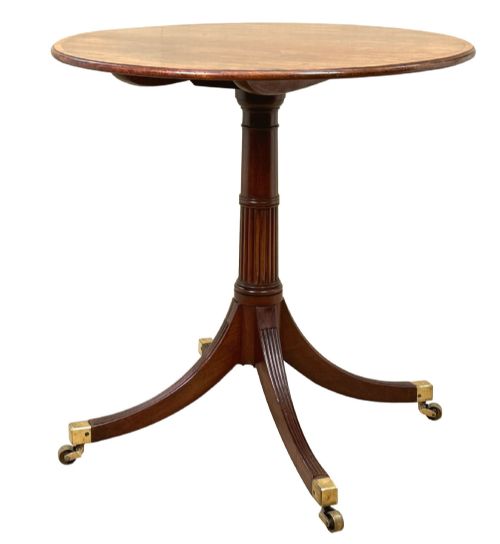
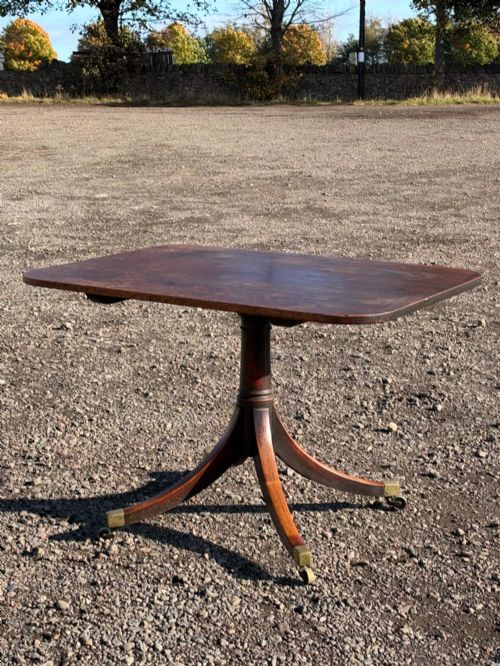
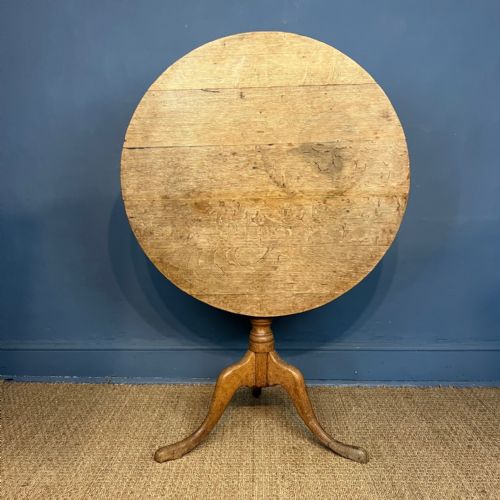
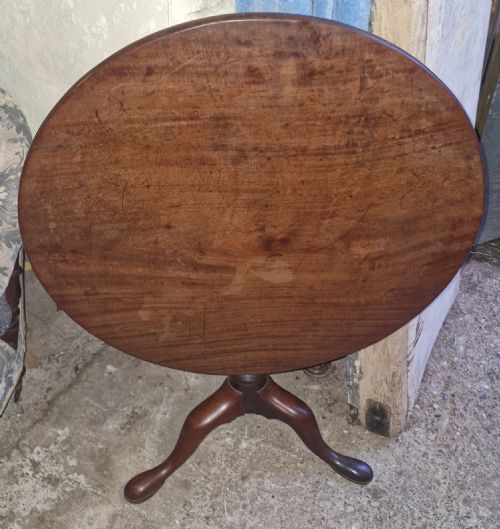
When searching for a late georgian tilt table, you are looking at practical furniture designed during the late eighteenth and early nineteenth centuries. These pieces generally take the form of circular or octagonal occasional tables, breakfast tables, and lamp tables supported by a central pedestal and tripod base.
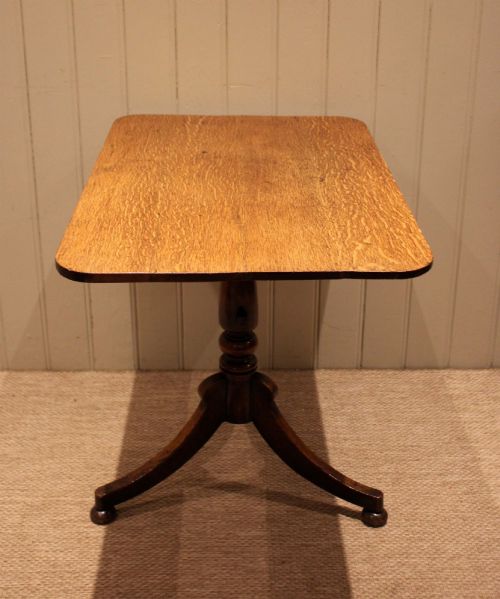
The version you are most likely to meet on this page is a mahogany tripod table dating from the George III or Regency periods. Oak, burr elm, and lacewood also appear, reflecting the diverse material choices of cabinet makers working around eighteen hundred.
How they were made
Makers utilised solid timbers such as mahogany, oak, and burr elm for the tops and turned pedestals, often combining brass fittings for movement and iron mechanisms for the tilting action. Timber selection dictated whether the piece functioned as a sturdy dining surface or a delicate occasional table.
Tripod bases were engineered with three splayed legs mortised into a central pillar, providing stability for the tilting mechanism. Single-piece timber tops demonstrate the skill required to source wide boards of figured wood without warping.
Late Georgian Tilt Table Retail Price Guide 2026
Typical asking prices for late georgian tilt table among the pieces listed under this phrase on Sellingantiques today, from the lower quarter to the upper quarter. They describe what is for sale here now, not the wider market.
One remarkably honest table even comes with its own built-in tilt mechanism that still surprises unsuspecting guests today.
What varies in quality
The distinction between ordinary and superior pieces rests upon the choice of timber and the fidelity of the turning on the pedestal. Figured mahogany or burr elm surfaces with rich grain patterns elevate a piece far above plain utilitarian examples.
Proportion and the integration of the tilt mechanism also define quality. A well-balanced tripod base and a mechanism that locks firmly into the horizontal position show superior cabinet work compared to loose or clumsy joints.
The Late Georgian Tilt Table Glossary
- Tilt-top
- A table top hinged to fold into a vertical position when not in use. This clever mechanism allowed large tables to be stored against room perimeters to save space.
- Tripod base
- A support structure comprising three legs radiating from a central pillar. It remains stable on uneven historic floorboards.
- Breakfast table
- A large circular or octagonal table designed for morning dining. These examples frequently feature pedestals mounted on tripod legs.
- Occasional table
- A small movable table used for specific tasks such as holding a lamp or writing. They represent the lighter side of late eighteenth-century domestic furniture.
Late Georgian Tilt Table: Frequently Asked Questions
How do I date a Georgian table?
Dating these pieces relies on examining the timber species, base construction, and stylistic details of the pedestal turning. Pieces from the George III era often showcase rich mahogany and robust tripod legs, while Regency examples lean towards bolder architectural forms.
Hardware components like brass catches and iron pivot pins also provide clues to the exact decade of manufacture.
Where were these tables used?
These tables served multiple functions across different rooms in a Georgian household, acting as breakfast surfaces, lamp stands, or general occasional tables. Their portability made them easy to move wherever extra surface area was required.
In larger reception rooms, they held tea service or reading materials before being folded away at the end of the evening.
How should I care for timber?
Historic wood requires protection from direct sunlight and sudden shifts in room humidity to prevent the top boards from splitting. Regular dusting with a dry cloth helps preserve the natural finish of the polish.
Applying a traditional wax occasionally nourishes the grain without building up heavy chemical layers that obscure the original surface.