
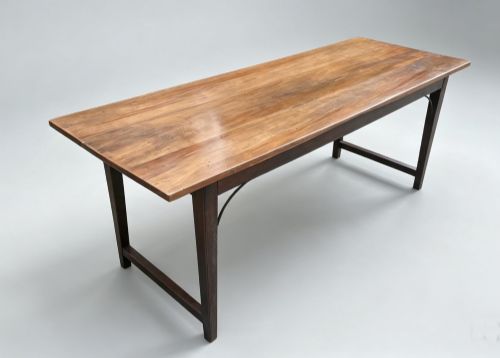
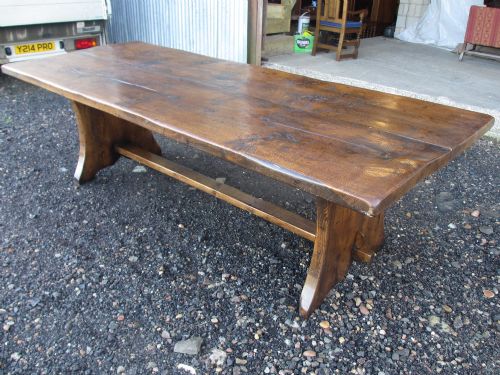
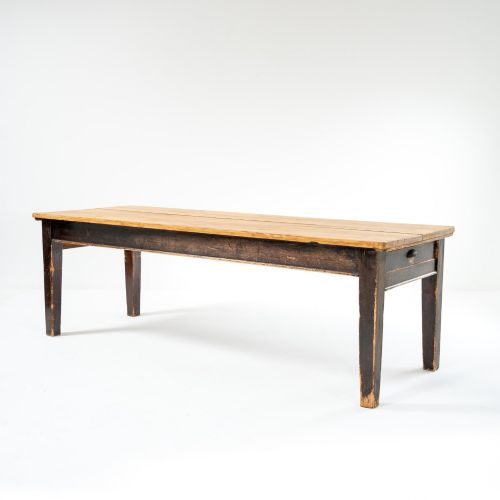
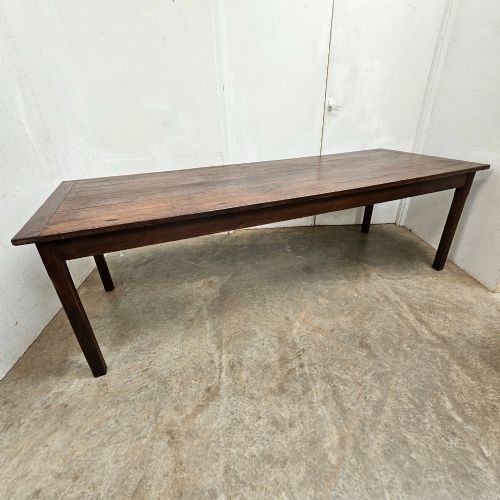





Large Wooden Farm Table
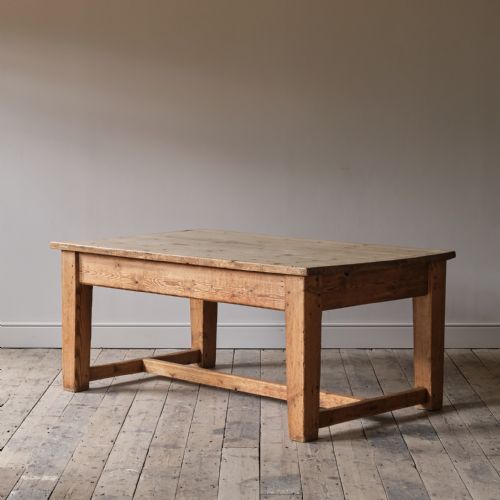
A large wooden farm table anchors the kitchen or dining room with sturdy boards and centuries of practical use behind it.
Large Wooden Farm Table
Buyers seeking a large wooden farm table find robust dining pieces designed for communal gatherings and daily household labour. The selection on this page centres primarily on nineteenth-century examples alongside seventeenth-century and twentieth-century interpretations.
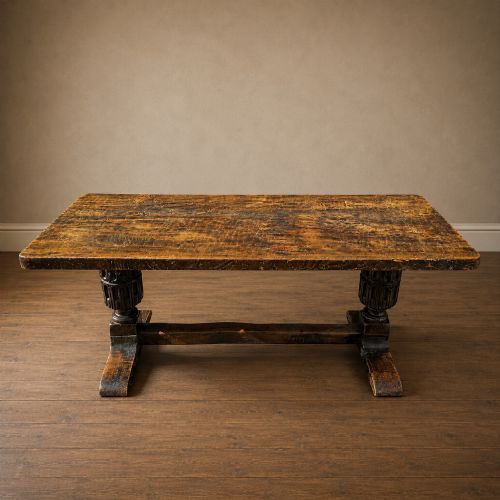
The forms span traditional dining tables, refectory styles, harvest tables, and preparation benches. Oak and pine appear frequently, supported by elm, fruitwood, and cherry wood.
Origin points stretch across English, French, Swedish, and Italian traditions, ranging from rustic farmhouse aesthetics to structured refectory designs.
Materials and construction methods
Carpenters built these tables using heavy native timbers such as oak, pine, and elm, often selecting single plank tops for strength and durability. Joinery relied on traditional methods including trestle bases and pegged joints.
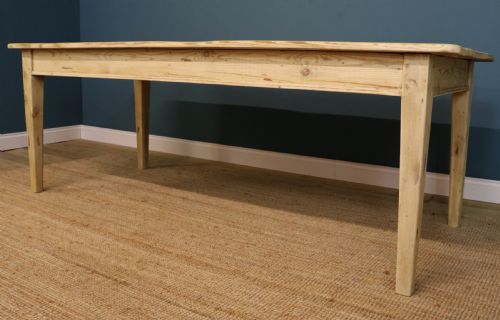
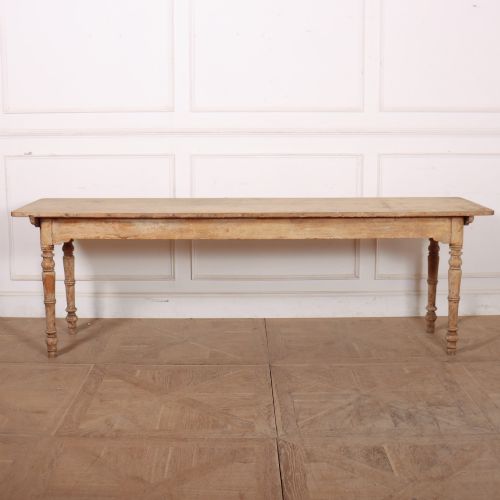
Surface finishes vary from natural waxed grain and bleached pine to original painted surfaces and faded cherry wood tones.
Listings span periods from the seventeenth century through to the 1930s, utilising oak, pine, elm, and cherry wood.
Judging quality in historic tables
Quality rests in the integrity of the timber, particularly the thickness of the top boards and the stability of the base. Single plank elm tops and substantial oak refectory frames represent superior construction.
Proportion and untouched patination distinguish finer examples, where age and heavy use have produced a deep, honest finish across the wood.
The Large Wooden Farm Table Glossary
- Refectory table
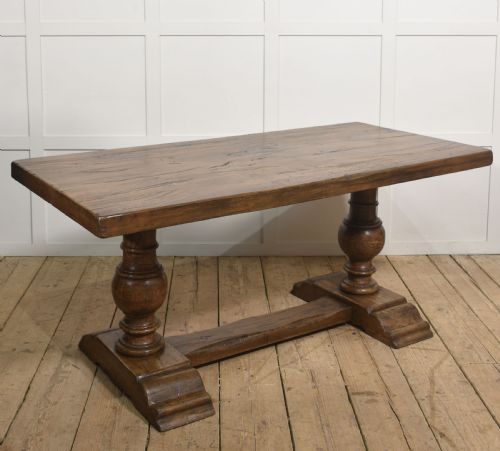
- A long, narrow dining table traditionally used in monasteries and large halls. These feature substantial wooden legs connected by a central floor stretcher.
- Harvest table
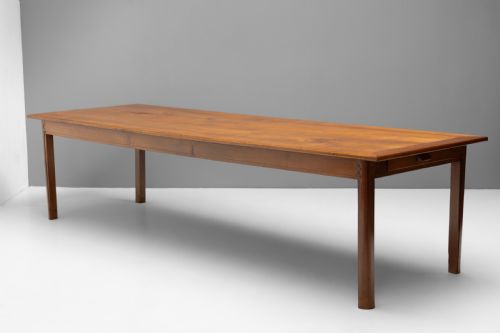
- A utilitarian table designed to seat many workers during seasonal gatherings. They often feature drop leaves or long rectangular tops.
- Trestle table
- A table construction where the top rests on two or more support frames rather than four distinct corner legs. This design provides maximum legroom along the length.
- Single plank top
- A table surface constructed from one wide piece of timber rather than multiple boards joined together. Elm and oak examples often display this feature.
Large Wooden Farm Table: Frequently Asked Questions
How do I clean a wooden farm table?
Wipe surfaces down with a damp cloth and mild soap, avoiding harsh chemical cleaners that strip historic finishes.
Apply a coat of natural beeswax periodically to nourish the dry wood and maintain a soft sheen.
Are these tables suitable for daily dining?
These tables were originally built for heavy daily use, making them exceptionally durable for modern family dining.
Use heat mats and coasters to protect the aged timber from moisture rings and hot dishes.
How can I tell a seventeenth-century table apart from a nineteenth-century one?
Seventeenth-century examples typically employ heavy oak refectory frames with deep patination and pegged joinery.
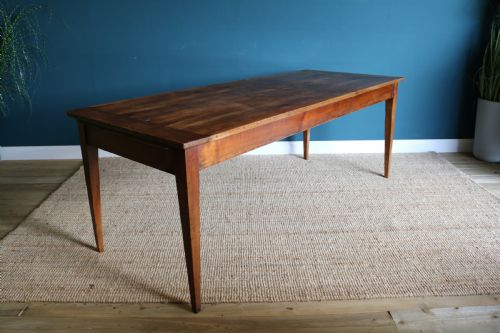
Nineteenth-century harvest and farmhouse tables often utilise softer pine or fruitwood with lighter trestle or turned leg supports.
What is a bleached pine finish?
Bleached pine refers to wooden surfaces treated to lighten the natural yellow or orange tones of the resin.
This process creates a pale, chalky appearance favoured in Scandinavian and French country interiors.