





Rustic Walnut Refectory Table
These heavy timber surfaces bring honest domestic warmth to a room, offering a rustic walnut refectory table built for daily gatherings.
Rustic Walnut Refectory Table
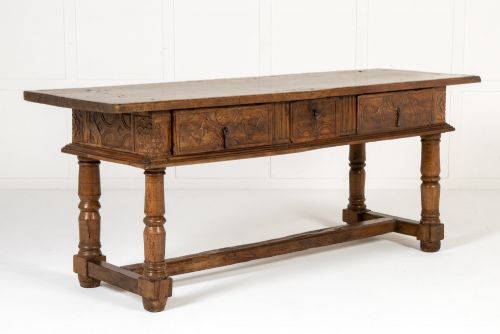
A rustic walnut refectory table serves as a long, solid surface originally designed for communal dining in monasteries and large houses. These pieces span several distinct eras, drawing on styles such as Spanish Baroque, French Provincial and Jacobean Revival.
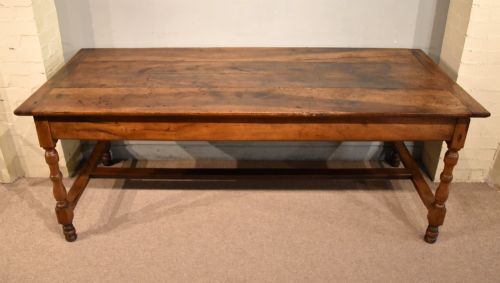
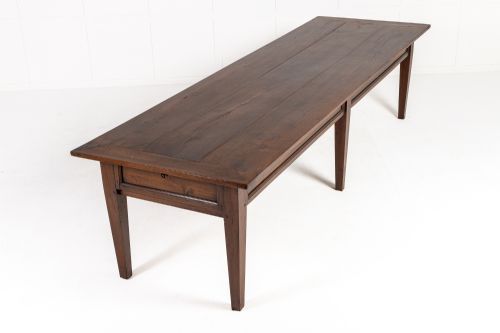
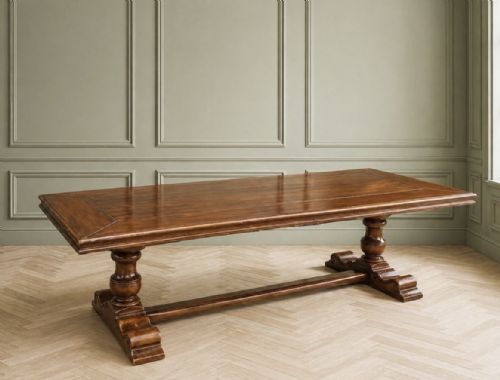
Most examples found here date from the seventeenth, eighteenth and nineteenth centuries, alongside a few early twentieth-century pieces. Buyers encounter various forms including monastery tables, trestle styles and heavy farmhouse dining tables.
Originating largely from continental workshops in Spain, France and Italy, these items rely heavily on rich walnut timber. They combine practical utility with robust construction, making them a central feature for modern dining spaces.
How they were made
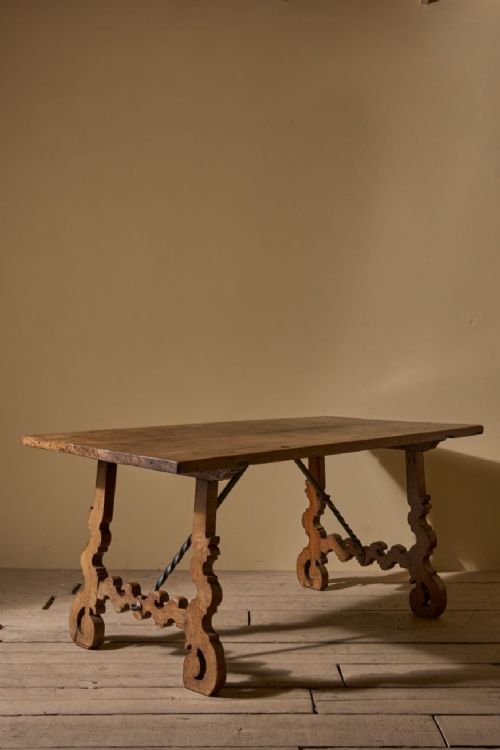
Master carpenters built these tables using solid walnut timber, often supplemented by oak or supported with wrought iron stretchers for added stability. Joinery relied on traditional peg and tenon methods to withstand decades of heavy use.
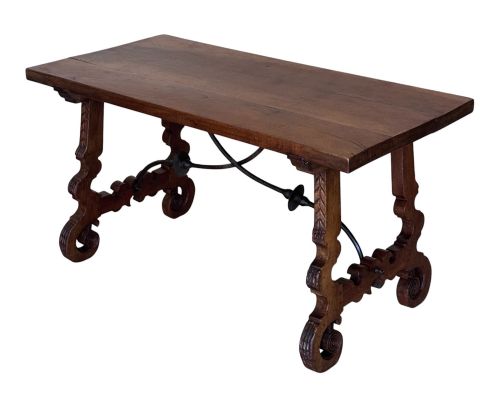
Surfaces were hand-planed and finished to highlight the natural grain of the wood rather than applying heavy lacquers. Iron stretcher bars, seen on several variations, provided essential structural support beneath the long tabletops.
Many an eighteenth-century dining surface still bears the faint ink stains of ancient ledger entries.
What varies in quality
Quality rests upon the depth of the timber patination and the integrity of the original construction. Tables retaining their early surface texture and genuine period fixings command greater appreciation from collectors.
Proportion and timber selection dictate the visual balance of the piece, with dense grain and well-proportioned stretchers elevating an example above standard utility furniture.
The Rustic Walnut Refectory Table Glossary
- Refectory table
- A long dining table traditionally used in monastic dining halls. These surfaces evolved to accommodate large groups for communal meals.
- Stretcher
- A horizontal beam connecting the legs of a table to improve rigidity. Iron or wooden stretchers often feature prominently beneath long walnut tops.
- Trestle
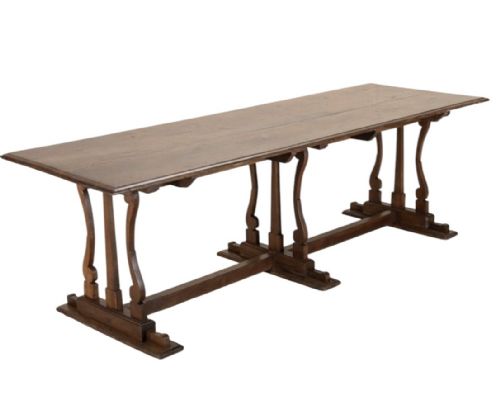
- A structural support consisting of a horizontal beam fixed to two splayed feet. This design allows maximum legroom along the length of the table.
- Patina
- The surface sheen and colour developed through age, handling and polishing. Good patina shows decades of natural wear on the timber.
Rustic Walnut Refectory Table: Frequently Asked Questions
How long should a refectory table be?
These tables vary considerably in length to suit different dining spaces and historical room proportions.
Buyers should measure their available floor space carefully to ensure adequate clearance around all sides for chairs.
Are these tables suitable for everyday family use?
Solid timber construction makes these pieces remarkably durable for daily meals and family gatherings.
Routine maintenance involves simple dusting and gentle cleaning to preserve the historical surface finish.
How do I identify a Spanish Baroque style?
Spanish Baroque influences often appear through robust forms, carved trestle supports and heavy iron stretchers.
These design cues reflect seventeenth-century furniture traditions focused on strength and austere decoration.
What is the difference between walnut and oak versions?
Walnut timber typically displays a warmer, darker tone with intricate grain patterns compared to heavier oak.
Both woods provide exceptional structural strength suitable for large dining surfaces.