

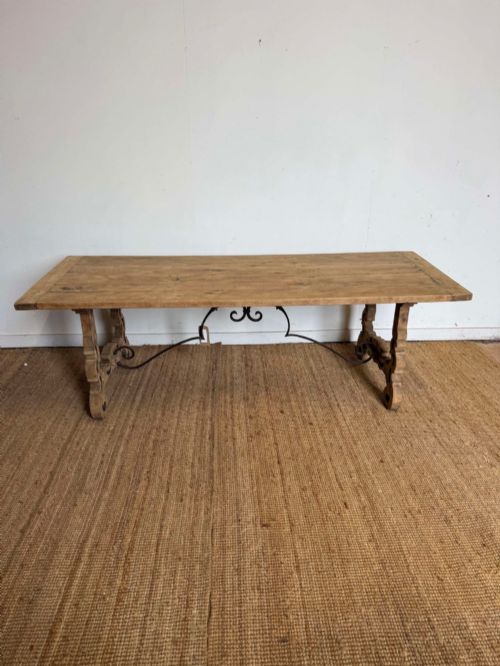
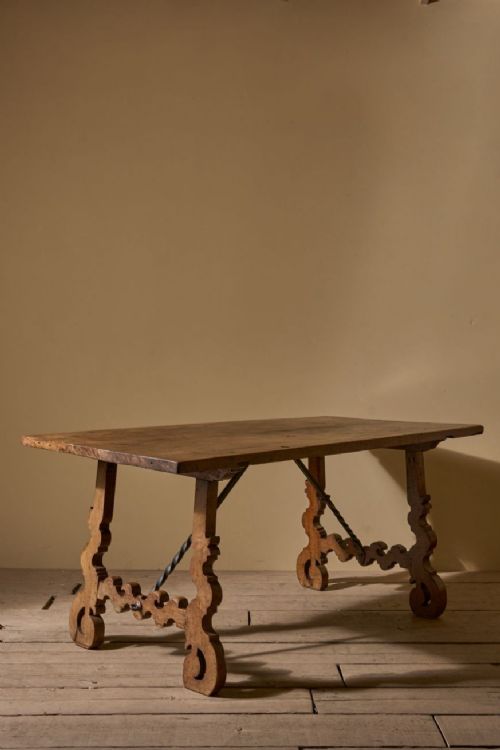
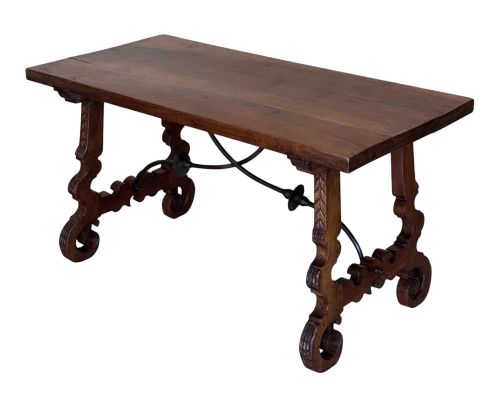
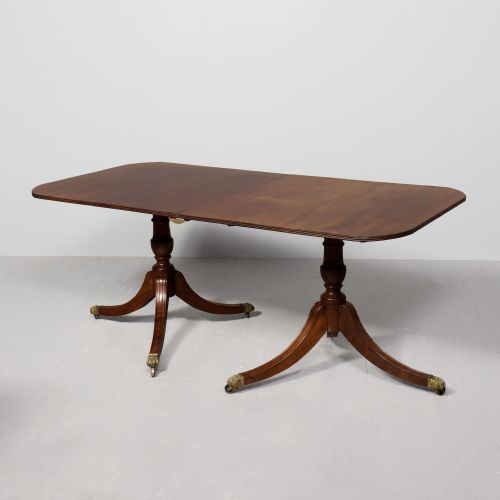


Antique Spanish Dining Table
An antique spanish dining table anchors a room with centuries of timber and honest joinery, offering the deep warmth and solid presence that modern boards lack.
Antique Spanish Dining Table
An antique spanish dining table brings centuries of traditional craftsmanship into the home, drawing on regional forms and robust timbers. When you search for this phrase, you encounter heavy refectory boards, farmhouse surfaces, and trestle designs that once served grand halls or rural kitchens.
The versions most frequently met on this page span the seventeenth, eighteenth, and nineteenth centuries, alongside later revivals from the early twentieth century. Walnut and oak dominate the offerings, joined by chestnut, elm, fruitwood, and mahogany in various regional styles from Basque country to Catalonia.
Forms range from long dining surfaces with stretcher bases to pedestal centre tables and extending boards. These pieces reflect enduring utility, shaped by Spanish Baroque aesthetics and rustic farmhouse practicality.
How they were made
Joiners built an antique spanish dining table using dense regional hardwoods like walnut, oak, chestnut, and elm, selected for structural endurance. Planks were hand-planed and joined to heavy stretcher bases, occasionally reinforced with wrought iron or brass hardware.
Construction methods relied on pegged mortise and tenon joints to secure thick tabletops to sturdy legs or trestle supports. Makers utilised local timbers available in regions such as the Basque country and Catalonia, applying simple finishes that allowed the grain of the wood to show.
Antique Spanish Dining Table Retail Price Guide 2026
Typical asking prices for spanish dining table among the pieces listed under this phrase on Sellingantiques today, from the lower quarter to the upper quarter. They describe what is for sale here now, not the wider market.
Listings feature timbers including walnut, oak, chestnut, elm, mahogany, fruitwood, and wrought iron.
What varies in quality
The distinction between ordinary and exceptional examples rests in the selection of timber and the integrity of the original construction. Superior pieces utilise dense, highly figured walnut, oak, or chestnut with deep patination accumulated over generations.
Refinement of carving, the presence of original ironwork, and the balance of proportions separate regional vernacular pieces from later revival items. The weight of the timber and the honesty of the joinery determine the character of each board.
The Antique Spanish Dining Table Glossary
- Refectory table
- A long, narrow dining table traditionally used in monasteries or large halls, characterised by substantial legs connected by a low stretcher.
- Trestle table
- A table consisting of two or more support frames connected across the underside by a horizontal beam or stretcher to hold a top board.
- Stretcher
- A horizontal wooden or metal bar connecting the legs of a table to provide structural stability and rigidity.
- Baroque style
- An ornate design tradition originating in the seventeenth century, known for dramatic proportions, rich carved details, and substantial presence.
- Patina
- The deep sheen and surface alteration developed on timber over centuries of handling, polishing, and exposure to light.
Antique Spanish Dining Table: Frequently Asked Questions
What woods were used in these tables?
Makers relied on dense hardwoods available locally, primarily walnut, oak, chestnut, and elm. Fruitwood and mahogany also appear in specific regional or later examples.
These timbers provided the structural strength required for heavy daily use in both rural farmhouses and formal settings.
How do I care for antique timber?
Protect the surface by avoiding excessive moisture and direct heat sources that can dry out old timber. Regular dusting and occasional application of natural wax help maintain the finish.
Treat the wood gently to preserve the accumulated patina and the integrity of the original joints.
Are these tables suitable for daily dining?
Most examples were built for heavy domestic use, making them sturdy and practical for contemporary dining rooms. Their robust construction handles regular gatherings with ease.
Using felt pads and heat mats protects the historical surface from modern wear without altering the appearance.
How are different periods identified?
Dating relies on timber selection, tool marks, joinery techniques, and stylistic traits such as Spanish Baroque carving or plain farmhouse construction. Earlier pieces often display hand-sawn planks and pegged joints.
Comparing regional characteristics from areas like Basque country or Catalonia helps narrow down the origin and era.