


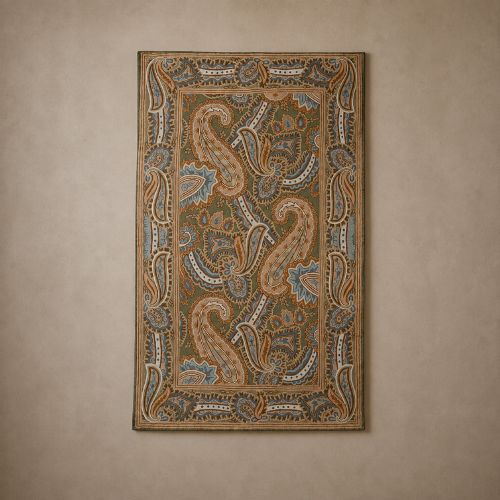

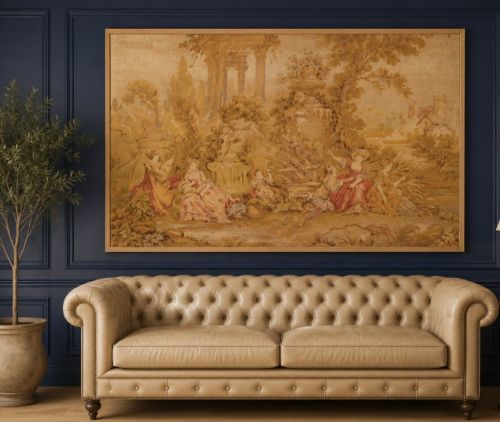

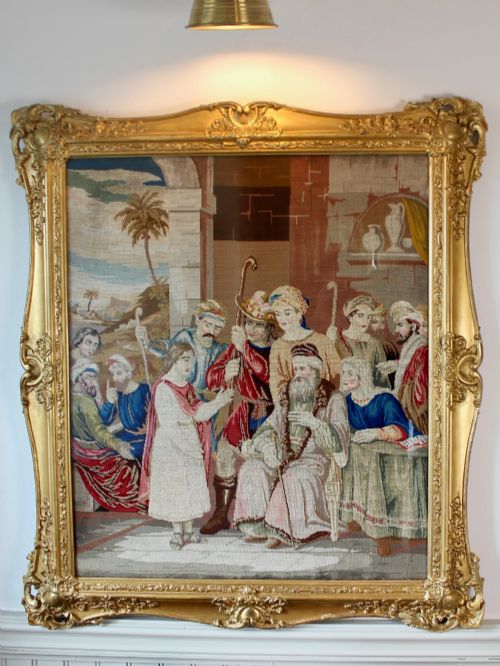
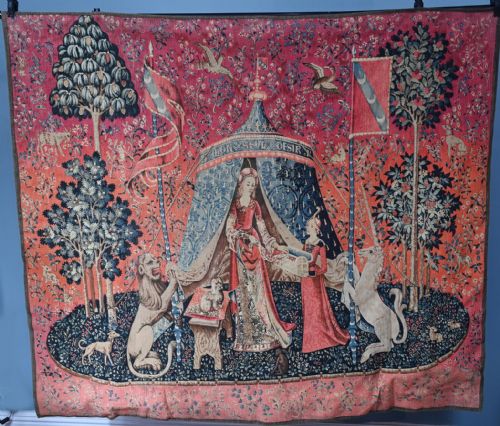

Large Wall Tapestry
A large wall tapestry brings historic texture and scale to a room, offering woven pastoral scenes, botanical verdure landscapes, and elaborate figural compositions.
Large Wall Tapestry
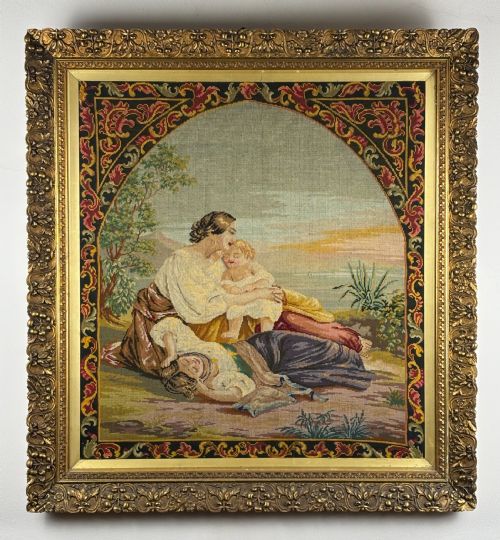
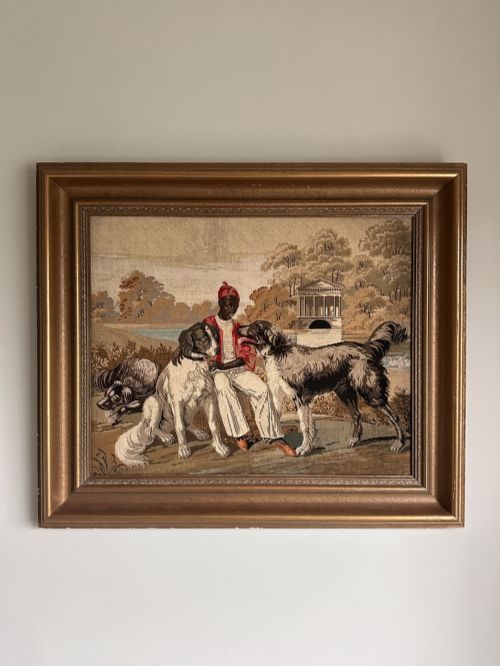
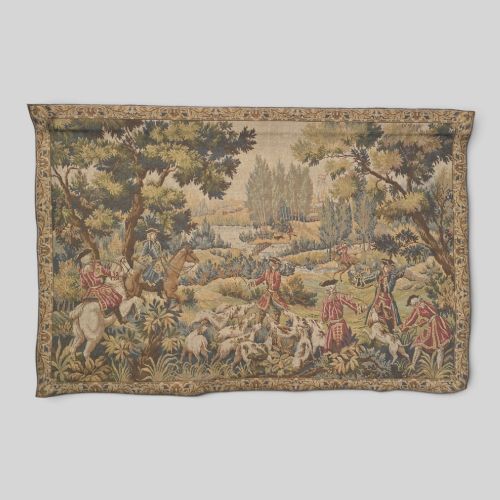
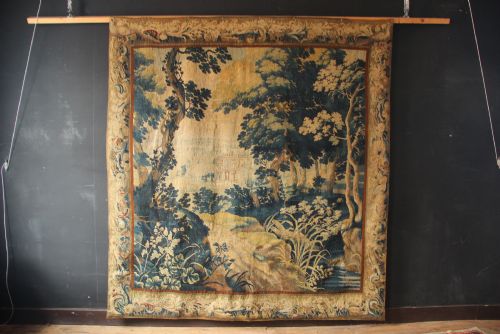
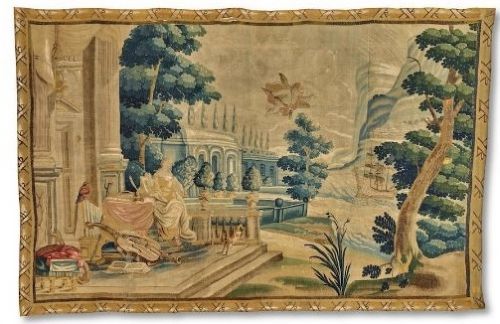
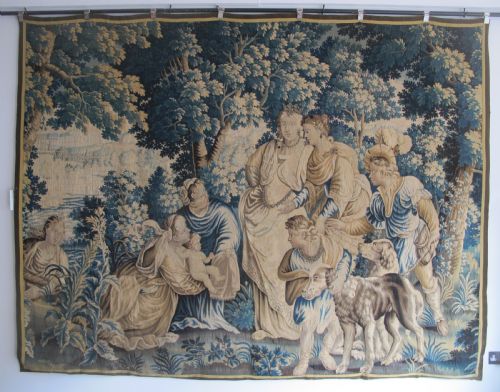
A large wall tapestry functions as a substantial textile decoration designed to cover significant interior surfaces with woven, embroidered, or needleworked imagery. When searching for a large wall tapestry, buyers encounter monumental Flemish verdure scenes, French Aubusson pastoral compositions, and detailed needlework panels from various centuries.
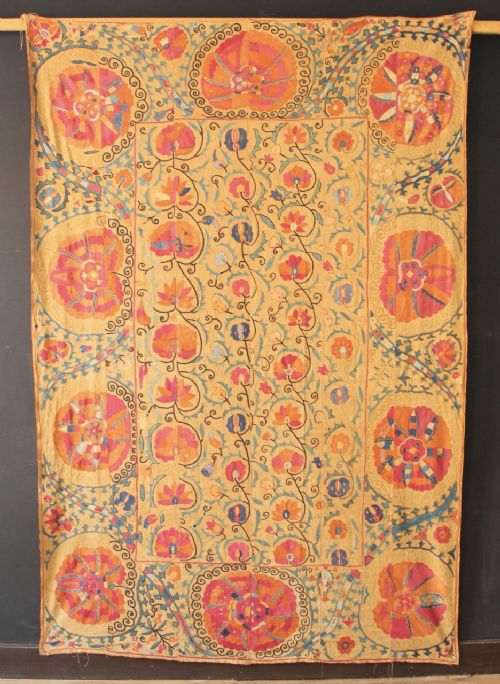
The pieces available span from seventeenth-century Flemish workshop outputs to nineteenth-century French chateau and Victorian reinterpretations. Woven verdure landscapes featuring dense foliage and mythological or biblical narratives dominate the older periods, alongside embroidered Central Asian panels and framed woolwork pictures.
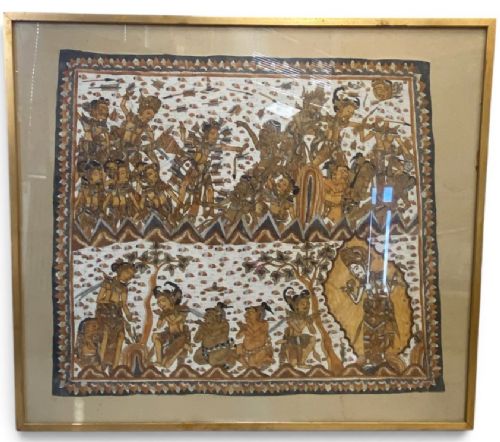
Origins range across European centres like Aubusson, Audenarde, and Flanders, as well as Asian traditions including Suzani and Kalamkari textile art. Buyers frequently meet works executed on grand scales that served historically to insulate stone walls and display cultural prestige.
What varies in quality
The quality of a large wall tapestry rests upon the fineness of the weave, the complexity of the pictorial design, and the survival of the original material fibres. Tightly woven examples from historical Flemish or French centres display sophisticated tonal gradation and intricate botanical detail that lesser decorative productions lack.
Material selection dictates much of the visual depth, with the inclusion of silk and metal thread elevating the sophistication of the textile far above standard wool-only compositions. The integrity of the ground fabric and the precision of the hand-stitched embroidery or needlework further separate masterworks from simpler domestic wall hangings.
Large Wall Tapestry Retail Price Guide 2026
Typical asking prices for large wall tapestry among the pieces listed under this phrase on Sellingantiques today, from the lower quarter to the upper quarter. They describe what is for sale here now, not the wider market.
The listings show pieces spanning from the seventeenth century through to the 1940s, utilising wool, silk, cotton, and linen across French, Flemish, and Asian traditions.
The Large Wall Tapestry Glossary
- Verdure
- A type of tapestry featuring a heavily wooded landscape, foliage, and often birds or animals as the primary subject matter. These pastoral scenes were immensely popular in seventeenth-century Flemish and French workshops.
- Aubusson
- A town in France renowned for producing woven tapestries and carpets from workshops established over centuries. Aubusson pieces frequently depict pastoral, floral, or neoclassical architectural motifs.
- Berlin woolwork
- A type of needlepoint embroidery popular in the nineteenth century that used brightly coloured wool yarns charted on grid paper. This technique allowed makers to create highly pictorial framed wall pictures.
- Crewelwork
- A traditional form of surface embroidery executed using wool yarn on a heavy linen or cotton twill fabric. It creates richly textured wall hangings and textile panels depicting scrolling vines and floral patterns.
- Warp
- The vertical threads stretched rigidly on a loom before the horizontal weft threads are passed through to create the woven textile structure. The density of the warp determines the fine resolution of the final tapestry design.
Large Wall Tapestry: Frequently Asked Questions
How do I hang a large wall tapestry safely?
Heavy textiles require even weight distribution across a sturdy wooden batten or a concealed metal rod secured directly to wall studs. Avoid hanging tapestries by isolated corner loops, as this stresses the historic fibres.
Lined panels benefit from a sewn-on Velcro heading or a fabric sleeve that distributes the downward pull evenly along the entire top edge of the textile.
How were these large tapestries originally used?
Historically, large wall tapestries served a dual purpose of insulating cold stone castle walls and displaying the wealth, lineage, and cultural literacy of the owner. They were easily transportable and moved between royal residences.
Over subsequent centuries, their function shifted toward purely decorative interior wall art within grand drawing rooms, chateaux, and Victorian libraries.
How do I tell seventeenth-century Flemish work from nineteenth-century French pieces?
Seventeenth-century Flemish works typically display dense, muted verdure foliage, mythological narratives, and coarse wool or silk weaves that show natural age-related softening of the palette. They reflect the workshop output of centres like Audenarde.
Nineteenth-century French pieces, particularly Aubusson styles, often exhibit brighter botanical tones, crisper decorative borders, and mechanically assisted or tighter modern weaving structures influenced by revivalist tastes.