






Beige Woven Tapestry
These beige woven tapestry pieces bring historic warmth to modern rooms through centuries of textile artistry.
Beige Woven Tapestry
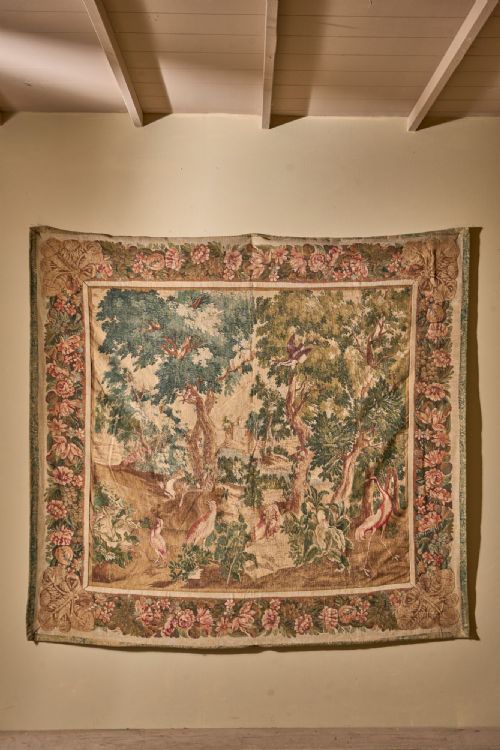
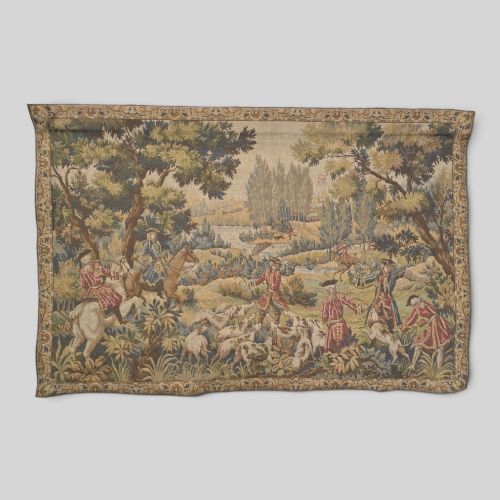
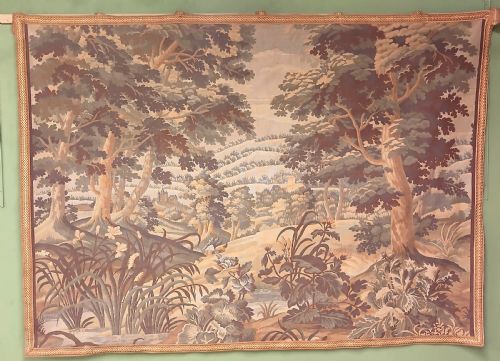
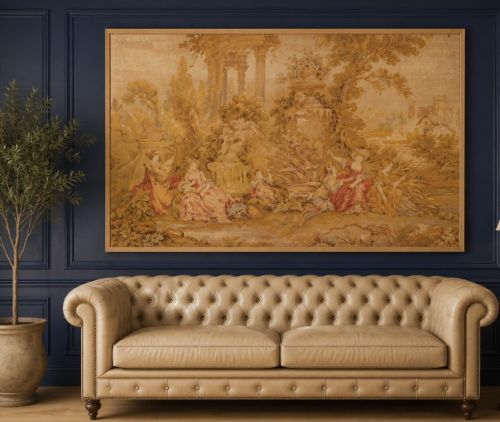
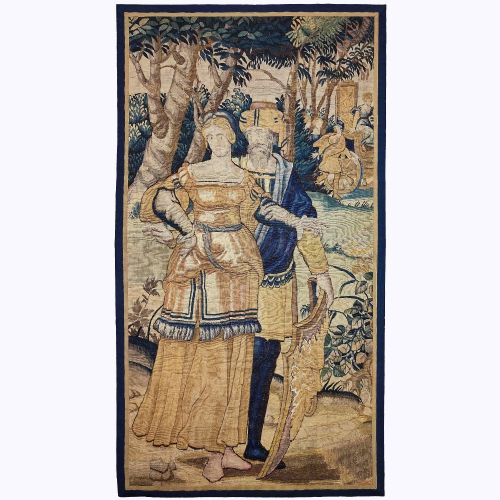
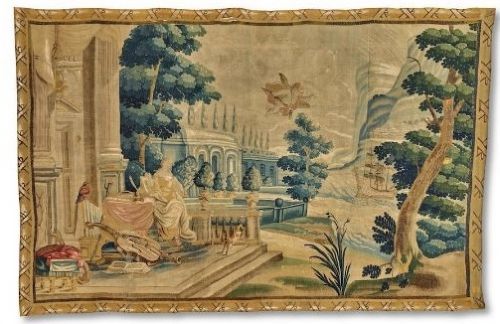
A beige woven tapestry covers grand wall hangings, framed panels, and smaller domestic rugs spanning from the sixteenth century into the twentieth century. These textiles originate largely from French workshops and Flemish looms, depicting pastoral scenes, mythological narratives, and floral patterns in neutral tones.
The selections available here range from massive seventeenth-century Flemish wall pieces to nineteenth-century Aubusson entre-fenêtre panels and smaller decorative cushions. Buyers frequently encounter French pastoral compositions and detailed floral designs mounted within timber frames or prepared for wall suspension.
Materials and construction
Weavers constructed these textiles primarily using wool, cotton, silk, and linen yarns on vertical or horizontal looms to build complex pictorial surfaces. Many surviving examples integrate timber frames, brass fixings, and mahogany mounts to support heavy textile panels and rugs.
The integration of diverse natural fibres allowed artisans to achieve varied textural depths within each beige woven tapestry. Skilled makers combined coarser wool foundations with finer silk highlights to create contrast and dimension across the woven surface.
Several listings include unexpected items like sturdy nineteenth-century stools upholstered in vintage tapestry fragments.
Evaluating quality and execution
Quality in these textiles rests upon the density of the weave and the complexity of the pictorial design. Finer examples display intricate rendering of figures and foliage, whereas simpler pieces rely on repeating patterns with less tonal variation.
The condition of the fibres and the integrity of the original backing or timber frame heavily influence the standing of each piece. Superior items retain their structural stability and clear chromatic distinction despite centuries of ageing.
The Beige Woven Tapestry Glossary
- Aubusson tapestry
- A woven wall hanging produced in the French town of Aubusson, known for pastoral and floral designs without metallic threads. These pieces often feature muted beige and earthy palettes suitable for period interiors.
- Entre-fenetre
- A tall, narrow tapestry designed specifically to hang on the wall space between two windows. Such pieces typically display vertical compositions like floral urns or slender architectural motifs.
- Tapestry fragment
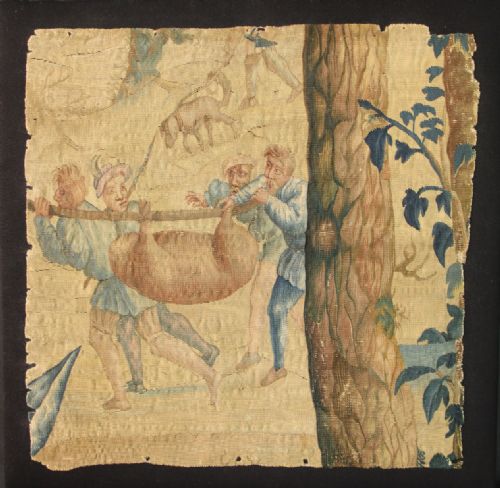
- A surviving portion of a larger historic wall hanging that has been salvaged and mounted for display. Fragments preserve specific figurative or decorative details from otherwise lost monumental works.
- Flemish tapestry
- A textile woven in historical Flanders by master artisans renowned for mythological and landscape scenes. These works represent some of the most sophisticated weaving traditions in European history.
Beige Woven Tapestry: Frequently Asked Questions
How do I hang a heavy tapestry safely?
Large wall hangings require even distribution of weight across a robust timber batten or hidden metal support system rather than a single fixing point. This prevents distortion of the woven structure over time.
Ensure the selected wall can bear the load and consult a professional restorer if the piece lacks existing suspension loops or a supportive backing lining.
Can I place these rugs on the floor?
Certain items listed as rugs or cushions are constructed for functional floor placement, utilising durable wool and cotton foundations designed to withstand light foot traffic. Antique pile rugs require gentle cleaning and appropriate underlays to prevent slip and wear.
Larger wall panels and delicate silk fragments must remain vertical to protect the fragile fibres from physical degradation and crushing.
How do I date an antique tapestry?
Dating relies on examining the stylistic elements, subject matter, weave density, and the specific composition of natural fibres used in the textile. Seventeenth-century Flemish works often feature dense mythological narratives, while nineteenth-century French pieces lean towards pastoral floral Aubusson styles.
Comparative analysis with documented museum archives helps narrow down the period of production when signatures or documentation are absent.
How should I clean my textile?
Routine maintenance involves gentle surface dusting with a soft brush or low-suction vacuum applied through protective mesh. Professional conservation cleaning is necessary for deeper soil removal.
Avoid using household detergents or water immersion on antique wool and silk, as moisture can weaken degraded historical fibres and cause shrinkage.