




Pictorial Needlepoint Tapestry
Pictorial needlepoint tapestry works bring historical narratives into rooms through threaded wool, silk and metal.
Pictorial Needlepoint Tapestry
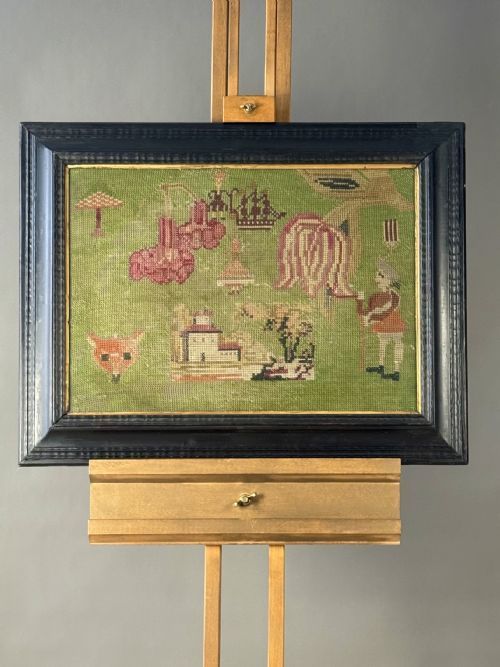
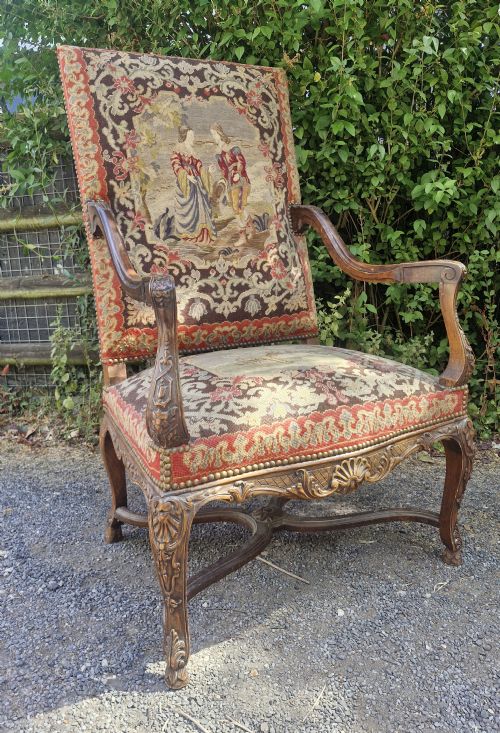
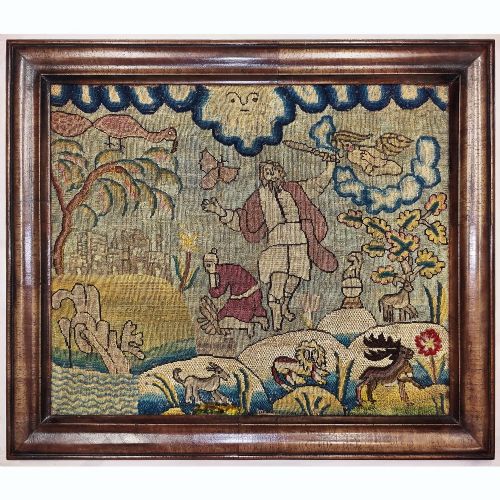
When you search for pictorial needlepoint tapestry, you encounter textile art ranging from framed wall pictures to upholstered armchairs. These pieces capture figurative scenes, portraits and hunting motifs executed in thread on canvas or linen grounds.
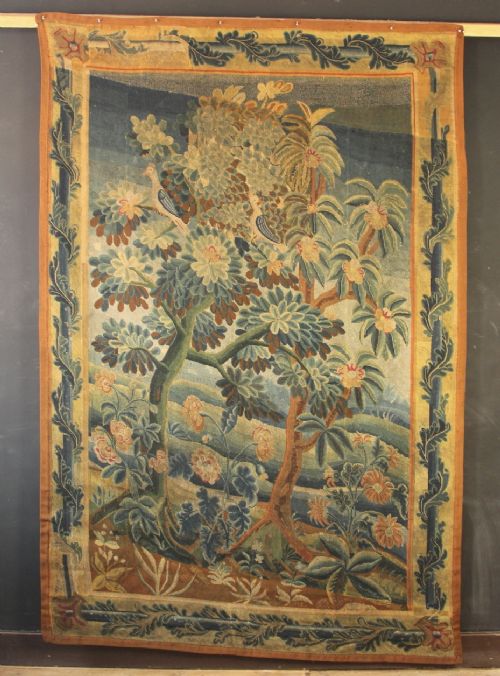
The selections span multiple centuries, touching upon seventeenth-century cushion covers and nineteenth-century framed works. Buyers frequently meet Victorian iterations alongside eighteenth-century European wall pieces and armchairs.
Forms vary between standalone framed textile art and functional seating upholstered in needlepoint. Each object demonstrates a distinct approach to narrative handwork, preserving historical portraiture and genre scenes.
Materials and construction methods
Maker execution relies on wool, silk and metal threads worked onto linen foundations or canvas backings. Artisans utilised gros point and needlework techniques to build dense pictorial surfaces.
Frames incorporate carved wood, walnut and rosewood, often housing glass to protect delicate textile fragments. Structural supports for seating utilise carved timber frames to sustain heavy needlepoint upholstery.
A cobbler and a prince share a quiet moment in one Italian portrait, immortalised in needlework.
Distinctions in quality
Quality rests upon the fineness of the stitch work and the complexity of the pictorial design. Pieces utilising silk and metal threads alongside wool display superior chromatic depth and material investment.
The integrity of the supporting frame, whether carved wood or rosewood, contributes to overall execution standards. Preservation of the textile ground without extensive loss dictates the standing of each piece.
The Pictorial Needlepoint Tapestry Glossary
- Gros point
- A coarse needlepoint stitch executed on canvas, commonly utilised for durability in upholstery and large tapestries.
- Needlework picture
- A framed textile artwork created with thread on a canvas ground, often depicting a specific narrative or portrait scene.
- Tapestry cushion cover
- A functional textile component designed for domestic furnishing, typically employing historical or figurative motifs.
- Sampler
- A piece of cloth demonstrating various stitches and patterns, worked by hand to record skill or designs.
- Silk and metal thread embroidery
- Textile decoration incorporating silk yarns alongside metallic filaments to achieve reflective highlights within the pictorial design.
Pictorial Needlepoint Tapestry: Frequently Asked Questions
How do I hang a textile picture?
Wall art requires stable hanging hardware suited to the weight of the timber frame and glass.
Keep pieces away from direct sunlight to protect silk and wool threads from fading.
Can I sit on needlepoint armchairs?
Seating upholstered in historical needlepoint handles gentle domestic use when handled with care.
Heavier traffic can strain older canvas foundations and delicate wool stitching.
How do I clean antique needlework?
Dust removal requires gentle surface brushing with a soft implement.
Water and liquid cleaners damage historical fibres and must be avoided.
What periods do these textiles represent?
The pieces span from the seventeenth century through the Victorian era and into the twentieth century.
Each period utilises distinct stitching densities and material combinations.