


Alphabet Cross Stitch Panel
An alphabet cross stitch panel is a framed textile record of letters and numbers worked by hand, offering a direct window into nineteenth-century domestic life.
Alphabet Cross Stitch Panel
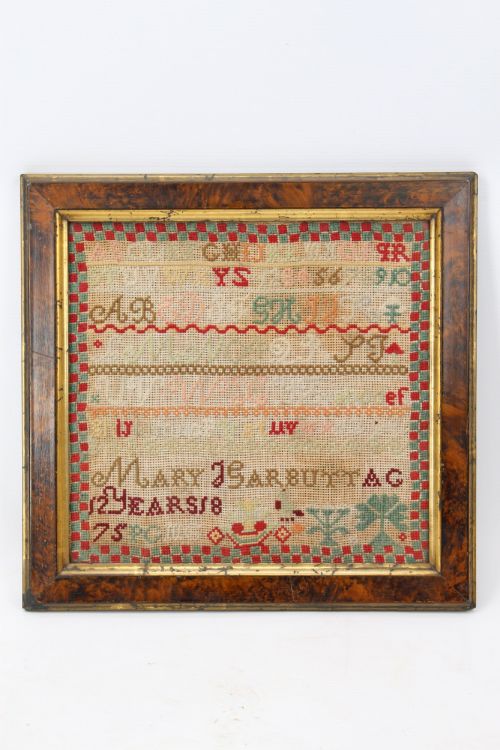
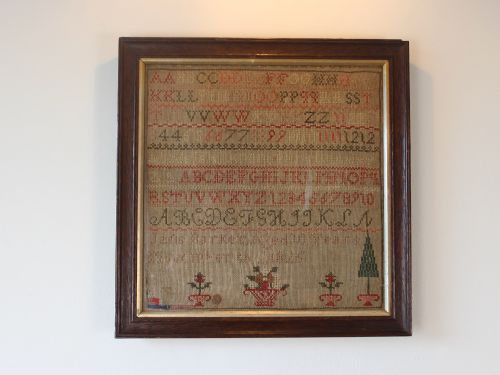
An alphabet cross stitch panel takes the form of a needlework sampler, created by young makers such as Mary J Garbutt and Annabella Samon during the Georgian and Victorian periods. These pieces frequently record the maker's name, age, and a specific date, ranging from early eighteenth-century examples like Sarah Reading's 1729 work through to late nineteenth-century panels.
The format encompasses various textile wall art forms, including framed needlework and pairs of samplers worked by family members like Emma and Hannah Barnes. Alongside traditional alphabets, many panels incorporate moral verses, the Lord's Prayer, and the Commandments, reflecting the educational practices of the time.
Materials and construction
Makers stitched using silk thread and wool onto woven linen grounds, employing counted thread techniques to create uniform letters, numerals, and pictorial motifs. These panels are typically housed behind glass within wooden frames, which protect the fragile textiles from dust and handling.
The execution relies entirely on hand stitching, with individual threads showing the varied dexterity of makers ranging in age from young children to teenagers. Natural ageing of the linen and threads reveals the organic composition of the materials used in these historical schoolroom exercises.
Surviving panels frequently record young makers aged eleven to thirteen, including named works from 1729 through to the late nineteenth century.
Distinctions in craftsmanship
Quality rests upon the regularity of the stitching, the complexity of the alphabets and pictorial borders, and the preservation of the linen ground. Finer examples display meticulous stitch control and harmonious thread palettes that have survived with minimal fading.
The inclusion of detailed genealogical data, complete dates, and legible inscriptions by named makers elevates an example above anonymous or plain letter-only panels. Original wooden framing and clear historical provenance further distinguish the finer pieces available.
The Alphabet Cross Stitch Panel Glossary
- Sampler
- A piece of needlework produced as a demonstration or test of skill in various stitches. These textiles often preserve alphabets, numbers, and decorative motifs for future reference.
- Needlepoint
- A type of canvas work where yarn is stitched through a stiff open-weave mesh. It differs from flat surface embroidery by covering the entire ground.
- Linen
- A textile made from the fibres of the flax plant. It provides the traditional durable ground fabric for counting threads in historical needlework.
- Glass
- A hard, brittle transparent material used historically to glaze framed art. It protects delicate silk and wool threads from atmospheric moisture and dirt.
Alphabet Cross Stitch Panel: Frequently Asked Questions
What is an alphabet cross stitch panel?
An alphabet cross stitch panel is a hand-worked needlework piece featuring letters, numbers, and sometimes verses or pictorial motifs. They were traditionally worked by young girls as an exercise in literacy and sewing competence.
Surviving examples from the Georgian and Victorian eras often record the maker's name, age, and date of completion. These panels function today as framed textile art and historical documents.
How were samplers used historically?
Samplers served primarily as educational tools in schools and homes during the eighteenth and nineteenth centuries. Young makers practised fundamental stitches, lettering, and numerical sequences while demonstrating their patience and neatness.
Completed panels were subsequently framed and displayed in domestic interiors as evidence of a proper upbringing and domestic accomplishment.
How do I date an antique sampler?
Dating relies heavily on inscribed dates, maker names, and stylistic markers recorded within the textile itself. Georgian and Victorian panels often display specific years, accompanied by lettering styles and border designs characteristic of the period.
Examining the materials, such as the weave of the linen and the type of thread, offers further confirmation of the period of creation.
How should I care for a framed textile?
Framed samplers require protection from direct sunlight to prevent the silk and wool threads from fading. Keeping them in stable indoor environments away from excessive humidity preserves the fragile linen and wooden frames.
Displaying them behind glass shields the ancient fibres from dust, grease, and atmospheric pollutants without requiring direct contact with the fabric.