


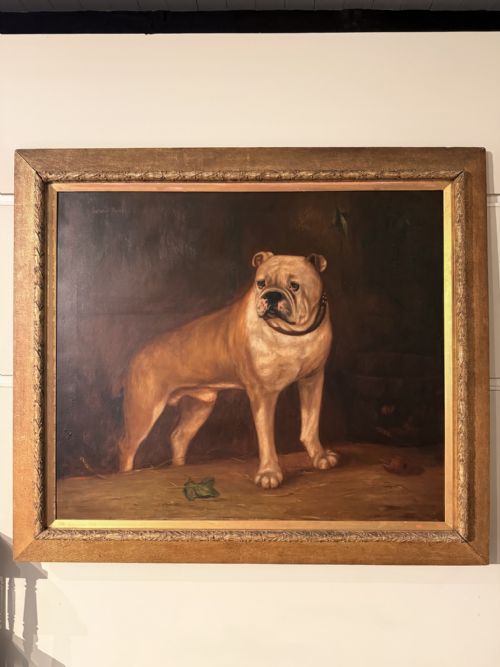

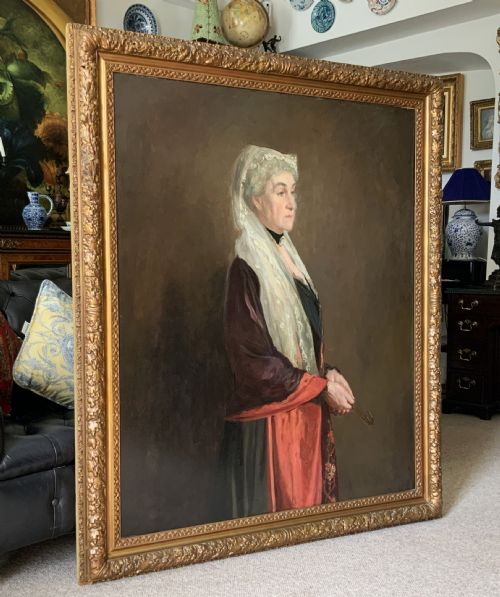
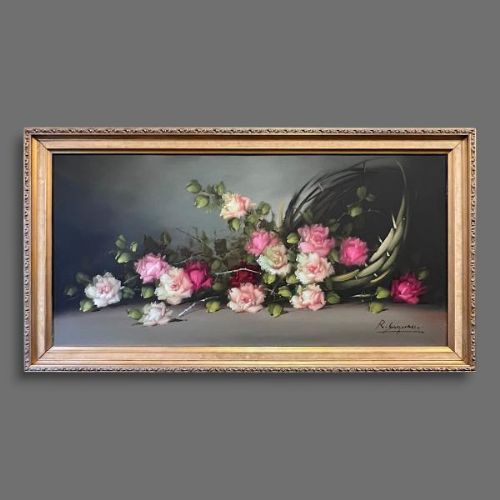


Large Vintage Canvas Painting
A large vintage canvas painting brings scale, texture, and deep layers of oil pigment straight into a room.
Large Vintage Canvas Painting
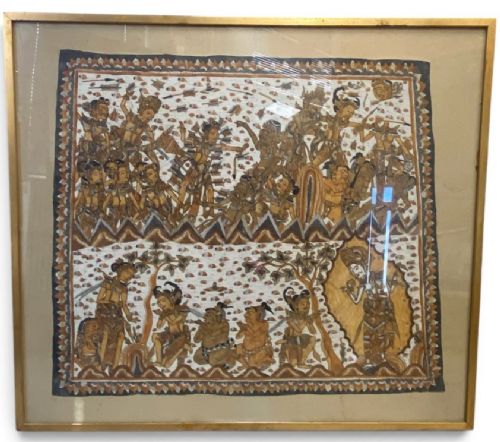
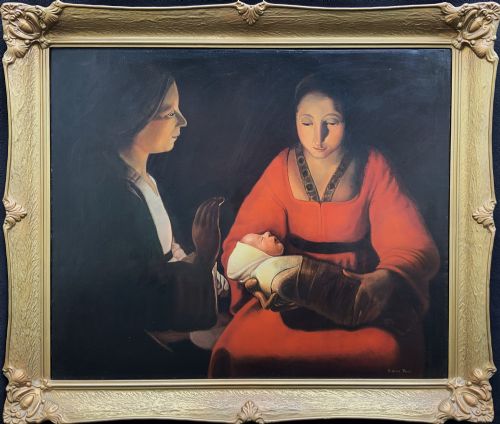
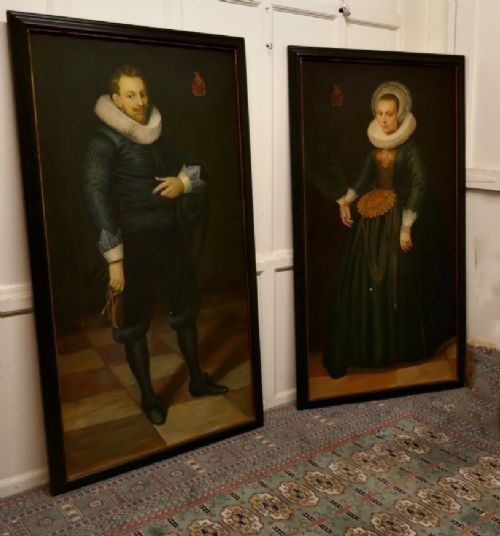
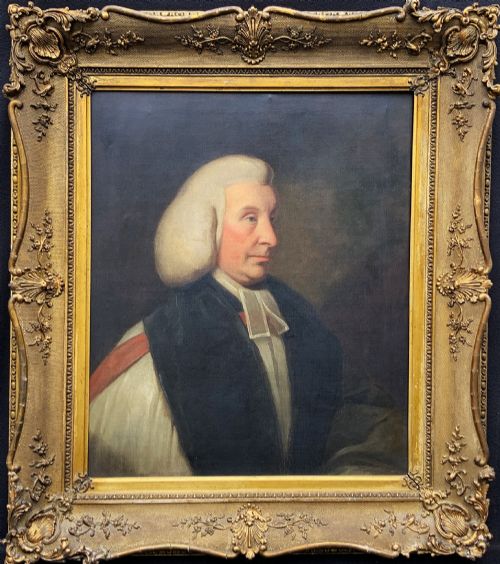
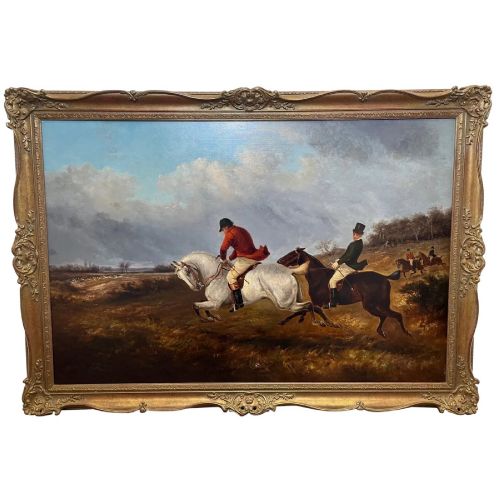
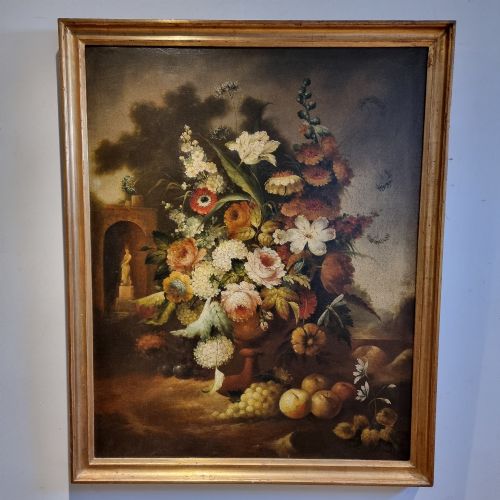
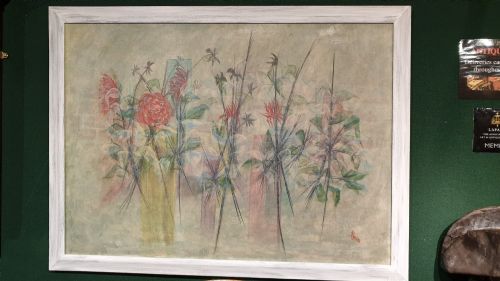
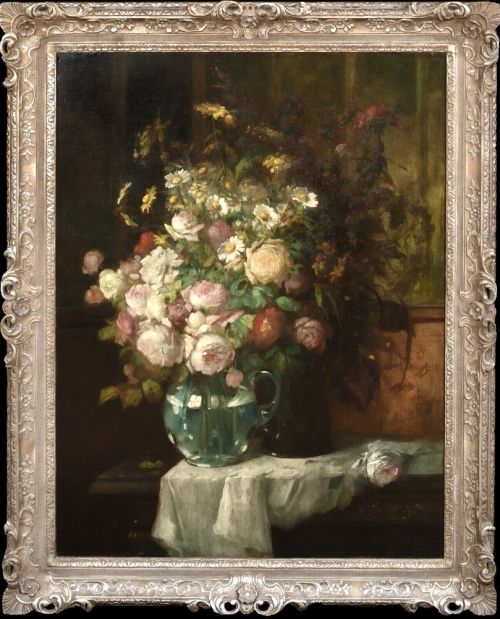
A large vintage canvas painting represents substantial wall art spanning from Victorian sporting scenes to mid-century abstract compositions. These works capture expansive landscapes, detailed portraits, and still lifes rendered on woven supports.
Buyers most frequently encounter mid-century impressionist cityscapes and floral displays alongside earlier nineteenth-century portraits and pastoral views. Many pieces arrive housed in heavy gilt wood or Montparnasse frames that complement the scale of the artwork.
The selection ranges from traditional British and European academic canvases to bolder post-war modernist experimentations. Each piece relies on the generous proportions of the canvas to create a commanding presence within an interior.
Materials and construction
These works are built primarily upon woven textile canvas stretched across sturdy wooden frames, providing a flexible yet resilient ground for heavy pigment applications. Artists built up their compositions using rich oil paint, sometimes utilising thick impasto techniques that leave distinct brushstrokes across the surface.
Many canvases find their final presentation within substantial frames fashioned from gilded wood or carved oak, which protect the outer edges and add architectural weight. The combination of oil on stretched canvas ensures depth of colour and longevity across the decades.
Several canvases depict horses galloping through hunting fields, quiet domestic interiors, and serene portraits that have silently watched generations pass.
Assessing quality
Quality rests upon the confidence of the brushwork and the structural integrity of both the canvas support and the surrounding frame. Superior examples demonstrate a secure bond between the oil paint layers and the underlying fabric, avoiding excessive craquelure or flaking.
The sophistication of the composition and the artist's ability to handle light and scale elevate certain pieces above standard decorative works. Original frames matching the period of the painting also contribute significantly to the overall integrity of the piece.
Thomas Smythe·Konstantin Stoitzner·Alexandre Le Bihan·Herbert Royle·Gabriel Dauchot
The Large Vintage Canvas Painting Glossary
- Impasto
- Paint applied thickly to a canvas, standing out in relief from the plane and capturing physical texture as well as colour. This technique adds tactile depth to mid-century and impressionist works.
- Gilt wood
- Timber surfaces coated with a thin layer of gold leaf or metallic powder, frequently seen on elaborate nineteenth-century picture frames. The finish catches ambient light to accentuate the artwork.
- Craquelure
- A fine network of microscopic cracks appearing across the surface of aged oil paint as it hardens over decades. It serves as a natural indicator of age in older canvas works.
- Stretcher
- The internal wooden framework that holds the canvas taut under tension. Proper construction prevents sagging and maintains the flat plane of the painting.
- Provenance
- The documented history of ownership associated with a work of art. Clear records help establish authenticity and the timeline of the piece.
Large Vintage Canvas Painting: Frequently Asked Questions
How do I hang a heavy canvas?
Large framed canvases require robust wall fixings anchored directly into studs or masonry to support the substantial weight safely. Heavy-duty picture wire or D-rings mounted securely to the wooden stretcher bars distribute the load evenly.
Ensuring the hanging hardware matches the weight of the painting prevents frame distortion and protects the wall structure over time.
How do I date a canvas?
The age of a painting is determined by examining the weave of the fabric, the composition of the wooden stretcher, and the style of the brushwork. Older canvases often feature hand-planed stretcher bars and oxidized pigments that fluoresce differently under ultraviolet light.
Examine the reverse side of the canvas for signatures, maker stamps, or old exhibition labels that offer clues to the creation date.
Are original frames important?
Frames contemporary to the artwork enhance historical context and provide a harmonious visual boundary for the composition. Many mid-century and nineteenth-century pieces were created specifically for their designated surrounds.
While replacement frames can protect the artwork, matching period surrounds often preserve the intended aesthetic balance of the piece.