


Large Victorian Credenza
A large victorian credenza brings nineteenth-century presence and rich timber grain to a room.
Large Victorian Credenza
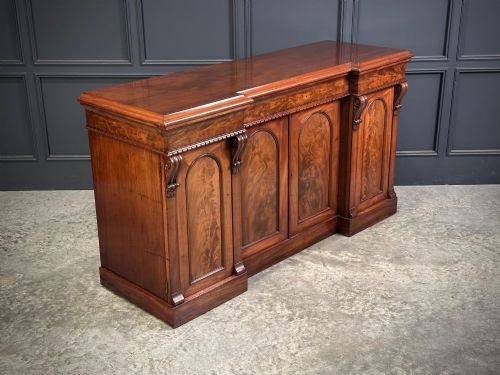
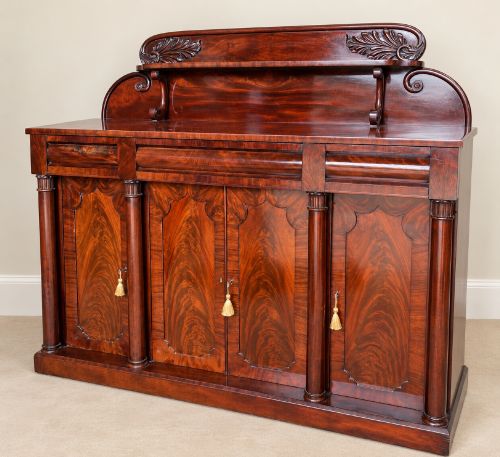
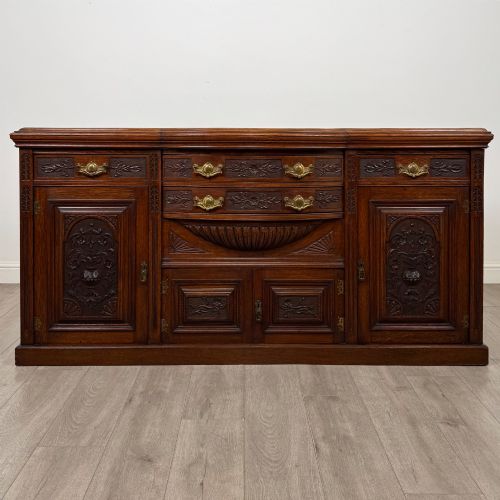
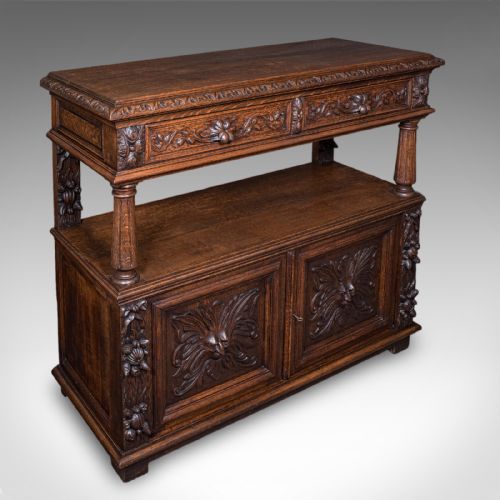
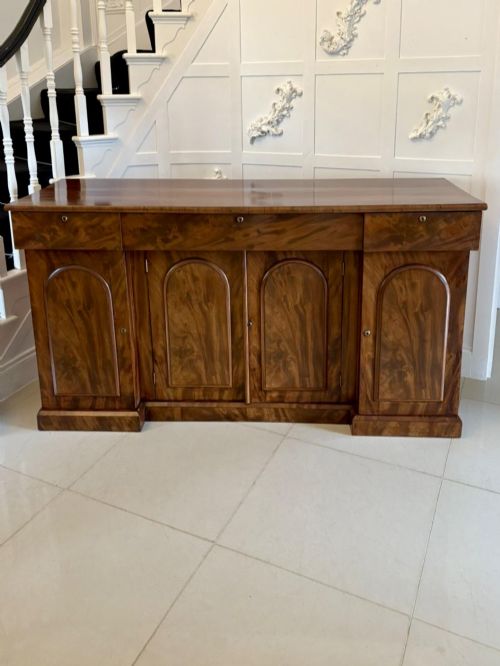
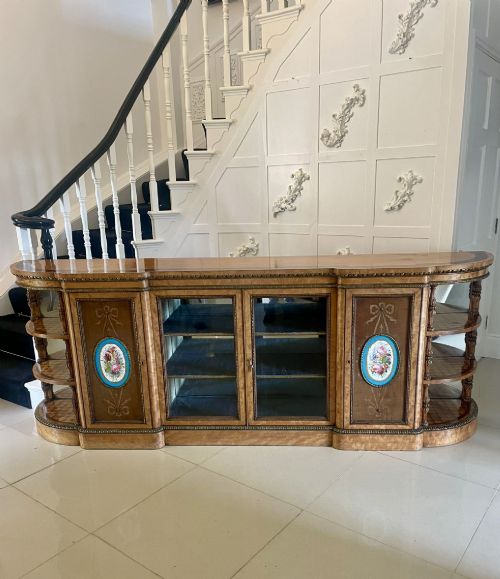
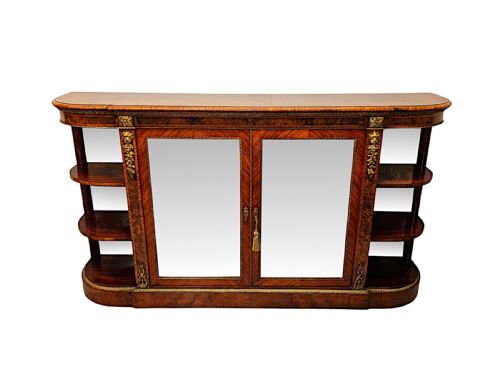
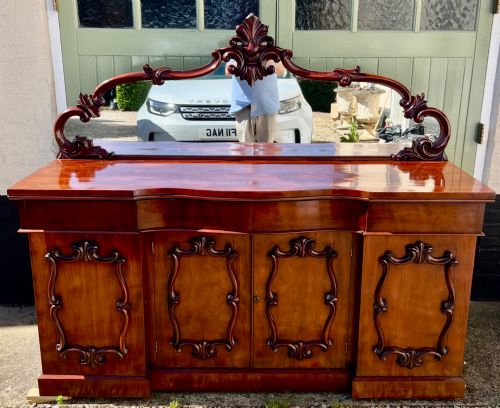
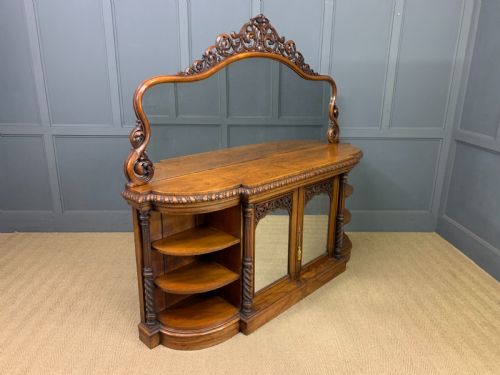
A large victorian credenza represents a substantial nineteenth-century storage cabinet built for formal display and dining spaces. These pieces emerge in walnut, mahogany, and oak across the Victorian period, often featuring glazed central doors flanked by curved side cabinets.
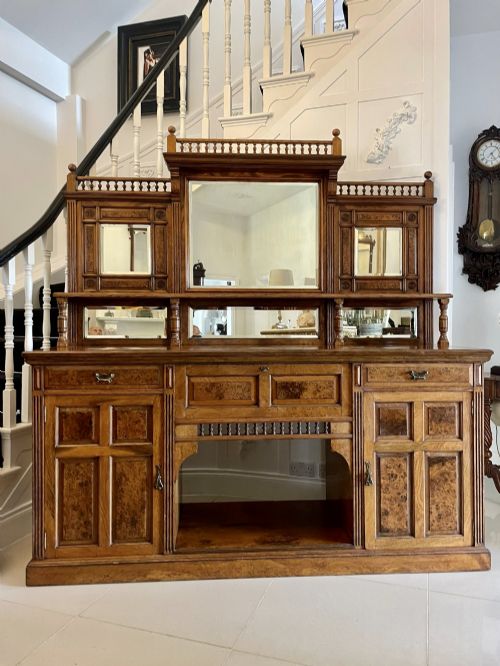
The versions most common on this page combine burr walnut timbers with marquetry inlays, glass panels, and ormolu mounts. They sit low to the floor, presenting a flat top surface designed for decorative arrangement rather than heavy service.
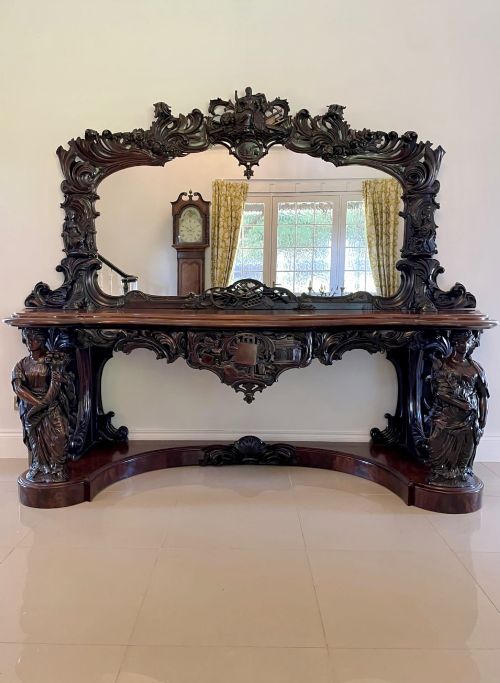
Makers working in the Victorian era also produced sideboards and console tables under related forms, but the credenza remains distinct through its enclosed glass display sections and brass ornamentation.
Materials and Construction
Cabinetmakers constructed these pieces using solid pine or oak carcases faced with expensive decorative veneers such as burr walnut and flame mahogany. Timber selection determined the visual richness of the front elevation, with book-matched grains creating symmetrical patterns across doors and panels.
Metal and ceramic elements completed the construction. Cast ormolu mounts frame the glazed doors and corners, while inlaid floral marquetry employs various contrasting woods to decorate the surfaces. Some examples incorporate porcelain plaques or Wedgwood cameos directly into the frieze.
Listings feature credenzas primarily from the nineteenth century, utilising burr walnut, mahogany, and oak.
Gradations of Quality
Quality shows in the precision of the cabinetmaker's joinery and the depth of figure in the chosen veneers. Superior pieces display continuous grain patterns across multiple doors and drawers, showing careful timber preparation before polishing.
The crispness of the cast brass ormolu mounts and the intricacy of the floral marquetry separate standard production from exhibition-grade work. Workshops known by stamps or documentation achieve a finer finish in their internal secondary woods and carving details.
Gillows
The Large Victorian Credenza Glossary
- Credenza
- A low nineteenth-century cabinet used for display and storage, typically featuring a glazed central section and curved side cupboards. This form became central to formal Victorian interior decoration.
- Ormolu
- Gilded bronze mounts applied to furniture edges and panels for decorative effect. These metal ornaments catch the light and highlight the cabinet contours.
- Marquetry
- Inlaid wood veneers cut into pictorial or geometric patterns using contrasting timbers. Craftsmen arrange these thin wood sections to form floral and scroll designs across the cabinet front.
- Burr Walnut
- A timber harvested from walnut tree growths that produces highly figured, swirling grain patterns. Cabinetmakers prize this veneer for its decorative impact on formal Victorian surfaces.
- Breakfront
- A furniture facade where the central section projects forward from the flanking cupboards. This architectural arrangement creates depth and shadow across the piece.
Large Victorian Credenza: Frequently Asked Questions
What is a large victorian credenza?
A low nineteenth-century display cabinet featuring glazed doors and decorative wood veneers.
These pieces served as formal storage and display surfaces in Victorian reception rooms.
How were they used?
Owners used them to display porcelain, silver, and decorative objects behind glass doors.
The top surface held lamps, statues, or floral arrangements during formal gatherings.
Where should I place one?
These cabinets suit large dining rooms, hallways, or spacious living areas.
Their low profile allows artwork or mirrors to hang easily on the wall directly above them.
How do I identify the wood?
Burr walnut displays tight, swirling grain patterns while mahogany shows a straight, reddish-brown figure.
Examining the door panels and side surfaces reveals whether the maker used solid timber or decorative veneers over a secondary wood.