
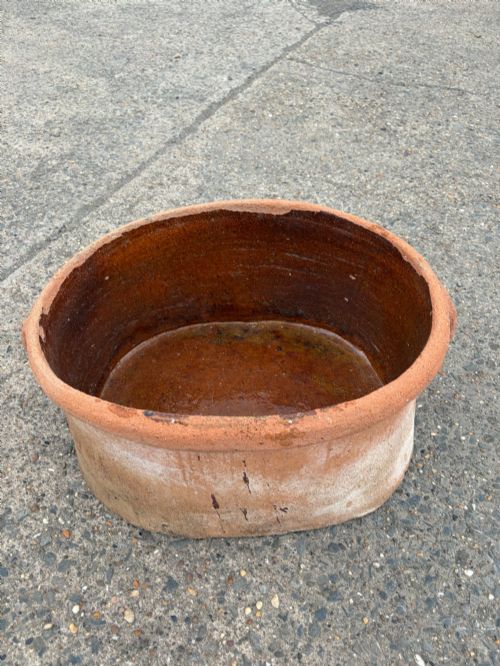
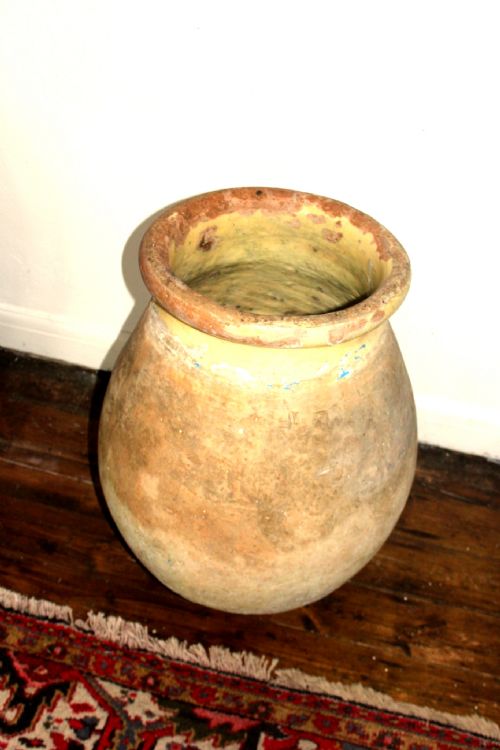

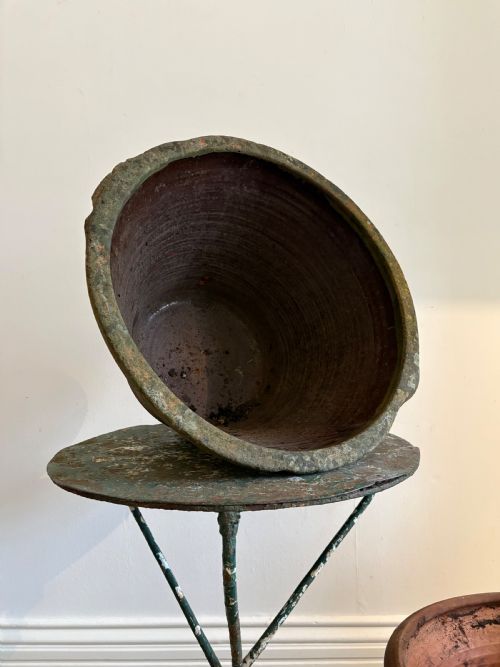


Large Terracotta Vessel
These large terracotta vessel examples bring earthy presence to gardens and interiors, shaped by centuries of utilitarian use.
Large Terracotta Vessel
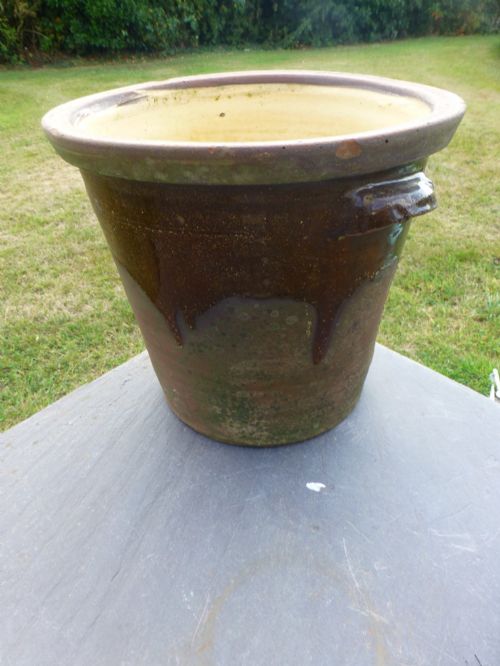
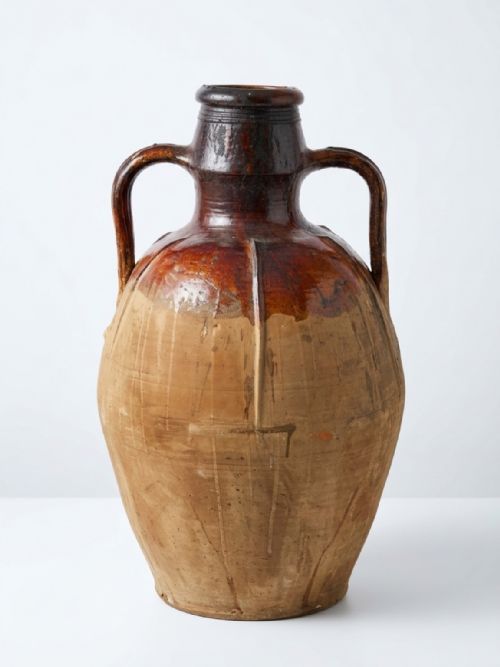
When you search for a large terracotta vessel, you encounter utilitarian containers designed for storage, agriculture, and estate use. The selections here span the seventeenth century through to the twentieth century, originating from English, French, Italian, Dutch, and Portuguese workshops. You meet garden urns, planters, dairy bowls, and tall storage jars intended for oil, wine, and water.
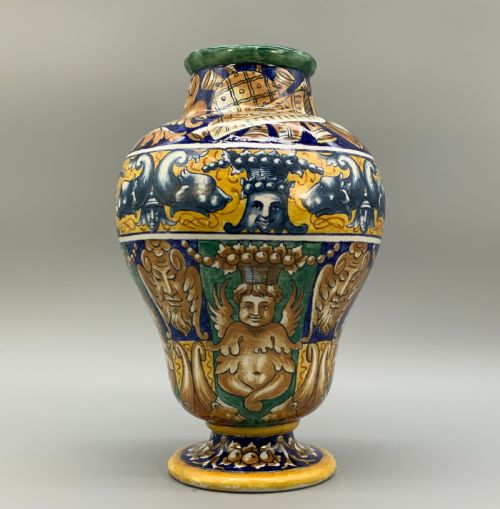
The most common forms on this page are oil jars, wine jars, and garden planters reflecting rustic Mediterranean, French country, and Victorian vernacular styles. Many retain functional attributes such as multiple handles, lead-glazed interiors, lime wash, or wrought iron mounts. Pieces range from simple earthenware crocks to revival majolica and slipware jugs.
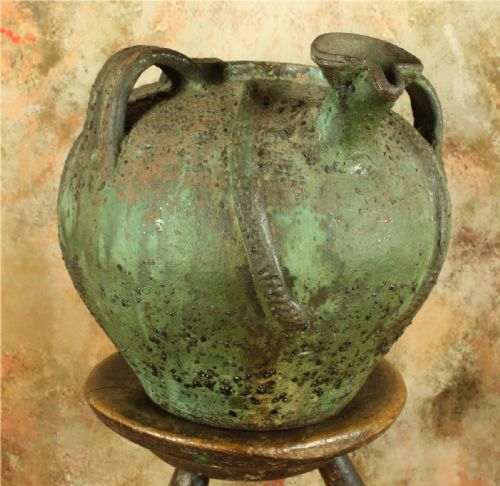
Regional variations shape these objects significantly, distinguishing heavy southern European olive jars from English dairy vessels and Dutch slipware. Some pieces show the marks of agricultural labour and age, while others carry decorative glazes or polychrome finishes. Their enduring appeal lies in their substantial scale and straightforward, functional origins.
What varies in quality
Quality in a large terracotta vessel rests upon the balance of its proportions, the integrity of its thrown form, and the honesty of its surface patina. Heavier, thicker walls and well-balanced handles indicate robust utilitarian construction designed for demanding agricultural tasks.
The character of the surface finish dictates visual success, whether through the weathered aged patina of a Provençal jar or the careful execution of polychrome maiolica painting. Pieces that retain original lead glazes, lime wash, or structural wrought iron mounts offer greater historical completeness.
Several seventeenth-century tavern jugs on this page have survived centuries of hard drinking without losing their rustic charm.
Royal Dux·Compton
The Large Terracotta Vessel Glossary
- Terracotta
- A porous, unglazed or glazed fired earthenware clay of a brownish-red or buff colour. It forms the primary material for most garden urns, storage jars, and agricultural vessels.
- Slipware
- Pottery decorated with a thin mixture of clay and water applied before firing. This technique appears on seventeenth-century tavern jugs and dairy vessels.
- Majolica
- Tin-glazed earthenware featuring opaque white glazes painted with polychrome designs. Pieces in this style often reflect Renaissance Revival aesthetics during the nineteenth century.
- Faience
- European tin-glazed earthenware similar to majolica, often produced in imitation of imported styles. It appears on decorative vases and urns from the period.
- Lead Glaze
- A glossy coating applied to earthenware to render the surface impermeable to liquids. It is frequently found on the interior surfaces of dairy bowls and salting crocks.
Large Terracotta Vessel: Frequently Asked Questions
How were large terracotta vessels used originally?
These large vessels served practical agricultural and domestic functions across European estates and farms. They stored olive oil, wine, grain, and water, or acted as dairy vessels for setting milk and salting provisions.
Over time, many migrated from working courtyards and dairies into Victorian or Edwardian gardens as planters, orangery tubs, and decorative architectural ornaments.
Can these antique vessels stay outside in winter?
Porous terracotta absorbs moisture, which can freeze and crack the earthenware during harsh winter frosts. Many owners protect older or more fragile garden pots by moving them into greenhouses, orangeries, or sheltered indoor spaces.
If left outdoors year-round, raising the vessel slightly off the ground on pot feet prevents water from pooling at the base and reduces frost damage.
How do I clean an antique terracotta pot?
Gentle brushing with water and a soft-bristled brush removes surface dirt without harming the historic patina or lime wash. Avoid harsh chemical cleaners or pressure washers, which strip away centuries of weathering and weaken the earthenware surface.
Allowing the vessel to dry naturally preserves the aged appearance that collectors and gardeners value.
What is the difference between an oil jar and an amphora?
Oil jars typically feature wide mouths, robust bodies, and multiple handles designed for steady pouring and storage of agricultural liquids. They often have stable flat bases suited for sitting on stone floors or stands.
True amphorae traditionally possess pointed or tapered bottoms intended for embedding in sand or earth for upright storage in ancient cellars.