



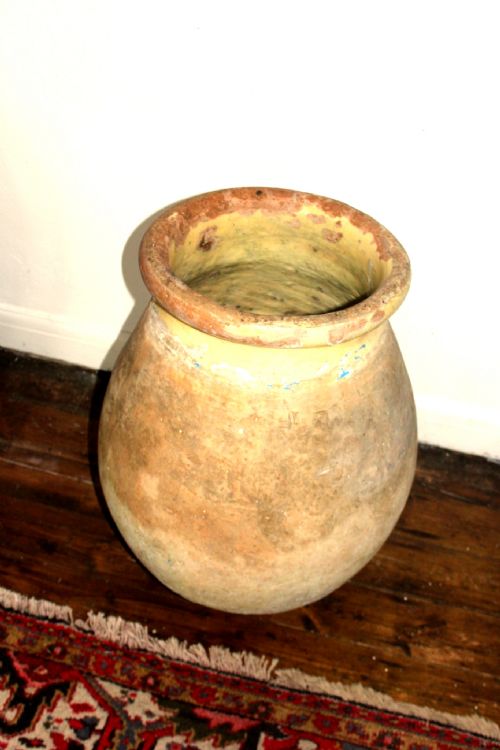

Large Terracotta Planter
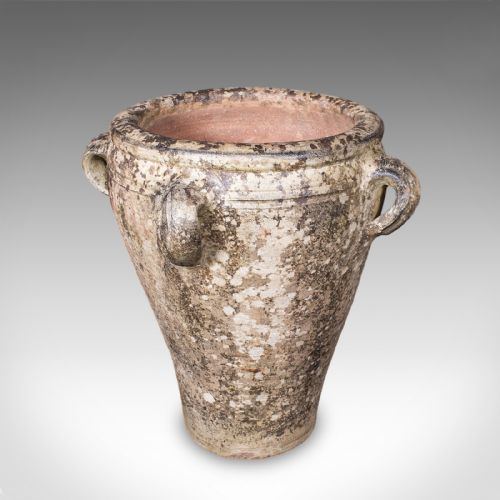
A large terracotta planter brings earthy weight and scale to a terrace, selected from sturdy nineteenth-century garden pots, oil jars and majolica jardinières.
Large Terracotta Planter
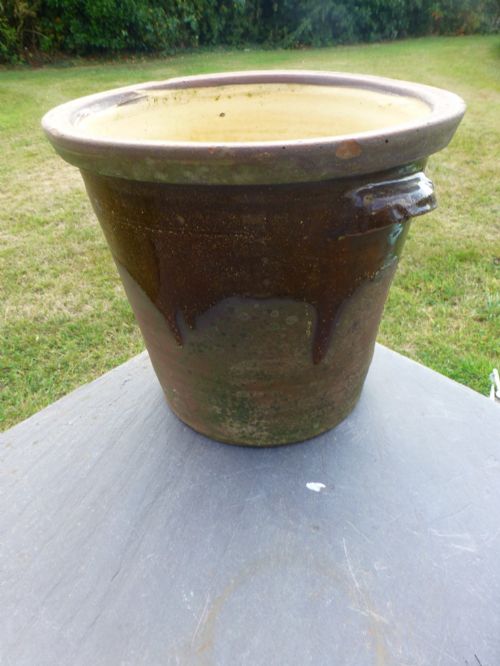
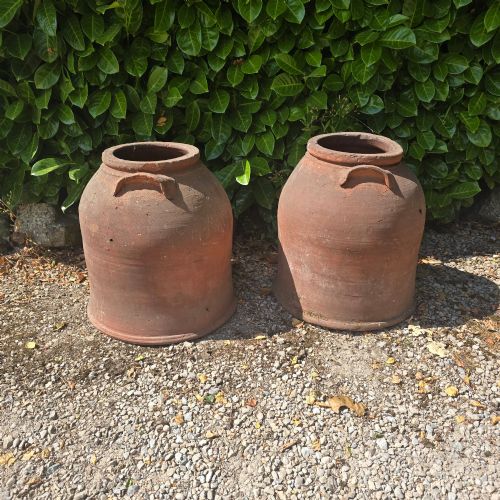
When searching for a large terracotta planter, a buyer encounters substantial vessels designed for gardens, orangeries and patios, ranging from utilitarian dairy crocks and rhubarb forcers to ornamental urns and olive jars. The pieces appearing here span the nineteenth and early twentieth centuries, drawing on Victorian, Arts and Crafts and rustic Mediterranean traditions.
The most common forms are French, Portuguese and Italian oil jars, alongside sturdy British garden pots and chimney pots repurposed for planting. These vessels often arrive as pairs or sets, featuring substantial clay bodies intended to weather the elements outdoors.
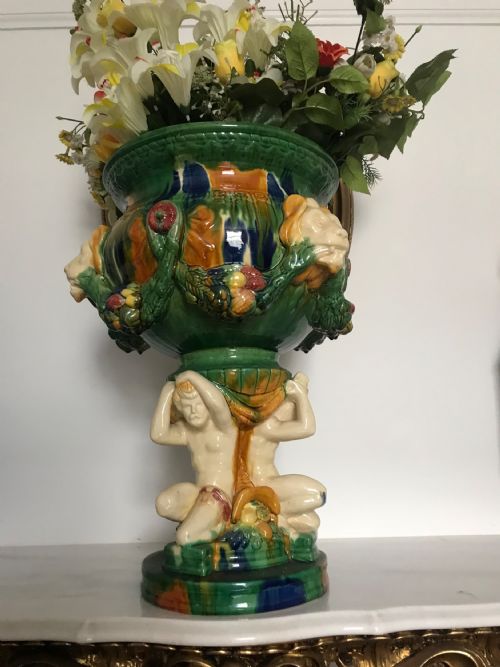
Makers and regional styles vary widely, from Scottish works like the Dunfermline Clay Company to Grand Tour Italian pedestals and majolica-glazed stands. Each form reflects the specific domestic, agricultural or estate use for which it was originally fired.
Materials and Making
Potters shaped these large vessels from dense terracotta, earthenware and buff clay, often throwing them in sections or utilising traditional moulds before firing them in kilns. The resulting porous bodies allow air and moisture to reach plant roots, a practical quality inherent to nineteenth-century and early twentieth-century clay working.
Surface finishes include natural aged patinas, applied paint, wrought iron mounts and rich majolica or standard glazes. Some examples incorporate figural base stands with lions head decoration or decorative scroll mouldings applied by hand.
Large Terracotta Planter Retail Price Guide 2026
Typical asking prices for large terracotta planter among the pieces listed under this phrase on Sellingantiques today, from the lower quarter to the upper quarter. They describe what is for sale here now, not the wider market.
Quality and Character
Quality rests in the crispness of moulded details, the proportional balance of handles and rims, and the depth of the natural weathering on the clay body. Superior pieces display harmonious proportions and robust walls without clumsy repairs.
Provenance and regional identity elevate certain examples, such as marked pieces by known makers like Lipscombe and Co or identifiable Compton Pottery styles. The integrity of the glaze on majolica pieces or the authentic age of a Provençal Biot jar determines the standing of an individual vessel.
Dunfermline Clay Company·Compton Pottery·Lipscombe and Co·Bavent
The Large Terracotta Planter Glossary
- Terracotta
- A porous, brownish-red fired earthenware clay used extensively for garden pots and oil jars. Its breathable nature makes it ideal for supporting healthy root systems.
- Majolica
- A type of earthenware decorated with opaque colourful tin glazes over a fired body. It provides a glossy, vibrant finish found on decorative nineteenth-century jardinières.
- Biot Jar
- A traditional large olive or storage jar originating from the French town of Biot. These vessels feature distinctive forms and aged patinas developed over centuries.
- Rhubarb Forcer
- A heavy ceramic bell-shaped pot placed over crowns in the garden to exclude light and blanch the shoots. Gardeners frequently repurpose these as striking planters.
- Jardiniere
- An ornamental indoor or patio plant receptacle, often footed or set on a stand. These range from rustic earthenware to ornate glazed majolica pieces.
Large Terracotta Planter: Frequently Asked Questions
Can these planters stay outside in winter?
Most nineteenth-century terracotta and earthenware pots withstand normal garden conditions, though severe frost can damage damp, porous clay.
Gardeners often raise pots on feet during winter months to prevent water freezing at the base.
How do I identify a French Biot jar?
Biot jars originate from Provence and typically display heavy, thick terracotta walls with characteristic surface weathering and historic repair marks.
They were originally utilised for storing olive oil or wine before becoming sought-after garden ornaments.
What is a majolica planter?
Majolica is earthenware covered in a lead glaze containing tin oxide, producing a smooth, colourful and reflective surface.
These planters frequently feature moulded relief decorations such as animal heads, foliage or figural stands.
Are these pots extremely heavy?
Large terracotta, clay and majolica vessels possess substantial weight, especially when filled with damp compost and established plants.
Planters should be positioned in their permanent garden or patio location before planting commences.