
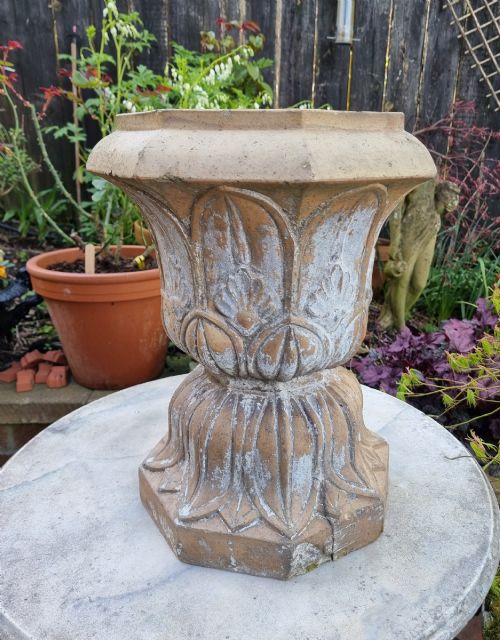


Victorian Terracotta Urn
These Victorian terracotta urns bring classical presence to gardens and orangeries, combining durable earthenware bodies with sculptural ornament.
Victorian Terracotta Urn
A Victorian terracotta urn is a garden or architectural vessel modelled in fired clay, often cast in classical or naturalistic forms for display on lawns, terraces, and plinths. When you search for this phrase, you meet pieces spanning the nineteenth century, including Campana shapes, lobed bodies, and baluster designs.
Most examples originate from British and continental kilns, functioning historically as ornamental garden planters, wine cisterns, or focal points for country house orangeries. Some survivors retain original pedestals or plinths, while others appear as single garden ornaments with patinated surfaces.
Making the urn
Potters utilised natural earthenware and terracotta clays, shaping them through moulding or throwing before firing the vessels at high temperatures to achieve durability outdoors. Certain pieces feature applied glazes, enamel decoration, or salt-glazed finishes to modify the porous clay body.
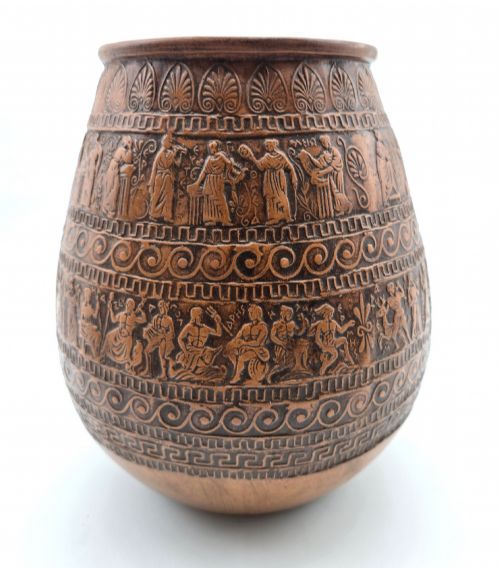
Detailing was achieved through hand-carved elements, applied handles with sculpted heads, or crisp mould work depicting classical motifs, faux bois textures, and relief ornamentation.
Several nineteenth-century handles surprise observers with carved human heads peering out from the clay.
Judging quality
Quality rests in the crispness of the modelling and the depth of relief cast into the terracotta, where sharper details indicate superior original moulds. The natural patination accumulated through weathering also contributes to visual character, distinguishing well-fired earthenware from softer or later replacements.
Dunfermline Clay Company·Burmantoft's Pottery·Bernhard Bloch·Royal Crown Derby·Lipscombe and Co·Garnkirk
The Victorian Terracotta Urn Glossary
- Terracotta
- A porous, unglazed or glazed red earthenware clay fired at moderate temperatures. It is commonly used for garden ornaments and architectural vessels.
- Salt-Glazed Stoneware
- Pottery finished by throwing common salt into the kiln during high-temperature firing, producing a characteristic textured glaze resembling orange peel.
- Plinth
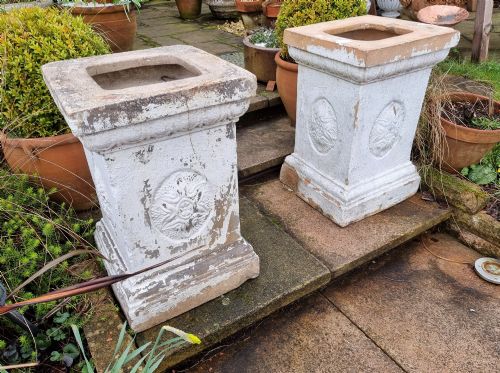
- A heavy rectangular or square block supporting an urn, pedestal, or statue. It elevates garden vessels above ground level for improved display.
Victorian Terracotta Urn: Frequently Asked Questions
How do I care for a Victorian terracotta urn?
Keep the urn clear of standing water during freezing weather to prevent the porous earthenware from cracking as ice expands.
Position the vessel on feet or a stone plinth to allow proper drainage through the base.
Were these urns meant for outdoor use?
Nineteenth-century terracotta urns were designed specifically for gardens, terraces, and orangeries to withstand varying weather conditions.
Over decades outdoors, the clay develops a natural weathering patina that highlights the moulded details.
Do urns usually come with pedestals?
Some pieces include matching terracotta or stoneware pedestals and plinths, while many survivors are offered as standalone garden vessels.
Matched pairs with original bases remain less common than single garden urns.
How do I identify the period of an urn?
Examine the weight, clay consistency, and style of ornament, comparing Campana shapes, neoclassical details, or salt-glazed finishes against nineteenth-century manufacturing norms.
Maker stamps or impressed factory marks on the base provide definitive attribution.