


Glazed Terracotta Urn
These glazed terracotta urn vessels and planters bring functional warmth to gardens and interiors alike.
Glazed Terracotta Urn
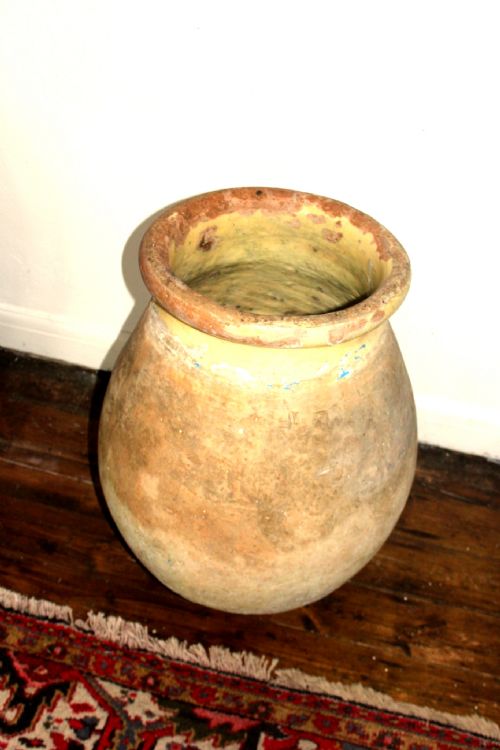
A glazed terracotta urn is a vessel formed from fired earth and sealed with a vitreous coating, appearing in forms such as garden urns, confit pots, and majolica vases. You will frequently encounter French and Italian examples originating from the eighteenth and nineteenth centuries.
Confit pots, olive jars, and amphorae sit alongside grander garden urns and figural planters. These utilitarian and decorative objects serve as planters, wine cisterns, and interior focal points.
How they were made
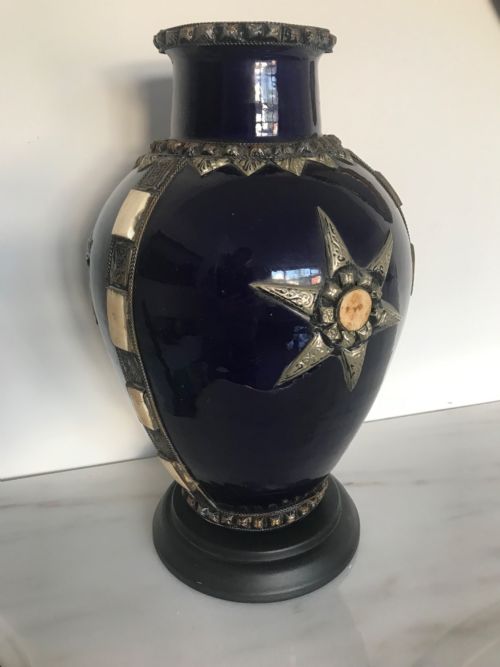
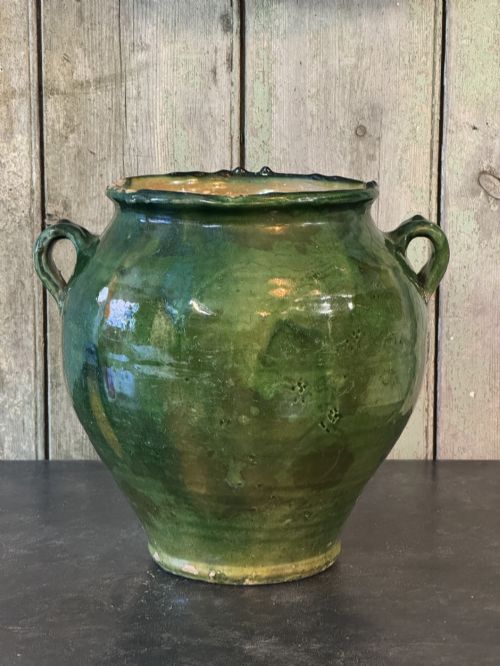
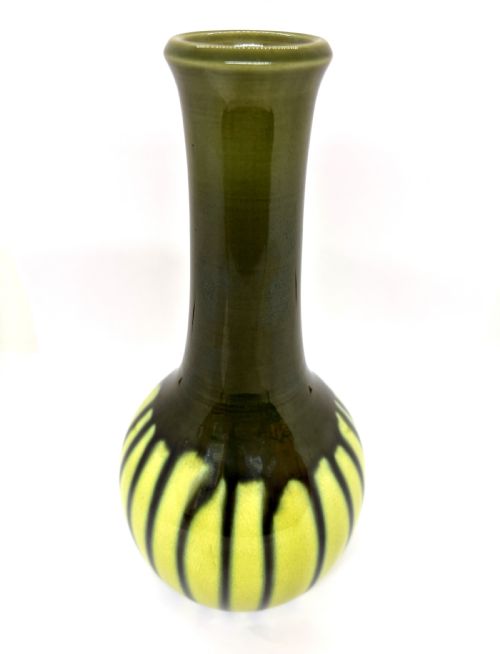
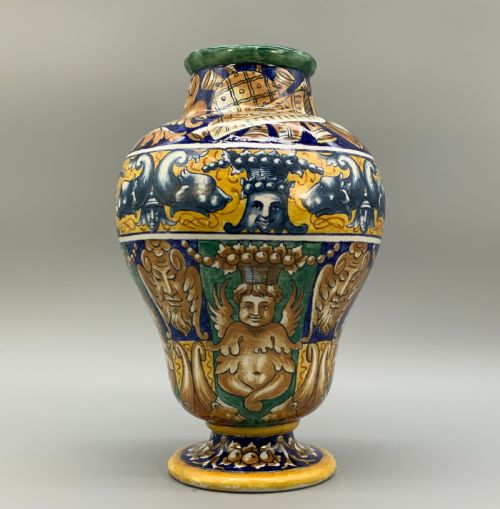
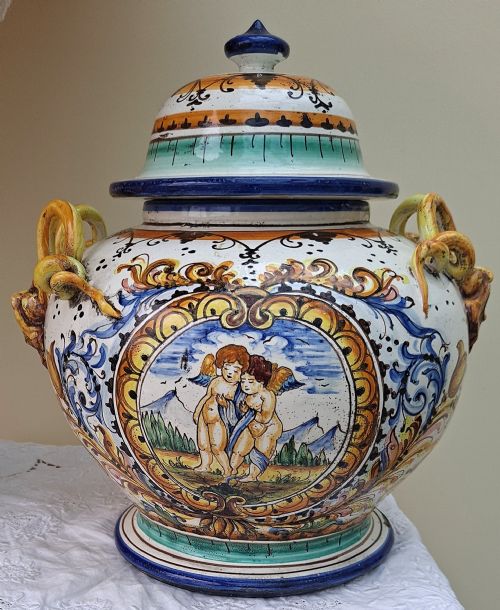
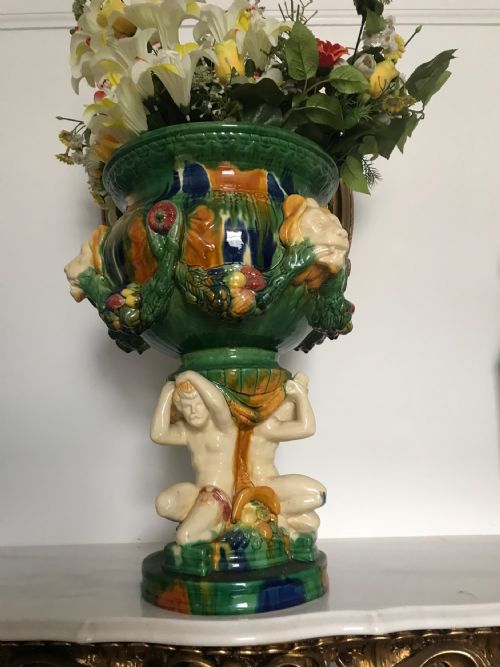
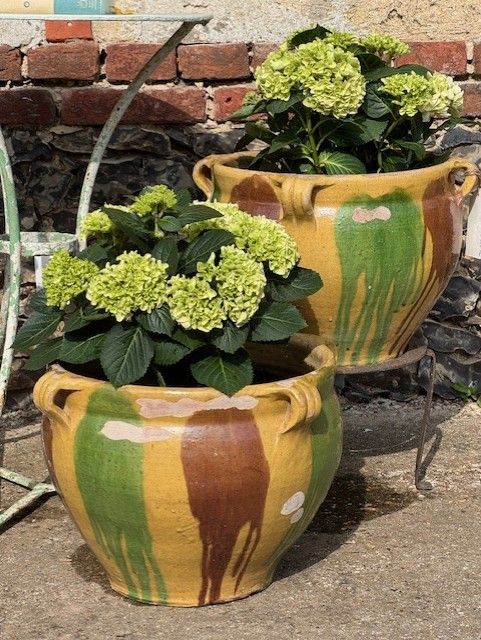
Potters shaped terracotta and earthenware by hand or on wheel, applying lead, tin, or salt glazes to seal the porous clay body. Many pieces receive rich monochrome coats of green, cobalt blue, or polychrome majolica painting.
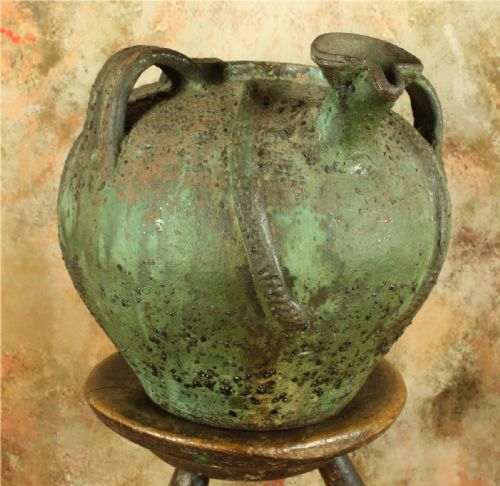
Firing in traditional kilns produces natural variations in the glaze, from smooth drip effects to aged patinas on French provincial jars and Italian revival vases.
Some French confit pots feature three handles because lifting heavy preserved duck fat out of deep jars required extra grip from the kitchen staff.
What varies in quality
Quality rests in the harmony of the thrown form, the depth and coverage of the glaze, and the crispness of applied details such as silver mounts or lion head decorations. Finer pots show deliberate craftsmanship in their handles and structural proportions.
Provenance and maker attribution elevate certain works, while the character of the aged glaze and the integrity of the terracotta body determine the overall presence of the piece.
Burmantoft's Pottery·Cantagalli Faience·Lipscombe & Co
The Glazed Terracotta Urn Glossary
- Terracotta
- A porous fired clay body ranging in colour from pale buff to deep red. This earthen material forms the structural foundation for garden urns and jars.
- Majolica
- Tin-glazed earthenware decorated with opaque colourful pigments. Italian workshops made this technique famous through vibrant polychrome vases and planters.
- Confit pot
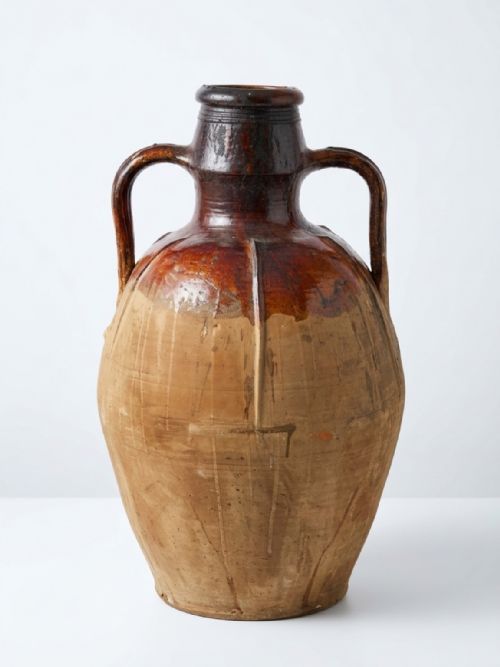
- A traditional French earthenware jar featuring glazed upper sections and unglazed lower bodies. These vessels originally stored preserved meats and confits.
- Salt glaze
- A glassy, slightly textured finish achieved by throwing common salt into the kiln during high-temperature firing. This creates an impermeable surface on nineteenth-century garden vessels.
- Amphora
- A two-handled ancient vessel form adapted in later centuries for decorative garden and interior use.
Glazed Terracotta Urn: Frequently Asked Questions
How were confit pots used?
French country households utilised confit pots for storing duck confit, lard, and other preserved foods in larders and cellars. The partial glaze prevented the porous lower clay from absorbing grease.
Today, these jars function primarily as decorative interior accents and planters.
Can these urns stay outside in winter?
Many nineteenth-century garden urns and salt-glazed planters were built for outdoor use, though porous terracotta remains vulnerable to freezing moisture. Severe frost can cause unsealed earthenware to crack.
Protecting delicate majolica and historic pots indoors during harsh winter months preserves the glaze and clay body.
How do I identify a nineteenth-century piece?
Nineteenth-century examples display characteristic hand-thrown irregularities, historical glaze formulations like lead or tin coatings, and genuine aged patinas. Stylistic revivals such as Renaissance Revival and Victorian Chinoiserie provide strong period indicators.
Maker marks and traditional regional manufacturing methods further help verify the age of these jars and urns.