
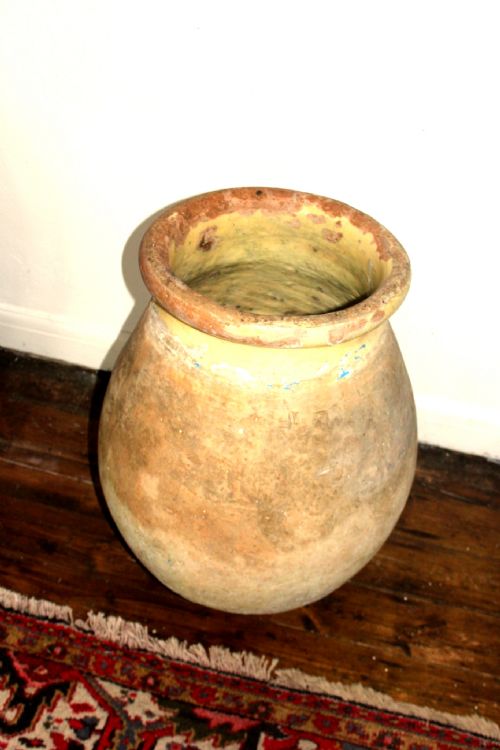


Large Terracotta Jar
A large terracotta jar brings substantial presence and earthy warmth to a garden or room, carrying the practical heritage of Mediterranean and European agriculture.
Large Terracotta Jar
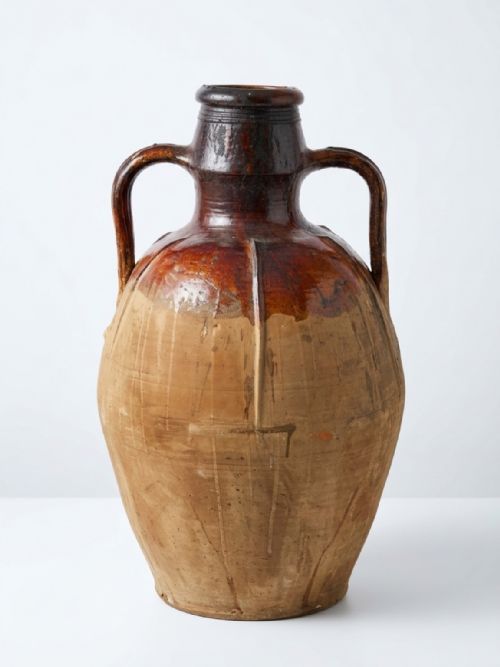
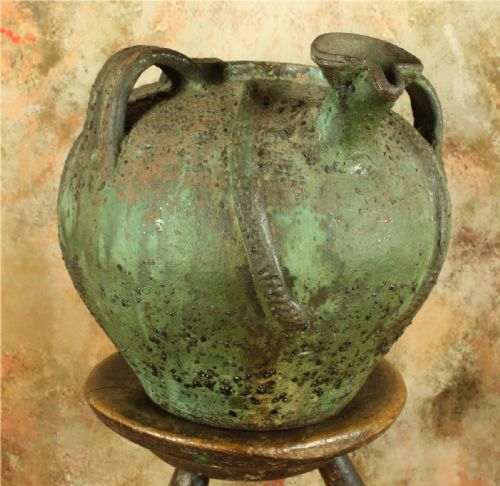
When searching for a large terracotta jar, collectors encounter robust utility vessels designed for storing oil, wine, and water across the Mediterranean and European countryside. These pieces range from eighteenth-century French walnut and olive pots to nineteenth-century Italian wine vessels and Portuguese storage jars.
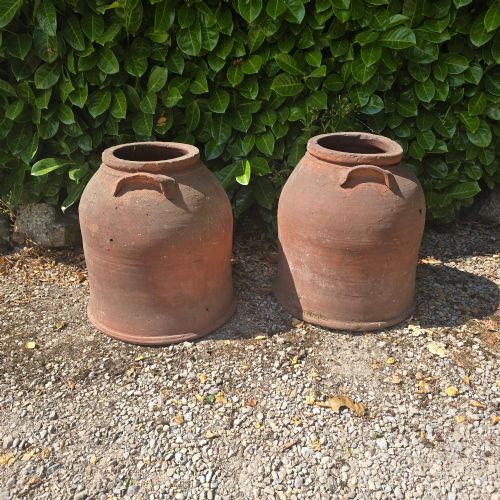
The domestic and estate forms seen here include provincial garden planters, rhubarb forcers, and twin- or triple-handled olive jars. French Biot jars and Turkish amphorae demonstrate the heavy, utilitarian roots of these heavy earthenware containers.
Most examples originate from the nineteenth century, though eighteenth-century French and Portuguese editions appear alongside later Victorian country house and rustic Mediterranean designs. Buyers often place these imposing vessels directly onto patios, within orangeries, or as standalone floor vases.
How they were made
Potters shaped these heavy vessels from local clay and terracotta, utilising traditional throwing and coiling techniques suited to large-scale utilitarian production. Many surfaces retain the marks of their initial construction, including throwing ridges and tool scars from the workshop floor.
Finish treatments varied according to regional use, with some jars left porous and unglazed, while others received lime washes, exterior paint layers, or localized glazes. Earthenware bodies were fired in large kilns, resulting in varied iron-rich hues that range from pale buff to deep reddish-brown.
Many an antique olive jar spent its youth quietly fermenting fruit or grease before retiring to a sunny orangery to look picturesque.
What varies in quality
Structural integrity combined with authentic signs of agricultural labour defines the upper tier of these vessels. Jars that show balanced patination from decades of exposure to outdoor elements without destabilizing deep fractures offer the ideal combination of decorative impact and historical integrity.
The Large Terracotta Jar Glossary
- Terracotta
- A porous, brownish-red earthenware clay that is fired at relatively low temperatures. This material forms the primary body for the majority of Mediterranean storage and agricultural vessels.
- Amphora
- A two-handled ancient storage vessel with a narrow neck and a tapering base designed for holding liquids. Later nineteenth-century interpretations adapted this classic silhouette for garden ornament.
- Biot Jar
- A traditional large terracotta storage vessel originating from the Provençal town of Biot in France. These jars are famous for their heavy construction and historical use in olive oil production.
- Patina
- The surface appearance altered by age, weathering, and handling over decades or centuries. In terracotta, this manifests as chalky lime residues, moss stains, and softened clay edges.
- Rhubarb Forcer
- A specialised heavy earthenware cover placed over growing rhubarb plants to exclude light and encourage tender stems. These tall, domed pots often feature removable lids.
Large Terracotta Jar: Frequently Asked Questions
Can I leave terracotta jars outside in winter?
Most traditional terracotta and earthenware vessels are porous and absorb moisture, which can freeze and expand in sub-zero temperatures. To protect them from cracking, it is wise to raise them off the ground on pot feet and shelter them during hard frosts.
Alternatively, lining the interior or emptying soil from the pots prevents trapped dampness from damaging the historic clay body during the coldest winter months.
How do I clean an old oil jar?
Cleaning an antique terracotta jar requires a gentle approach to preserve the accumulated patina, lime wash, or surface paint. Use a soft brush and plain water to remove loose garden dirt, avoiding harsh chemical detergents that might strip the historic surface.
Allow the vessel to dry naturally outdoors so that trapped moisture evaporates evenly without damaging the porous earthenware walls.
Were these jars used for wine or oil?
Large earthenware containers served multiple agricultural functions across the Mediterranean and Europe, acting as primary storage vessels for olive oil, wine, grain, and water. The presence of multiple handles or wide mouths often relates directly to whether the vessel was meant for pouring liquids or scooping dry stores.
French walnut and olive pots, for instance, were specifically dimensioned for pressing and storing agricultural yields on provincial estates.
How can I tell the age of a terracotta jar?
Dating relies on examining the forming technique, clay body characteristics, and regional stylistic markers such as handle placement and rim profiles. Eighteenth- and nineteenth-century pots typically show distinct hand-thrown ridges, tool marks, and consistent mineral wear compared to modern reproductions.
Surface evidence like historic lime washes, encaustic paint layers, and deep weathering provide reliable clues to a jar's age and Provençal or Italian origin.