


French Oil Jar
A French oil jar is a heavy earthenware vessel once used for storing olive or walnut oil, brought indoors or into gardens for its rustic silhouette and weathered surface.
French Oil Jar
When you search for a french oil jar, you are looking at utilitarian storage vessels made to hold walnut or olive oil in French provinces. These containers were shaped for bulk agricultural storage rather than display, which gives them their sturdy proportions and utilitarian handles.
The versions you are most likely to meet on this page date from the eighteenth century to the early twentieth century. They arrive from regions such as Provence and Auvergne, shaped from local clays and finished with glazes, lime wash, or paint.
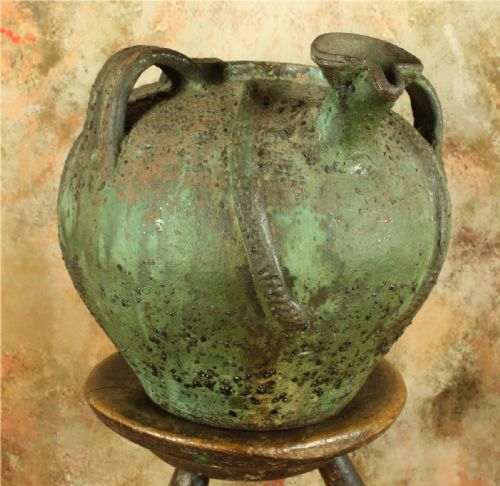
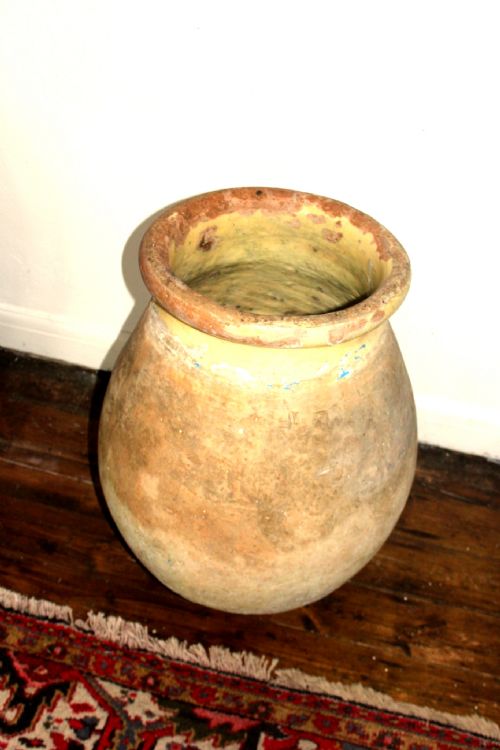
Forms vary from amphora vessels and three-handled olive jugs to large storage jars designed to sit on stands or directly on the earth. Many show the wear of centuries spent outdoors in Mediterranean and French country settings.
How they were made
Potters built these vessels using terracotta and earthenware, shaping local clay into thick walls capable of withstanding heavy loads of oil. Many examples feature applied wrought iron details or handles to assist with lifting.
Surfaces received various treatments depending on the intended use, ranging from tin glaze and painted finishes to weathered lime wash. Over decades, exposure to oil and weather created the aged patina seen on eighteenth and nineteenth-century pieces.
Listings feature terracotta, earthenware, wrought iron, and tin glaze across pieces dating from the eighteenth century to the early twentieth century.
What varies in quality
Quality rests in the character of the surface and the integrity of the form, where an undisturbed weathered glaze or historic paint layer elevates a piece. Pieces with multiple handles or regional markings from places like Provence hold greater visual weight.
The balance between the heavy terracotta body and any applied glaze determines the aesthetic success of the vessel. Simpler nineteenth-century earthenware jars rely entirely on their natural proportions and honest signs of past use.
The French Oil Jar Glossary
- Terracotta
- Fired unglazed clay of a brownish-red colour. It forms the porous body of most traditional Mediterranean storage vessels.
- Tin glaze
- An opaque white or coloured lead glaze containing tin oxide. It provides a smooth surface for polychrome decoration on earthenware jugs.
- Amphora
- A tall ancient storage vessel with two handles and a narrow neck. Later French garden jars often borrow this classic two-handled silhouette.
- Patina
- The surface sheen and weathering acquired by a material over long use and exposure. In these jars, it shows as soft chalky lime wash or worn paint over earthenware.
French Oil Jar: Frequently Asked Questions
What were french oil jars used for?
These large vessels served as agricultural storage containers for olive oil or walnut oil in French country properties. Their thick earthenware walls kept contents cool and secure.
Over time, many migrated from production cellars into gardens and courtyards as decorative planters and architectural accents.
How old are these oil jars?
The pieces available range primarily from the eighteenth century through to the early twentieth century. Eighteenth-century examples often feature three handles and rich weathered surfaces.
Later nineteenth and early twentieth-century versions display painted finishes, tin glazes, or simpler terracotta bodies.
Can I put them outside?
Most of these vessels were designed for heavy domestic and agricultural use, making them robust additions to garden settings. Terracotta and earthenware can absorb moisture, however, so freezing winter conditions require care.
Many owners bring older glazed or painted pots indoors during harsh weather to protect their historic surfaces.
How do I identify a regional piece?
Regional identification relies on clay colour, glaze type, and specific forms associated with areas like Provence or Auvergne. Local potteries utilised available minerals, resulting in distinct tin-glazed polychrome finishes or characteristic walnut oil jar shapes.
Documentation or archive examples often link specific glaze patinas to these southern French departments.