
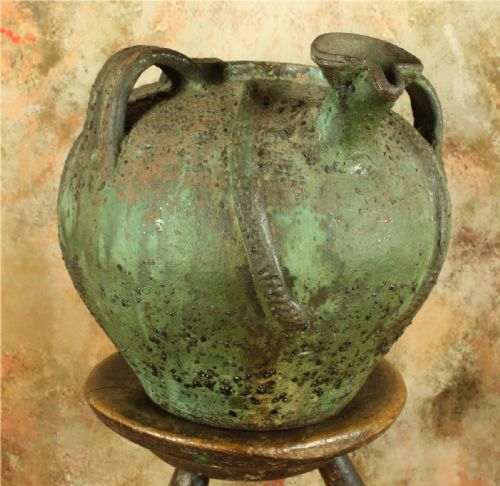
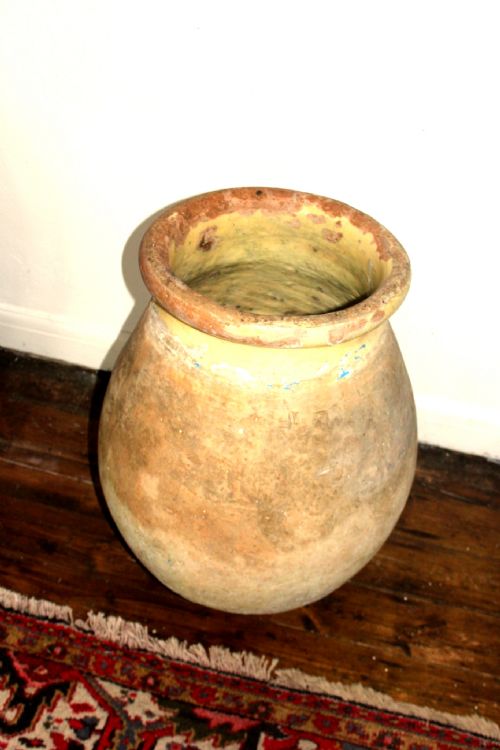


Antique French Oil Urn
An antique french oil urn brings rustic warmth to a room, taking the form of terracotta jars, earthenware pots and metal lamps.
Antique French Oil Urn
When you search for an antique french oil urn, you are looking at utilitarian storage vessels and domestic lighting from past centuries. These pieces encompass large earthenware and terracotta olive jars alongside brass and porcelain table lamps.
The version you are most likely to meet on this page is a terracotta storage jar or olive pot originating from provincial France. Such pieces range in date from the eighteenth century through to the early twentieth century.
Beyond earthenware vessels, the selection includes fitted lighting fixtures that repurpose classical forms or utilise glazed ceramics with metal mounts. These domestic items reflect both rural storage traditions and interior illumination needs.
Materials and construction
The earthen vessels rely on terracotta and coarse earthenware shaped into amphora and jar forms, often featuring applied handles and aged patinas. Glazed finishes and painted surfaces appear across many pots, protecting the porous clay.
Metal components utilise wrought iron, brass, gilt brass and ormolu, particularly in the construction of lamps and stands. These metals are shaped and joined to support heavy ceramic bodies or to serve as decorative mounts.
Materials across these listings span terracotta, earthenware, wrought iron, brass, gilt brass, and porcelain.
Assessing quality in these pieces
Quality rests in the harmony of proportion, the depth of the surface patina and the integrity of the material. Earthenware vessels show superior character when the weathering of the terracotta feels organic and honest.
For mounted items and lamps, the refinement of the brass work and porcelain detailing distinguishes the piece. Better examples display careful assembly and robust construction that withstands decades of handling.
The Antique French Oil Urn Glossary
- Terracotta
- A porous, brownish-red fired clay used extensively for large garden and storage vessels.
- Earthenware
- Pottery fired at lower temperatures, remaining porous unless glazed.
- Amphora
- A tall ancient vessel form with two handles and a narrow neck, utilised for storage.
- Ormolu
- Finely chased and gilt bronze applied as decorative mounts on lamps and furnishings.
- Patina
- The surface appearance developed through age, wear and exposure to the elements.
Antique French Oil Urn: Frequently Asked Questions
What were antique french oil urns used for originally?
These vessels were primarily utilitarian items designed for storing and transporting agricultural goods like olive oil and walnuts in rural households. Their heavy earthenware walls kept contents cool and secure.
Over time, many of these sturdy jars transitioned from utilitarian farm equipment to decorative garden and interior pieces. Smaller vessels and metal examples served distinct domestic functions, including interior lighting.
How do I care for terracotta oil jars indoors?
Terracotta is a porous material that benefits from gentle cleaning with a dry or slightly damp cloth without harsh chemical detergents. Keeping the surface free of dust preserves the natural patina.
If placed on wooden furniture, ensure a protective pad sits beneath the base to prevent moisture transfer from the unglazed clay. Heavy vessels should be positioned securely to avoid accidental tipping.
How can I tell the period of an earthenware pot?
Dating relies heavily on observing the forming marks, the consistency of the clay and the nature of any surface wear or glaze. Eighteenth-century and early nineteenth-century pots often display hand-thrown irregularities and deep patination.
Later pieces from the twentieth century can exhibit more uniform manufacturing traits and specific styles of painted decoration. Comparing handles and rim shapes helps contextualise the origin.
Can these jars be used outdoors in the garden?
Many terracotta and earthenware olive jars suit garden placement, provided local winters do not involve severe frost expansion. Freezing water trapped in porous clay can cause cracking.
For colder climates, bringing pots indoors or storing them under cover during freezing months ensures the material remains intact. Checking the drainage suitability of individual vessels is advisable before planting.