





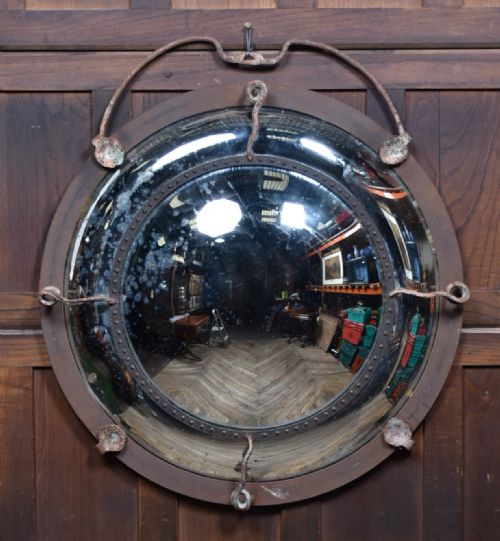


Large Round Mirror
A large round mirror anchors a room with its circular glass and substantial presence, drawing the eye instantly across a hallway or mantelpiece.
Large Round Mirror
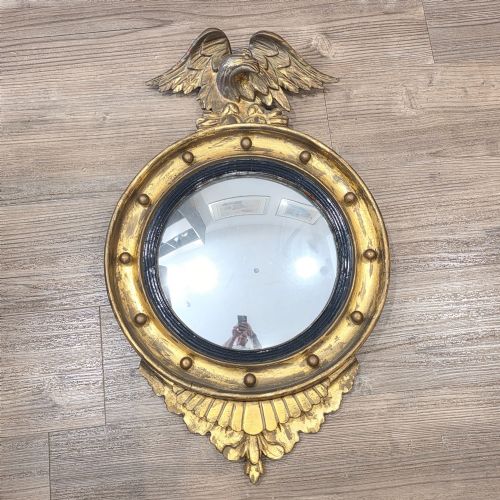
A large round mirror serves as a dominant wall piece, encountered most frequently in nineteenth-century convex forms, Regency circular designs, and French Louis Philippe styles. These pieces vary from simple gilded frames to grand convex glasses surmounted by carved eagles or fitted with ebonised slips.
The materials recorded across these forms include giltwood, gesso, silver leaf, wrought iron, mahogany, and plain wood. Buyers select these circular wall mirrors to create a focal point in domestic spaces, utilising the curved glass to reflect light across a room.
How they were made
Makers shaped these large round mirror frames from carved wood, plaster, and gesso before applying layers of gold or silver leaf. Giltwood and ebonised wood frames required skilled joinery to support the heavy curved or flat glass plates securely.
Convex mirrors utilised specialised curved glass blanks to distort reflections into a wide-angle view of the interior. Overmantel and wall mirrors incorporated sturdy timber backboards and structural ironwork to bear the substantial weight of the piece.
Materials recorded on this page include giltwood, gesso, silver leaf, ebonised wood, wrought iron, plaster, and plain wood.
What varies in quality
The fineness of the carved decoration separates standard mirrors from exceptional ones, particularly in Regency convex frames with spread eagles or detailed girandole candle branches. Crisp detail in the gesso and wood carving indicates superior craftsmanship.
The integrity of the original gilding and the depth of the glass plate determine the overall standard of the piece. Authentic period surfaces with undisturbed silvering command greater regard than heavily restored or later regilded examples.
The Large Round Mirror Glossary
- Convex mirror
- A circular glass formed with an outward curve that projects a wide-angle reflection of the room. These pieces often feature gilded frames with ball details.
- Giltwood
- Timber coated with a thin layer of gold leaf over a prepared gesso base. This finish provides the characteristic metallic brilliance seen on period frames.
- Gesso
- A plaster mixture applied to wood frames to create a smooth surface for carving and gilding. It allows intricate decorative motifs to be moulded onto the timber.
- Louis Philippe
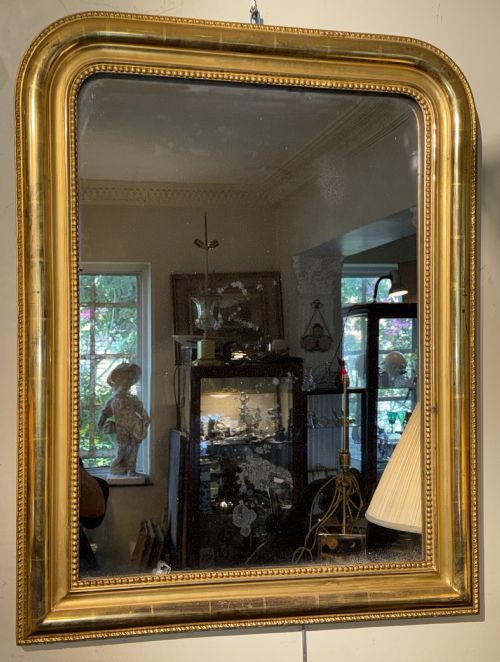
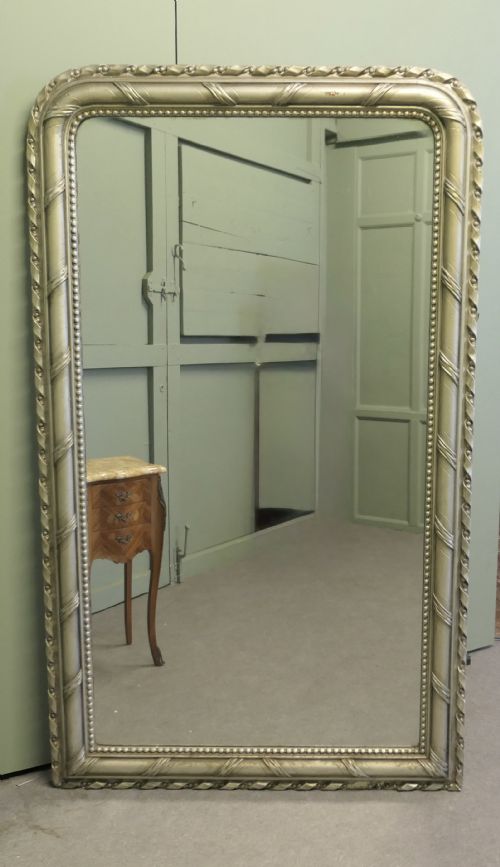
- A French nineteenth-century style characterised by restrained classical proportions and softened upper corners. These frames often utilise gilt or silver leaf finishes.
- Ebonised wood
- Timber treated to imitate the dark, dense appearance of ebony. This dark finish frequently appears as a slip inside gilded convex frames.
Large Round Mirror: Frequently Asked Questions
What is a convex mirror used for?
Convex mirrors historically served as functional objects to monitor activity across large rooms or butler's pantries without turning around. The curved glass gathers light from all angles to illuminate darker interiors.
Today, buyers place them in hallways and living spaces purely for their decorative impact and expansive visual effect.
How do I clean an antique mirror?
Dust the frame gently with a soft, dry brush to protect delicate gesso and gold leaf surfaces. Avoid liquid cleaners near the edges of the glass where moisture can seep behind the silvering.
Use a lightly dampened cloth on the glass itself, taking care not to let cleaning solutions touch the wooden or gilded borders.
How do I date an antique mirror?
Examine the construction of the timber backboard, fixings, and the characteristics of the glass plate. Nineteenth-century pieces often display hand-beveled edges, specific wood types like mahogany, and period framing styles such as Regency convex or Louis Philippe.
Compare the gesso work and gilding methods against known period examples to confirm the date of manufacture.