


Large Oriental Ginger Jar
A large oriental ginger jar brings heavy porcelain, rich cobalt pigment, and intricate enamels straight into a room from nineteenth-century workshops.
Large Oriental Ginger Jar
A large oriental ginger jar is a substantial vessel of porcelain or earthenware, typically created for storage before finding a second life as a decorative centrepiece. When you search for this phrase, you encounter heavy lidded vases, table lamps, and temple jars originating from Chinese and Japanese kilns.
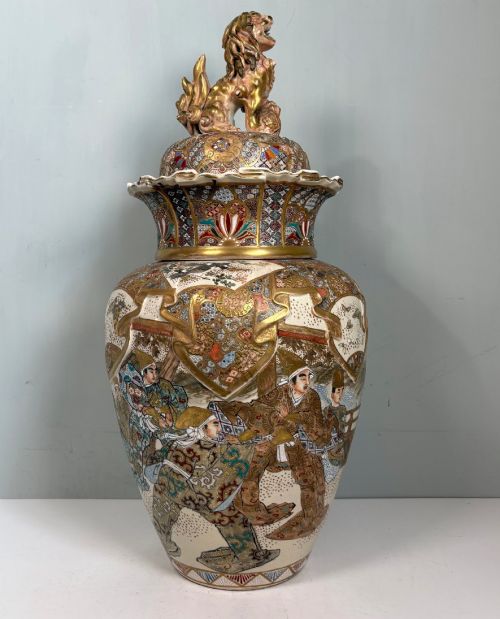
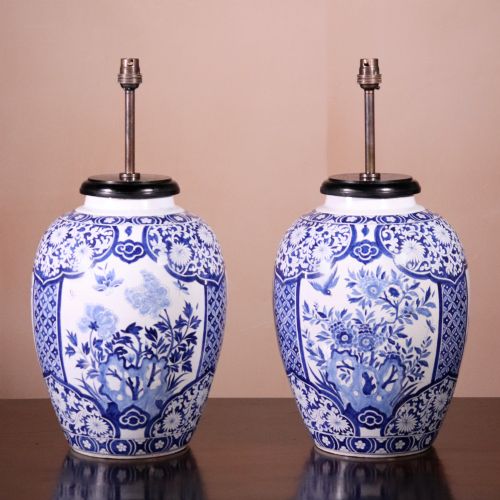
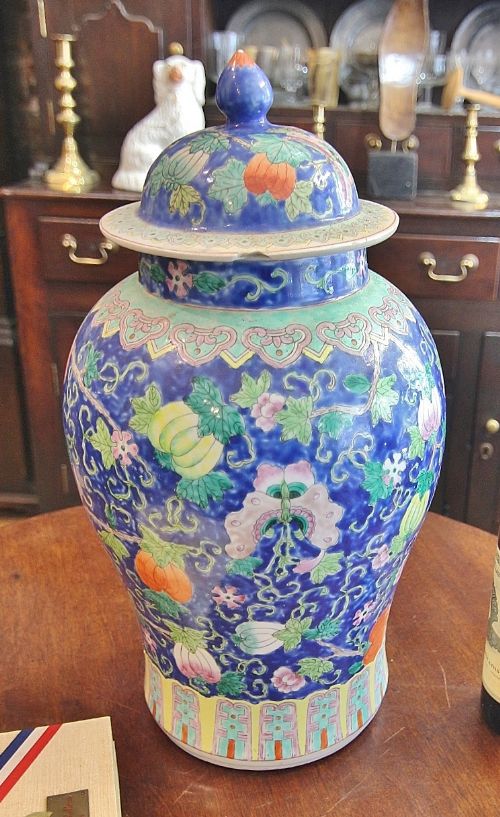
The pieces appearing on this page span the nineteenth century and the early twentieth century, taking forms such as Satsuma, Kutani, and Imari wares. They often arrive with matching covers or as balanced pairs, displaying traditional Asian designs adapted for both domestic display and export markets.
How they were made
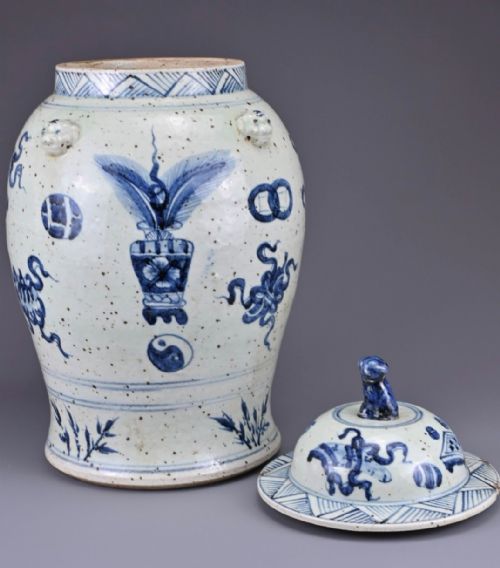
Potters shaped these vessels in porcelain and earthenware before applying cobalt pigment beneath the glaze or painting them by hand with rich enamels and gold leaf. Kiln workers then fired the pieces at high temperatures to vitrify the clay and fuse the colourful surface decoration.
Many items incorporate gilt accents and intricate brass fittings, particularly those converted into lamps or finished during the Meiji period and Qing dynasty. The physical weight of the porcelain and the depth of the glaze reflect the traditional throwing and firing techniques of the era.
Listings feature porcelain, earthenware, enamel, glaze, and gold leaf across nineteenth-century and early twentieth-century periods.
What varies in quality
The standard of a large oriental ginger jar rests on the precision of the hand-painted brushwork and the clarity of the underlying glaze. Pieces featuring meticulous enamel detailing and refined gilding sit apart from simpler commercial wares.
The presence of an original matching cover and the crispness of the porcelain body significantly influence the overall character of the piece. Masterful potting and balanced proportions separate ordinary export items from exceptional decorative objects.
The Large Oriental Ginger Jar Glossary
- Imari palette
- A distinctive Japanese decorative style utilising underglaze blue, iron red, and gold on a white porcelain background. This vibrant combination became immensely popular across European export markets.
- Satsuma
- A type of earthenware originating from Japan, characterised by an ivory crackle-glaze and dense polychrome enamel painting overlaid with gold. These pieces often depict traditional figures, landscapes, and floral motifs.
- Kutani
- Japanese porcelain or pottery known for bold pictorial designs, frequently dominated by rich greens, reds, and gold leaf. The workshops produced striking decorative chargers and vases.
- Cobalt pigment
- A mineral oxide used under the glaze to produce deep blue designs on porcelain before firing. It remains stable at extreme kiln temperatures.
- Qing Dynasty
- The final imperial dynasty of China, spanning from the seventeenth to the early twentieth century, noted for exceptional ceramic production and revival of classic forms.
Large Oriental Ginger Jar: Frequently Asked Questions
What is a ginger jar used for?
Originally manufactured in large quantities to transport spices, salt, and ginger across trading routes, these heavy vessels quickly transitioned into decorative ornaments for domestic interiors. Their generous proportions made them practical containers before collectors began displaying them purely for their artistic merit.
Today, they serve as striking floor vases, mantelpiece focal points, or repurposed table lamps that anchor a traditional or eclectic room scheme.
How do I date a ginger jar?
Dating relies on examining the characteristics of the porcelain body, the specific formulation of the glaze, and the painting style associated with periods like the Meiji era or Qing dynasty. Pigment saturation and foot-rim construction offer further clues to the decade of manufacture.
Handling multiple pieces helps train the eye to recognise the subtle shifts in potting weight and decorative motifs that distinguish nineteenth-century works from later copies.
Are ginger jars always sold with lids?
While many jars were made with matching covers to protect their contents during storage and transport, lids frequently became separated or lost over long periods of domestic use. Finding a piece with its original, undamaged cover remains a notable bonus for collectors.
Several examples on this page retain their matching lidded tops, while others have been adapted over time into lamp bases.
How do I style a ginger jar at home?
These substantial vessels work best when placed on sturdy pieces of furniture such as sideboards, console tables, or large cabinets where their weight and height can command attention. Pairing them as matching sets creates symmetry in a formal room.
Keep surrounding objects minimal to let the intricate cobalt blue or enamel colours stand out without visual clutter.