



Large Oriental Floor Vases
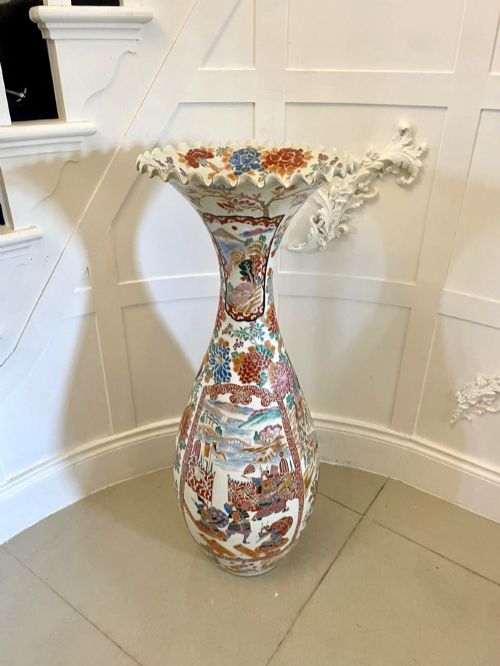
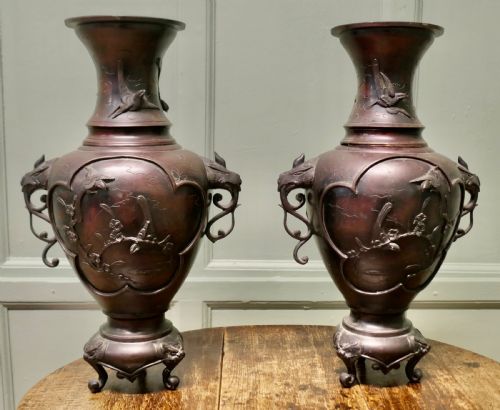
Large oriental floor vases stand tall in a room, bringing hand-painted ceramic and bronze presence from the nineteenth and twentieth centuries.
Large Oriental Floor Vases
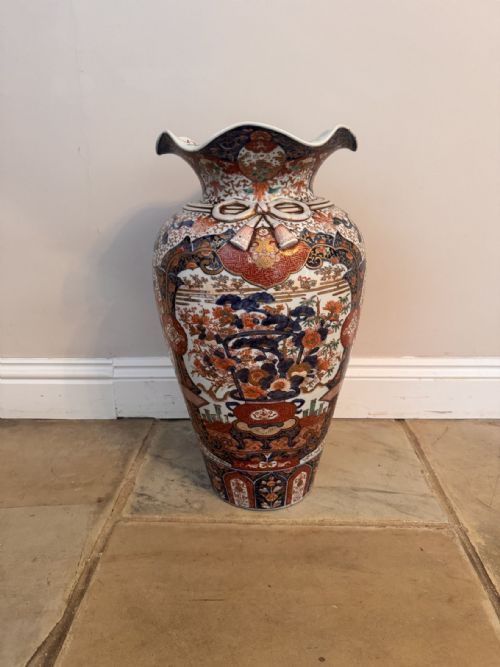
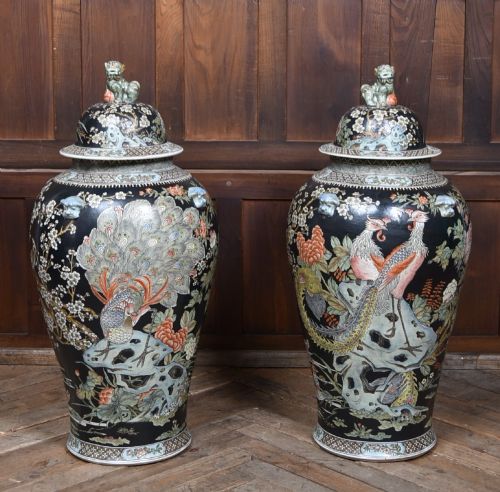
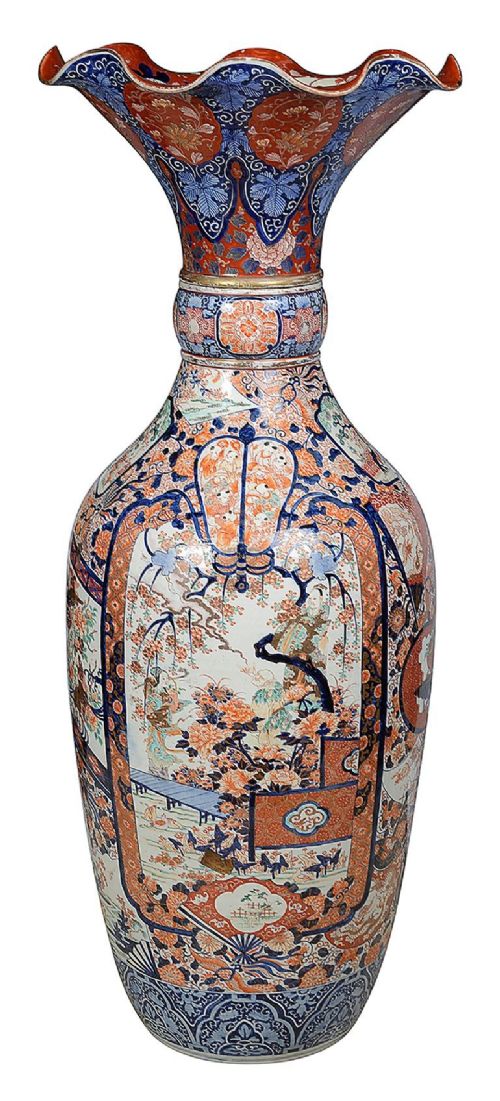
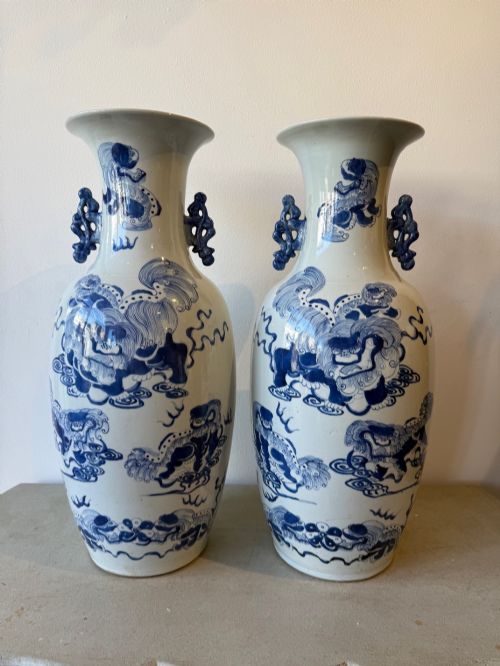
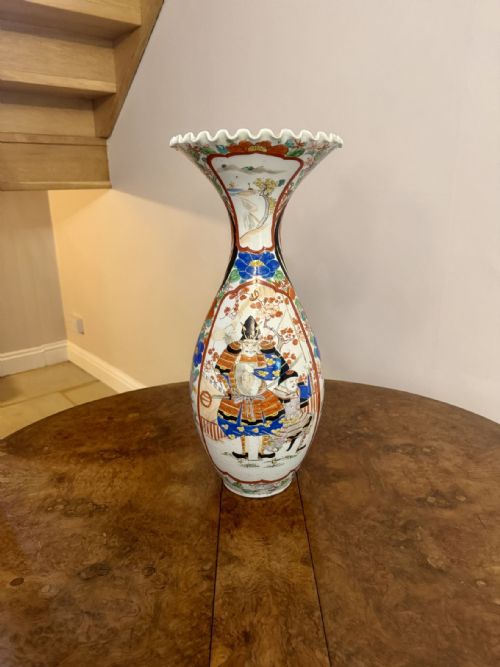
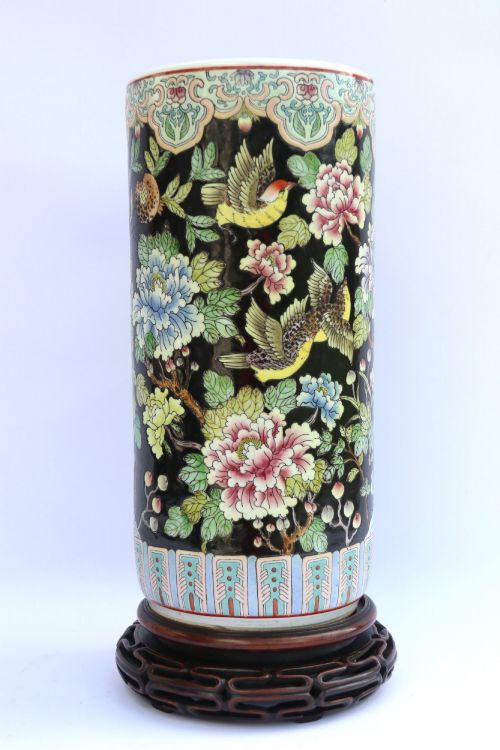
Large oriental floor vases are substantial decorative vessels designed to stand directly on the ground rather than upon furniture. When you search for large oriental floor vases, you encounter tall Chinese porcelain jars and Japanese Imari, Satsuma, and bronze pieces spanning the nineteenth and twentieth centuries.
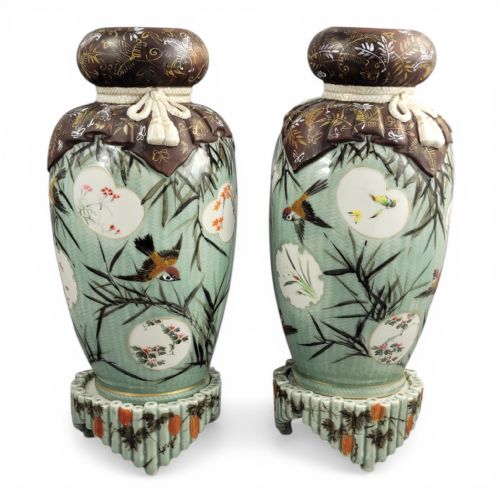
Many examples arrive in pairs, offering symmetrical impact for hallways, drawing rooms, and landings. They encompass lidded urns, temple vases, and baluster shapes accompanied occasionally by original stands.
How they were made
Artisans constructed these vessels using heavy porcelain, earthenware, or cast bronze, applying detailed glazes, enamel pigments, and gold leaf. Japanese and Chinese workshops utilised hand-painting techniques to depict flora, fauna, and figurative scenes.
Cloisonne examples involved soldering delicate metal wires onto a metal base to form cells which workers filled with enamel before firing and polishing. Bronze pieces often incorporated lost-wax casting alongside applied lacquer panels.
Materials represented across the inventory include bronze, cloisonne enamel, earthenware, porcelain, and gold leaf alongside original hardwood stands.
What varies in quality
The distinction between ordinary and exceptional items lies in the crispness of the hand-painted brushwork and the complexity of the enamel and gilt detailing. Finer vessels display precise control over cobalt blue and iron red pigments, alongside deeply layered glazes.
Makers known for superior output, such as Kinkozan or Kato Sanhei, produced works with extraordinary scale and intricate pictorial depth. The inclusion of matching original stands or covers elevates the completeness of the piece.
Kato Sanhei·Kinkozan
The Large Oriental Floor Vases Glossary
- Imari
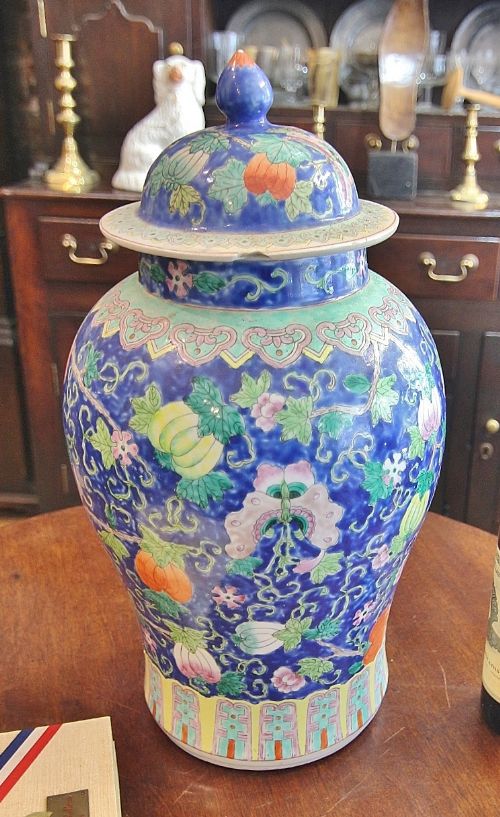
- A style of Japanese porcelain featuring a distinct palette of underglaze blue, iron red, and gold leaf. It originated in Arita and gained massive popularity for export.
- Satsuma
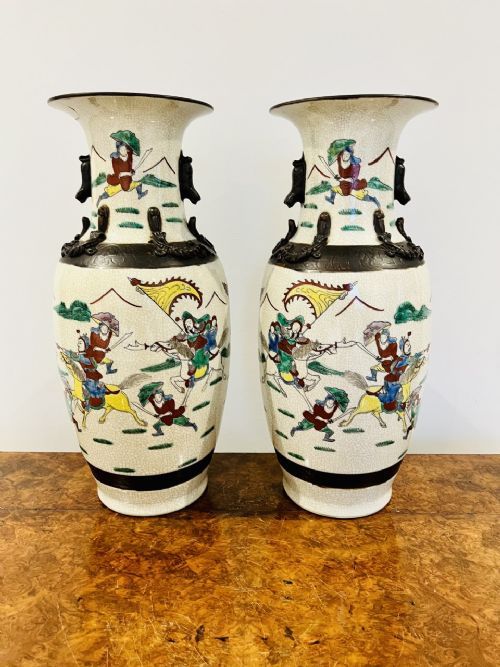
- An earthenware ceramic type from Japan characterised by a crackled ivory glaze decorated with polychrome enamels and gilding. It frequently depicts figurative scenes.
- Cloisonne
- A decorative metalwork technique where compartments are created using flat wires and filled with coloured enamel pastes before firing. It produces vibrant patterns on vases and urns.
- Famille Rose
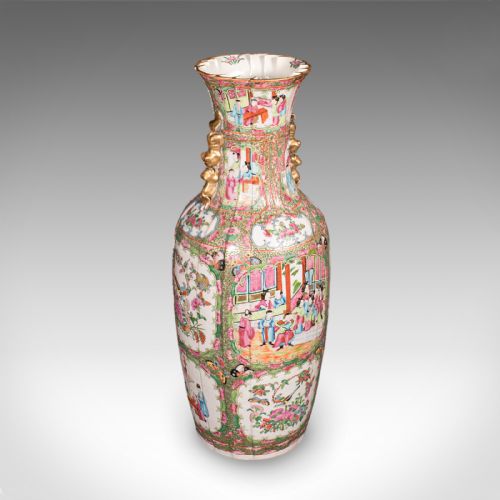
- A palette of Chinese porcelain enamels dominated by opaque pink or rose colours introduced during the Qing dynasty. It allowed artists to render delicate floral and human subjects.
- Baluster
- A tall vase form featuring a rounded lower body that tapers towards a narrow neck and flaring rim. This classical silhouette provides stability for large floor pieces.
Large Oriental Floor Vases: Frequently Asked Questions
Where should I place a floor vase?
These tall vessels anchor large entrance halls, wide corridors, and empty corners where standard furniture looks out of place. Their height allows them to balance high ceilings and grand architectural proportions.
Pairs look particularly striking positioned on either side of a fireplace or flanking a double doorway. Ensure they rest in low-traffic zones to protect their historic glazes and surfaces from accidental impacts.
Are these vases meant for fresh flowers?
Most antique floor vases served primarily as decorative objects or palace furnishings rather than functional containers for water. Their substantial weight and historic ceramic bodies make handling water risky for the interior.
If you wish to display botanicals, utilise dry branches or long ornamental grasses. This avoids moisture damage to antique earthenware, unglazed bases, and original wooden stands.
How do I distinguish Imari from Satsuma?
Imari pieces consist of hard porcelain decorated with deep underglaze blue, iron red, and abundant gold leaf. They possess a ringing tone when tapped and smooth vitreous surfaces.
Satsuma pieces utilise a softer earthenware body covered in a characteristic creamy, finely crackled glaze. Their decoration relies on dense polychrome enamels and raised gilding rather than blue underglaze.
How do I date a nineteenth-century vase?
Dating relies on stylistic markers, studio signatures, and the specific reign periods recorded in the evidence. Nineteenth-century pieces frequently bear Meiji period or Qing dynasty attributes.
Examine the foot rim for unglazed clay texture and manufacturing marks. Variations in enamel saturation and gilding wear also offer clues to the era of manufacture.