





Gilt Ceramic Floor Urns
These gilt ceramic floor urns bring grand scale and rich decoration to a room, offering the bold presence collectors seek in large decorative vessels.
Gilt Ceramic Floor Urns
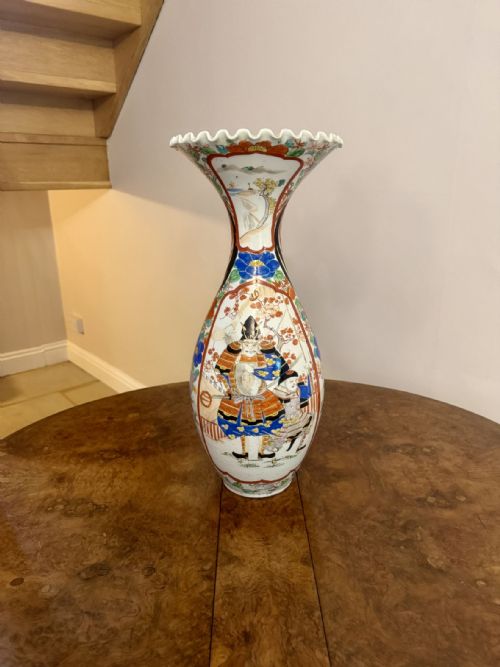
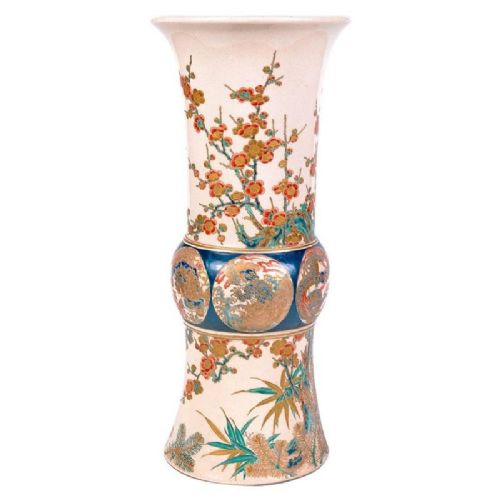
When searching for gilt ceramic floor urns, you encounter substantial decorative vases and floor vases spanning the nineteenth and early twentieth centuries. These vessels originate primarily from Japanese and Chinese export traditions, including Meiji period Satsuma ware, Imari porcelain, and Cantonese Rose Medallion pieces.
How they were made
The makers formed these large vessels from ceramic bodies such as porcelain, earthenware, and ironstone, shaping them into flared vases, lidded urns, and spill vases. Potters balanced considerable weight and height while maintaining structural integrity during firing.
Artisans applied surface decoration using gold leaf, gilding, and enamel work, sometimes layering lacquer over black paint. This metallic detailing highlights intricate hand-painted figural and floral scenes across the body of each vessel.
Gilt Ceramic Floor Urns Retail Price Guide 2026
Typical asking prices for gilt ceramic floor urns among the pieces listed under this phrase on Sellingantiques today, from the lower quarter to the upper quarter. They describe what is for sale here now, not the wider market.
Several towering pairs stand nearly a yard high, demanding more floor space than most household pets.
What varies in quality
Quality separates simple production wares from masterworks through the precision of the hand-painted detailing and the richness of the gilding. Fine examples display densely populated scenes with crisp enamel work and carefully preserved gold leaf that remains vibrant across a large surface.
Scale and proportion also define the upper tier, where immense floor vases maintain symmetry and balance despite their challenging dimensions. The presence of original fitted stands or matched pairs further elevates the standing of these large ceramic pieces.
Kinkozan
The Gilt Ceramic Floor Urns Glossary
- Satsuma ware
- Japanese earthenware pottery typically characterised by a ivory-coloured cracked glaze decorated with polychrome enamels and rich gilding. It gained immense popularity during the Meiji period for export markets.
- Imari
- A style of Japanese porcelain featuring distinctive underglaze blue and overglaze red, green, and gold ornamentation. These pieces often display complex floral and brocade patterns.
- Ironstone
- A heavy, durable type of earthenware patented in the nineteenth century to imitate porcelain. It provides a robust body suitable for large hall vases and heavy decorative vessels.
- Rose Medallion
- A style of Chinese export porcelain featuring panels filled with figures alternating with panels of birds and flowers, all tied together with green and gold scrollwork.
Gilt Ceramic Floor Urns: Frequently Asked Questions
How were floor urns used historically?
These large vessels served as grand decorative statements in nineteenth-century entrance halls, drawing rooms, and formal reception spaces. They were positioned directly on the floor or on dedicated wooden stands to fill empty architectural corners.
Owners often displayed them empty or filled with dried botanicals, relying on their painted surfaces and gilt highlights to catch the natural light of a room.
How do I identify Satsuma ware?
Satsuma ceramics are recognised by their characteristic cream-coloured earthenware body covered in a fine network of crackled glaze. The surfaces feature detailed hand-painted scenes enriched with heavy enamel and gold leaf.
Most pieces date from the Meiji period and carry distinct Japanese aesthetic motifs, ranging from dense floral compositions to complex figural groupings.
Where should I place a floor vase?
Floor vases require stable, low-traffic areas where their substantial size can be appreciated without risk of accidental impact. They work well in spacious hallways, flanking fireplaces, or anchoring empty corners in high-ceilinged rooms.
Ensure the floor surface is level and consider placing them on a protective mat or stand if the ceramic base is unglazed.