




Orange Japanese Floor Vases
Orange japanese floor vases command attention in any interior, offering striking scale and rich historical decoration.
Orange Japanese Floor Vases
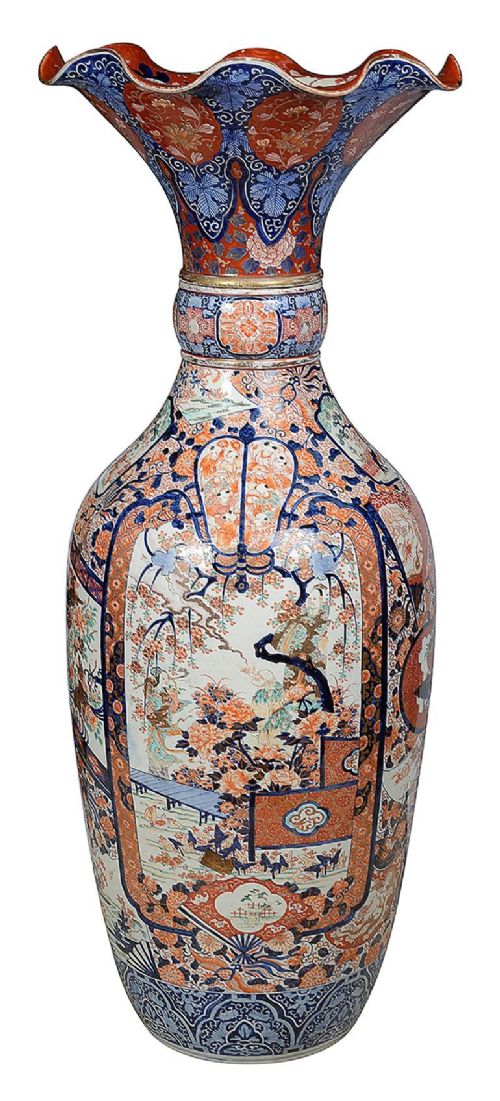
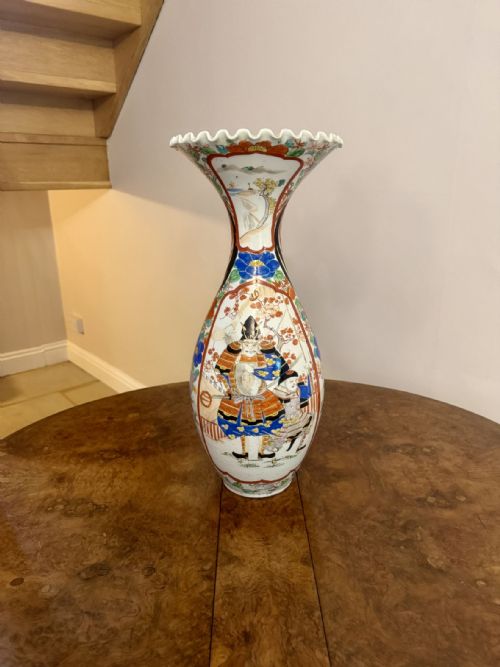
When you search for orange japanese floor vases, you encounter substantial ceramic vessels originating from the nineteenth and early twentieth centuries. These grand pieces stand tall upon the floor, commanding attention through their sheer height and vibrant palettes.
The versions most frequently met on this page span the Meiji period and late nineteenth century, taking the form of large floor-standing vessels and decorative urns. Many examples showcase traditional Imari styles, alongside Satsuma and Kutani traditions.
Makers fashioned these imposing objects to serve as primary focal points in principal rooms, utilising generous proportions that suit both traditional and contemporary interiors. Their presence introduces a distinct architectural weight and historical character.
Materials and construction
Potters shaped these large vessels from porcelain and earthenware, building up substantial bodies capable of supporting rich surface decoration. The physical weight and stability required for floor-standing pieces demanded careful clay preparation and firing.
Artisans applied enamel and gold leaf to the fired surfaces, creating intricate patterns that define the aesthetic of Japanese export wares. Gilt highlights catch the light across the decorated panels, contrasting with the dominant orange and iron-red tones.
Orange Japanese Floor Vases Retail Price Guide 2026
Typical asking prices for orange japanese floor vases among the pieces listed under this phrase on Sellingantiques today, from the lower quarter to the upper quarter. They describe what is for sale here now, not the wider market.
Current listings span the nineteenth and twentieth centuries, incorporating porcelain, earthenware, enamel, and gold leaf materials across multiple decorative styles.
Assessing quality and execution
The hierarchy of quality rests primarily upon the precision and complexity of the enamel work and the crispness of the porcelain or earthenware body. Superior examples display meticulously controlled brushwork and harmonious colour saturation across their expansive surfaces.
Scale combined with structural integrity separates standard production from exceptional works, particularly given the technical challenges of firing large floor vases. Pieces that maintain geometric balance despite their height represent the pinnacle of period craftsmanship.
The Orange Japanese Floor Vases Glossary
- Imari
- A traditional style of Japanese porcelain featuring a distinct palette of underglaze blue, iron-red orange, and gilt. This aesthetic gained immense popularity in the West during the export periods.
- Meiji Period
- The era in Japanese history spanning from 1868 to 1912, characterised by extensive international trade and the production of ambitious decorative arts. Pieces from this time often exhibit exceptional technical mastery.
- Earthenware
- A porous pottery body fired at lower temperatures than porcelain. It serves as a substantial base for complex enamelled decoration.
- Gilt
- A thin layer of gold applied to the surface of the ceramic to highlight specific decorative elements. It adds luminous contrast to the orange and red enamel pigments.
Orange Japanese Floor Vases: Frequently Asked Questions
Where should I place a floor vase?
These tall vessels suit spacious reception rooms, wide hallways, or empty corners that require a strong vertical element.
Ensure the placement protects the piece from accidental knocks while allowing the painted details to catch natural light.
How do I clean my vase safely?
Dust the surface gently with a soft, dry feather duster to remove particles without disturbing the delicate enamel or gilt.
Avoid using water, chemical cleaners, or abrasive cloths, which can damage the historic glaze and metallic leaf.
Are these vases waterproof?
Most historic floor vases are intended purely for decorative display rather than holding fresh water and floral arrangements.
Filling them with water can seep through older earthenware bodies or cause staining to internal surfaces.
How do I date a floor vase?
Examine the base, the weight of the ceramic body, and the specific style of the hand-painted enamels.
Pieces from the Meiji period often carry distinct export characteristics that align with late nineteenth and early twentieth century production.