
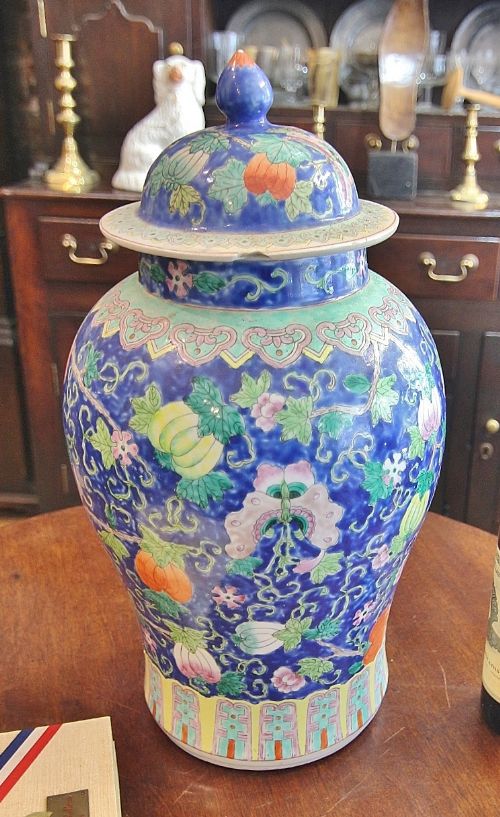
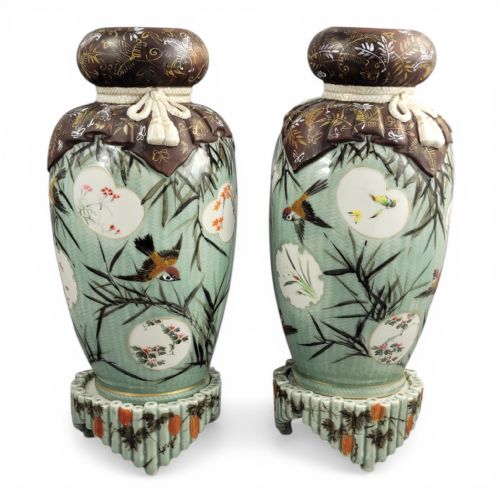


Large Oriental Floor Urn
A large oriental floor urn delivers immense scale and rich decorative presence to a room, standing as a focal point in traditional and eclectic interiors alike.

Large Oriental Floor Urn
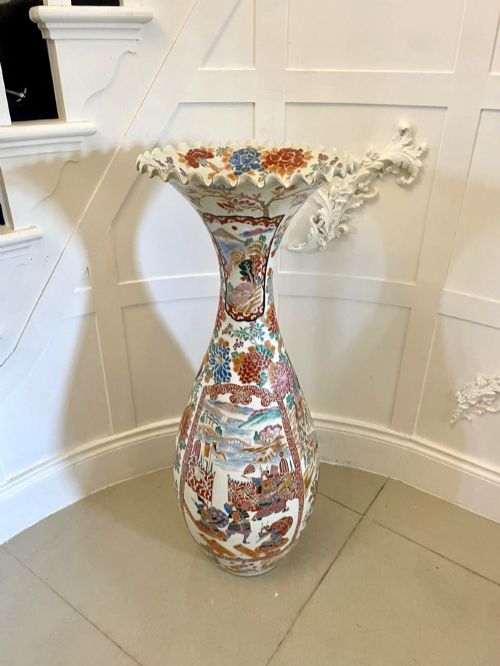
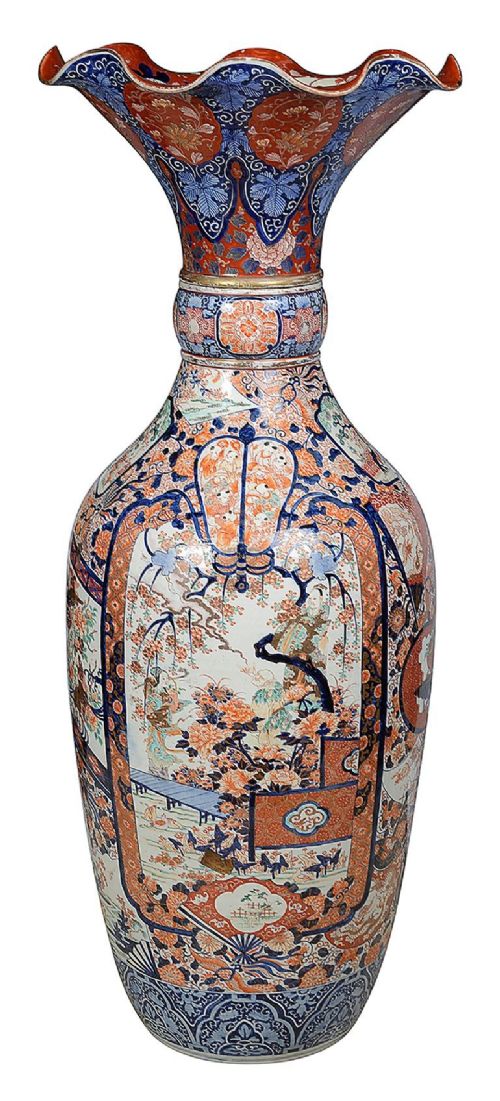
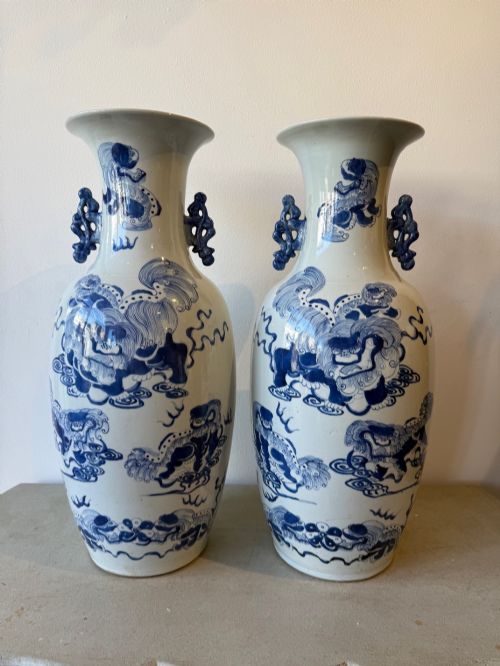
A large oriental floor urn is a substantial vessel designed for prominent placement directly on the floor rather than upon furniture, bringing decorative impact to wide hallways and reception rooms. These pieces originate primarily from nineteenth-century Japanese and Chinese workshops, spanning distinct regional styles.
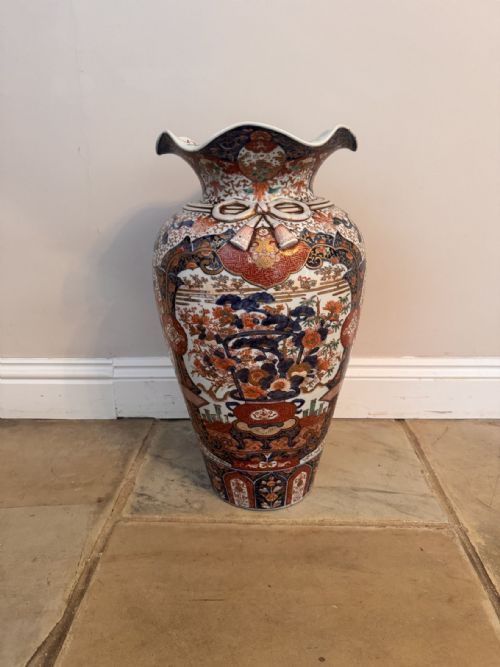
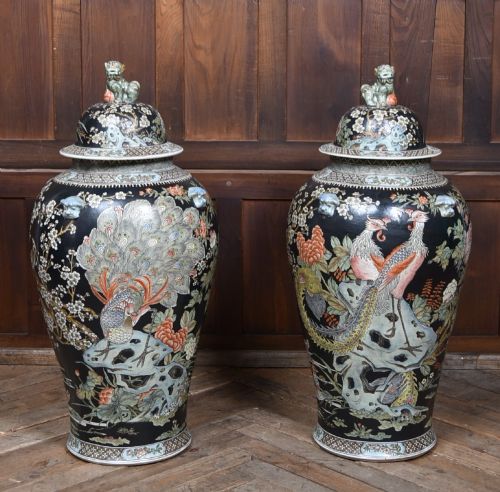
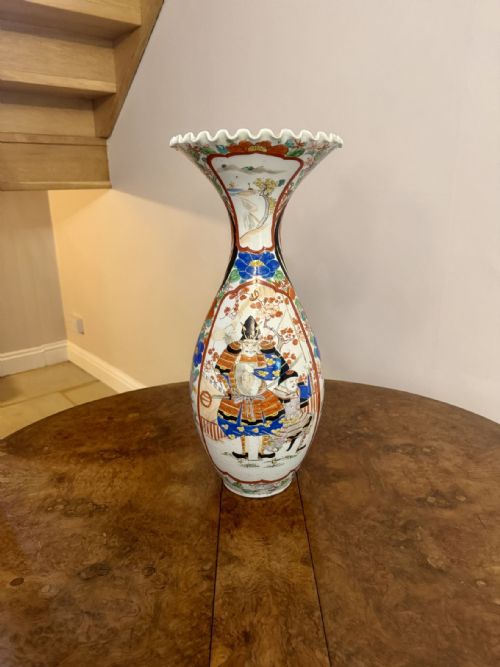
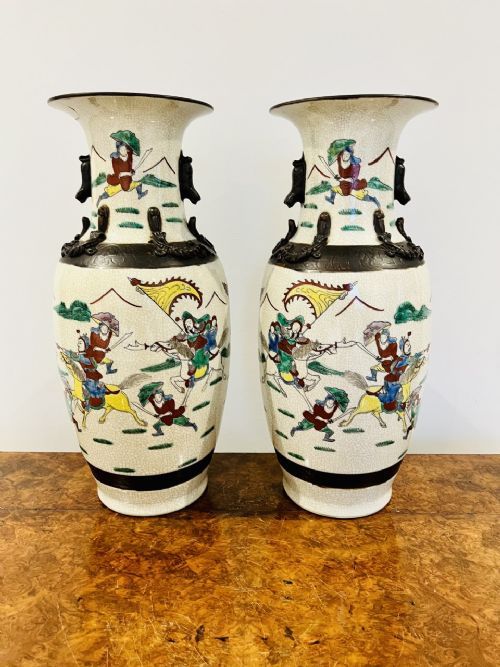
The selections available here lean heavily towards Japanese Imari and Satsuma ceramics alongside Chinese export palace jars and temple vases. Forms range from lidded vessels and two-handled urns to tall flared-neck cylinders and monumental temple jars.
Dated examples frequently trace back to the Meiji period and the wider Victorian era, showcasing elaborate hand-painted motifs and traditional glazes. Buyers encounter both single statement urns and matched pairs designed for symmetrical display.
How they were made
Potters shaped thick earthenware and porcelain bodies to support the considerable height and weight required for large floor placement. Surface enrichment combined cobalt blue underglazes, polychrome enamels, and meticulous applications of gold leaf.
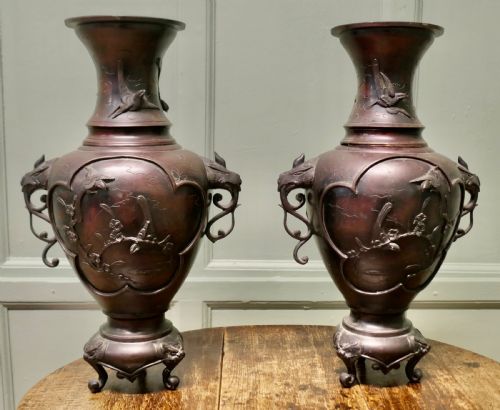
Alternative pieces utilised cast bronze decorated with applied relief work, while cloisonné enamel vessels incorporated delicate wire compartments filled with vitreous pastes. Artisans also integrated lacquer panels and specialised cracked glazes to achieve textural depth.
What varies in quality
Quality rests upon the precision and complexity of the hand-painted decoration, where master artists achieved exceptional clarity in facial expressions, plumage, and floral detailing. The density and purity of the gold leaf application further distinguish standard production ware from superior workshop output.
Structural integrity matters significantly given the sheer scale of these vessels, with higher-grade pieces maintaining true vertical alignment and sound glazing free of heavy distortion. The inclusion of matching original stands or lids elevates the completeness and historical authority of the piece.
The Large Oriental Floor Urn Glossary
- Imari
- A style of Japanese export porcelain characterised by a distinctive palette of underglaze blue, iron red, and gilt highlights. These wares were widely produced during the Meiji period for international markets.
- Satsuma
- A type of Japanese earthenware featuring a fine, ivory-coloured cracked glaze decorated with polychrome enamels and raised gold. Satsuma pieces often depict figurative scenes, birds, and intricate geometric borders.
- Cloisonne
- A metalwork technique where flat metal wires are soldered to a bronze or copper base to create compartments, which are then filled with enamel paste and fired. This method produced dense, colourful surfaces depicting motifs such as the phoenix and koi.
- Meiji Period
- The era of Japanese history spanning from 1868 to 1912, marked by industrialisation and a surge in decorative arts created for export. Works from this period are celebrated for technical ambition and varied surface textures.
- Qing Dynasty
- The final imperial dynasty of China, lasting from 1644 to 1912, encompassing notable periods of ceramic production such as the Daoguang reign. Pieces from this dynasty include large palace jars and blue and white temple vases.
Large Oriental Floor Urn: Frequently Asked Questions
Where should I place a floor urn?
These tall vessels command attention in wide entryways, landings, and corners of spacious reception rooms where they can be viewed without obstruction. Placing them away from heavy foot traffic protects the ceramic or bronze body from accidental impacts.
Matching pairs work effectively flanking a fireplace or framing a grand doorway to create symmetrical balance. Single monumental pieces stand well alone as sculptural elements against plain walls.
How can I tell Satsuma from Imari?
Satsuma ware utilises an earthenware body covered in an ivory-coloured glaze marked by a fine network of intentional craquelure. The decoration relies heavily on matte polychrome enamels and raised gold leaf depicting figures and nature.
Imari pieces are made of hard-paste porcelain rather than earthenware and lack the characteristic cracked glaze of Satsuma. The palette focuses primarily on cobalt blue underglaze combined with iron red and gold.
Are these urns waterproof?
Most antique floor urns were created purely for decorative display as sculptural objects rather than functional planters or water holders. The internal construction and older ceramic bodies may not withstand prolonged exposure to moisture or damp soil.
If you wish to display dried stems or large branches, place a separate inner container or plastic liner inside the neck to protect the historic interior. Avoid filling the base directly with water.