
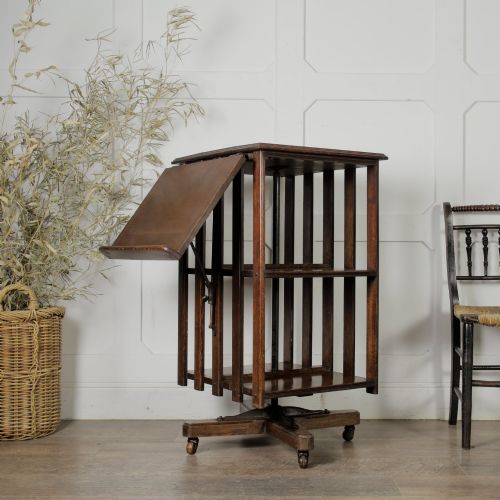
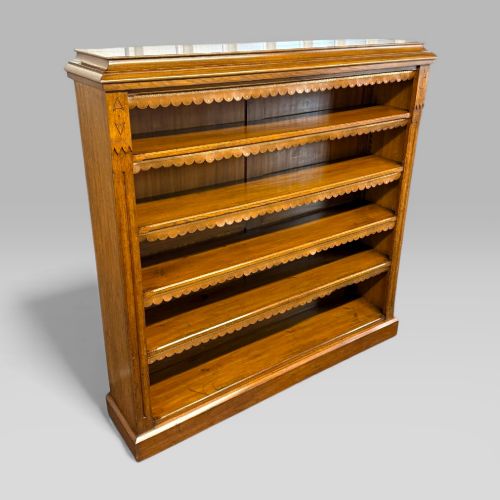
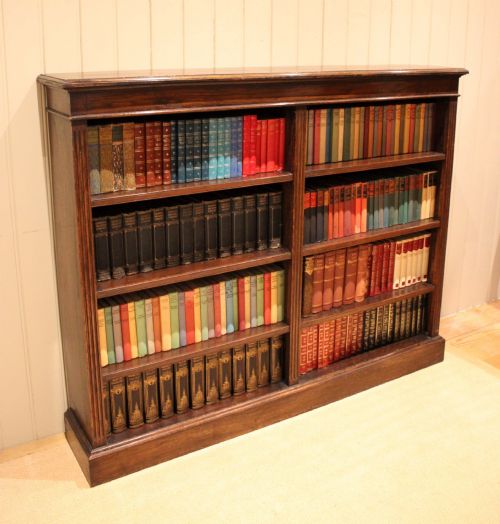
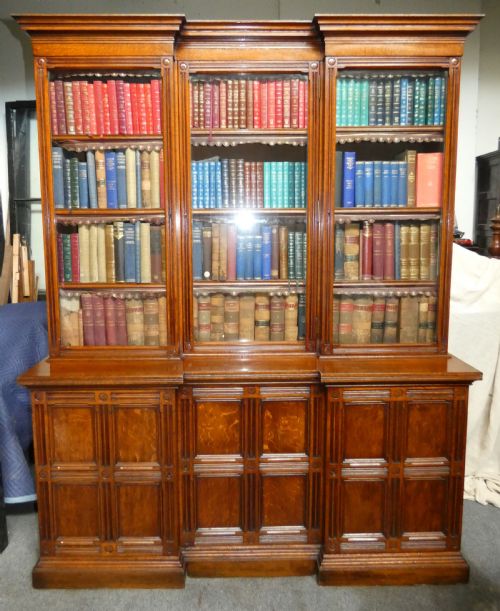
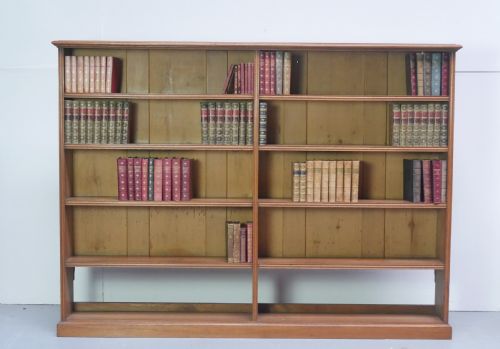


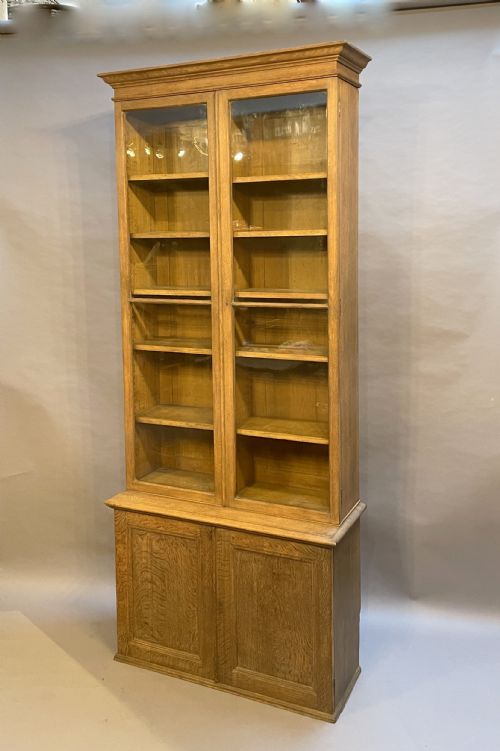
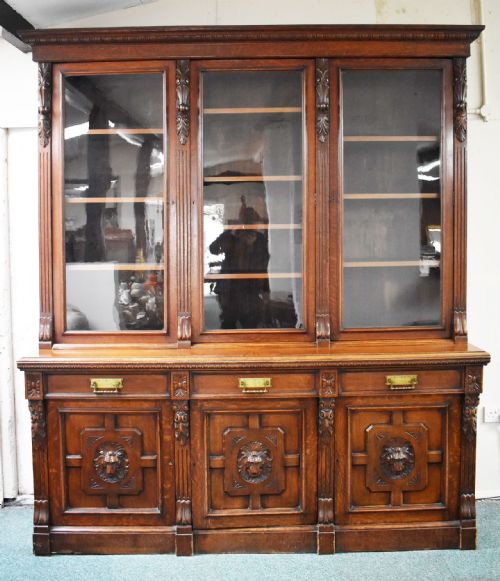
Large Oak Library Bookcase
A large oak library bookcase brings architectural presence to a room, offering vast shelving capacity combined with heavy timber construction.
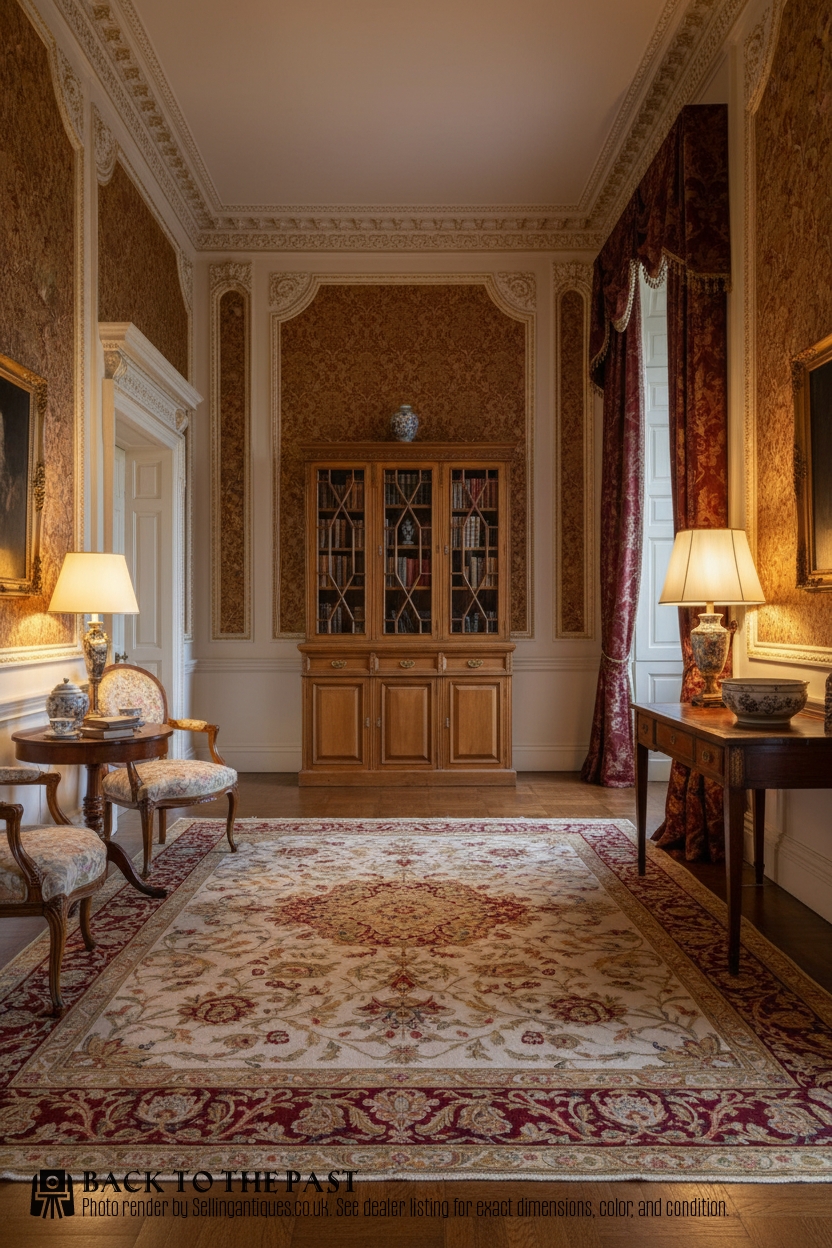
Large Oak Library Bookcase
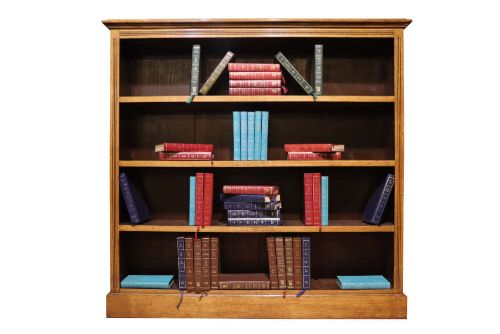
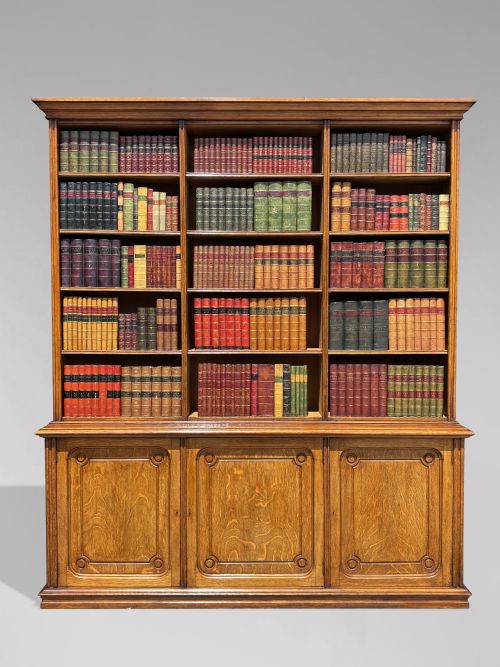
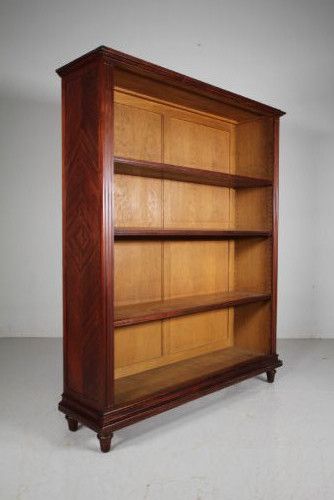
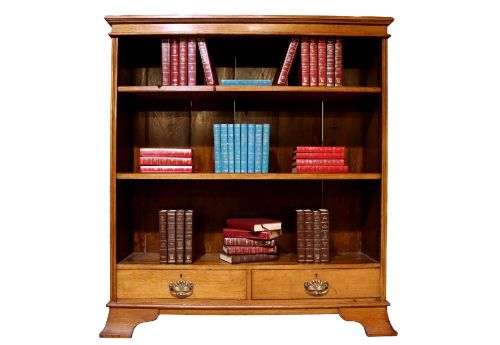
A large oak library bookcase is a substantial piece of furniture designed to house extensive book collections within domestic or institutional rooms. Buyers searching this phrase encounter monumental multi-door breakfront formats, tall open shelf units, and architectural glazed cabinets.
The pieces appearing here stem primarily from the nineteenth century, including Victorian and Edwardian iterations, alongside earlier stylistic revivals. Formats range from open-fronted storage to multi-door glazed architectural walls with adjustable shelving.
Makers utilised dense timbers, often incorporating decorative elements such as carved panels, brass hardware, and glazed doors to elevate the utility of the storage. These items served grand country houses, institutional libraries, and domestic studies.
How they were made
Makers constructed these carcasses using solid oak and pollard oak, reinforced with internal iron brackets and brass fittings to support heavy timber shelves. Glazed sections incorporate clear glass panes held by wooden glazing bars, whilst open variants rely on deep side panels and heavy cornices.
Cabinetmakers employed traditional joinery techniques, including dovetail joints for drawers and mortise and tenon joints for the structural frames. Carved ornaments, such as Gothic tracery or Renaissance motifs, were hand-chiselled directly into the solid timber.
Some Victorian volumes remain heavier than the shelves holding them, having quietly pressed their own study history into the timber.
What varies in quality
Quality diverges significantly in the selection of timber and the depth of architectural detailing. Superior examples feature figured pollard oak, intricate hand-carved friezes, and original glazed doors with bevelled panes.
Construction methods also separate standard production from exceptional workshop output. Pieces with integrated adjustable shelving mechanisms, heavy breakfront cornices, and robust backboards demonstrate superior structural ambition.
Howard & Sons
The Large Oak Library Bookcase Glossary
- Breakfront
- A cabinet design where the central section projects forward from the flanking wings. This configuration creates visual depth and breaks up the linear expanse of a large wall unit.
- Pollard oak
- Timber taken from trees that have been pollarded, producing a highly figured, mottled grain pattern. Cabinetmakers utilised this wood for decorative veneers and feature panels.
- Gothic Revival
- A nineteenth-century architectural and decorative style inspired by medieval forms. Pieces display pointed arches, trefoils, and heavy structural mouldings.
- Adjustable shelves
- Shelving resting on removable pins or tracks allowing height customisation. This mechanism enabled libraries to accommodate volumes of varying heights.
Large Oak Library Bookcase: Frequently Asked Questions
How do I fit a large bookcase into a modern room?
Measure ceiling height and wall space carefully before acquisition, accounting for heavy cornices and breakfront projections. Position the piece away from direct heat sources to protect the solid oak timber from warping.
Ensure the floor structure can support the combined weight of heavy oak and hundreds of books. Anchor tall units securely to the wall for safety.
How do I adjust the shelves?
Most period library bookcases utilise wooden support strips, metal ratchets, or peg holes drilled into the interior sides. You simply lift the shelf slightly to disengage it from the supports and reposition the pegs.
Take care when moving heavy oak shelves within the housing to avoid scratching the interior side panels. Ensure each shelf sits level on all four supports before loading books.
How do I identify a Victorian piece?
Victorian pieces often display dense, dark oak timbers, heavy architectural cornices, and deep hand-carvings reflecting Gothic or Renaissance revivals. Look for construction markers such as hand-cut dovetails and maker stamps on the interior woodwork.
The scale is typically monumental, frequently incorporating breakfront configurations and multiple doors designed for substantial country house libraries.