

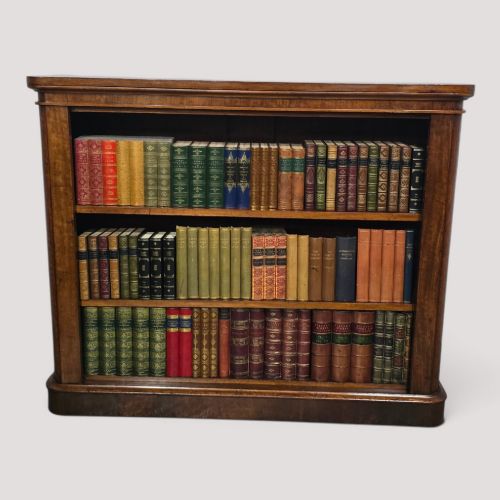


Nineteenth Century Oak Bookcase
A nineteenth century oak bookcase brings heavy timber and generous shelving to a room, offering a sturdy place to store a growing library.
Nineteenth Century Oak Bookcase
A nineteenth century oak bookcase spans open shelf formats, tall breakfront designs, and fitted secretaire pieces intended for working studies. These items range from plain utilitarian timber to heavily carved Gothic Revival variants with distinct architectural pediments.
Victorian examples dominate the selection, often employing rich pollard oak alongside standard oak timbers. Buyers encounter everything from diminutive dwarf cabinets to multi-door breakfront libraries designed for grand reception rooms.
Materials and construction
Makers utilised solid oak and decorative pollard oak veneers, frequently accented with ebony, walnut, fruitwood, and brass hardware. Glass doors protected valuable volumes while allowing titles to remain visible.
Joinery techniques relied on heavy framing to support deep timber shelving, with intricate hand carving defining the Gothic Revival and Jacobean styles. Adjustable shelf mechanisms appeared in several pieces to accommodate varying book heights.
Nineteenth Century Oak Bookcase Retail Price Guide 2026
Typical asking prices for nineteenth century oak bookcase among the pieces listed under this phrase on Sellingantiques today, from the lower quarter to the upper quarter. They describe what is for sale here now, not the wider market.
Distinctions in quality
The standard of carving and the choice of secondary timbers determine the distinction between basic workshop output and superior library furniture. Richly figured pollard oak surfaces and well-executed figurative carvings command greater attention from discerning collectors.
Proportion and architectural detailing dictate the visual balance of the piece, where harmonious cornices and crisply moulded panel work elevate the overall presence within an interior.
A Blain And Son Liverpool
The Nineteenth Century Oak Bookcase Glossary
- Breakfront
- A large cabinet where the central section projects forward from the flanking wings. This format creates a dramatic architectural silhouette in larger libraries.
- Pollard Oak
- Timber taken from trees that were pollarded, producing a heavily figured and mottled grain pattern. Cabinet makers prized this wood for decorative veneers.
- Secretaire Bookcase
- A tall piece incorporating a drop-front writing drawer above lower storage or shelving. It combines a compact desk surface with upper book storage.
- Gothic Revival
- A nineteenth century architectural and decorative style drawing inspiration from medieval forms. Pieces display pointed arches, tracery, and heavy carved ornamentation.
- Jacobean Style
- A seventeenth century aesthetic revived during the Victorian era featuring geometric mouldings and robust turned supports. It gives oak furniture a severe and substantial appearance.
Nineteenth Century Oak Bookcase: Frequently Asked Questions
How do I maintain oak furniture?
Keep wooden surfaces away from direct heat sources and sudden humidity shifts to prevent timber splitting.
Apply a traditional wax polish occasionally to nourish the grain and maintain a natural sheen.
Are the shelves adjustable?
Many nineteenth century examples feature adjustable shelving supported by wooden racks or brass pegs.
This adaptability allows the interior layout to suit various book sizes and collection types.
What is pollard oak?
Pollard oak comes from trees pruned near the top to encourage dense branching, creating highly patterned timber.
Cabinet makers used these distinctive veneers on prominent surfaces to showcase natural figures.
How do I spot Gothic Revival?
Gothic Revival pieces display architectural motifs such as pointed arches, quatrefoils, and deep relief carving.
These details reflect a nineteenth century fascination with medieval design and craftsmanship.