

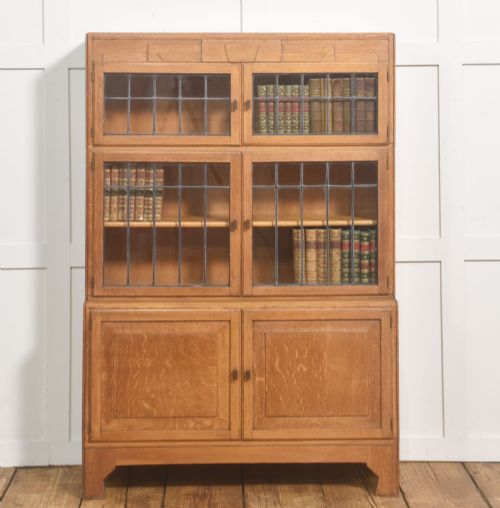
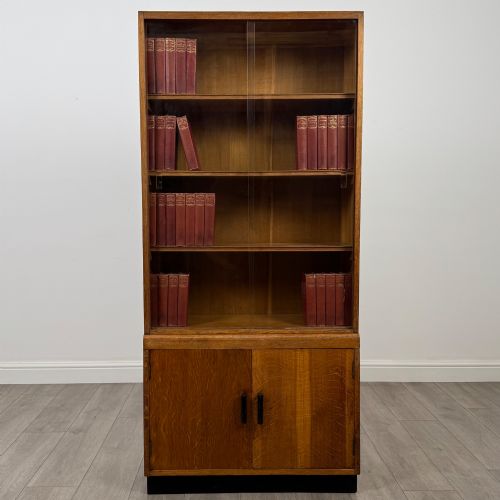
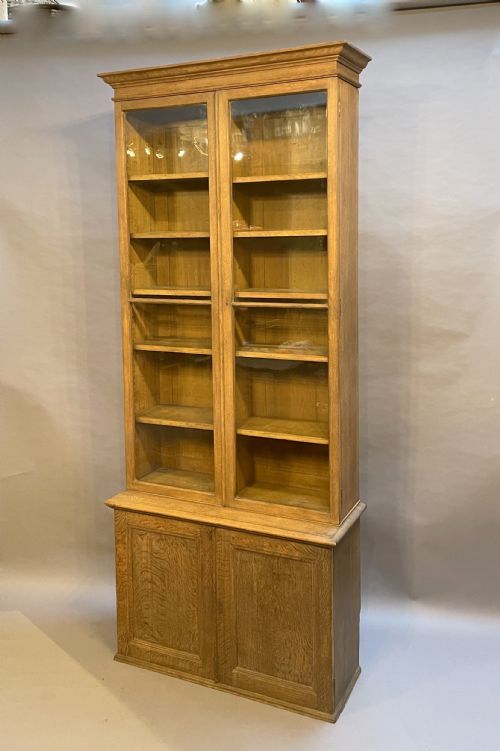
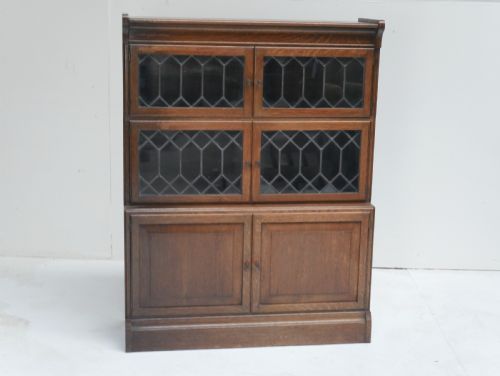


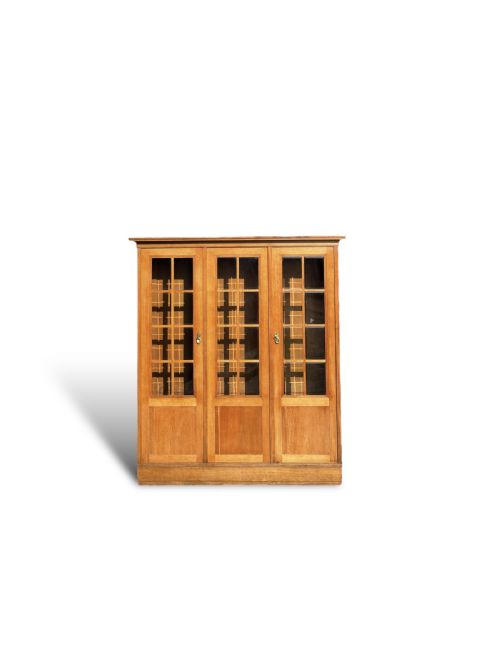


Light Oak Library Bookcase
These light oak library bookcase pieces bring functional storage and period character into a room, offering sturdy shelving and glazed display space.
Light Oak Library Bookcase
When you search for a light oak library bookcase, you encounter substantial furniture built to hold volumes and display collections. The examples on this page span several decades, featuring Victorian, Edwardian, and Art Deco interpretations alongside Mid-Century Modern and Arts and Crafts influences.
The form serves a practical purpose, uniting upright book storage with timber construction and glass panels. Whether configured as a tall breakfront unit or a simpler open shelving structure, each piece provides a tangible connection to historical cabinet making.
How these pieces were constructed
Makers utilised solid oak to build the primary carcass and shelving, ensuring the timber could support heavy rows of books. This hardwood formed the structural core for both open bookcases and enclosed display cabinets.
Glass and lead were integrated into doors to protect volumes while maintaining visibility, complemented by brass hardware for hinges and handles. These materials worked together to create durable furniture capable of withstanding daily library or study use.
Light Oak Library Bookcase Retail Price Guide 2026
Typical asking prices for light oak library bookcase among the pieces listed under this phrase on Sellingantiques today, from the lower quarter to the upper quarter. They describe what is for sale here now, not the wider market.
Listings span periods from 1860 to the 1920s, uniting Victorian, Edwardian, and Art Deco styles in oak, glass, lead, and brass.
What separates different examples
Quality in these bookcases rests on the selection of the timber and the sophistication of the joinery. Finer pieces demonstrate careful grain matching and proportion, whereas simpler utility items prioritise straightforward function over decorative restraint.
The integration of specialised elements such as leaded glass panes or stacking barrister mechanisms distinguishes standard production from more ambitious workshop output. Maker attribution, as seen in pieces by established firms, further elevates the standing of an individual bookcase.
Howard and Sons·Minty
The Light Oak Library Bookcase Glossary
- Breakfront
- A cabinet design where the central section projects forward from the flanking wings. This configuration adds architectural depth to large library bookcases.
- Stacking bookcase
- A modular shelving unit comprising separate horizontal sections that stack beneath a cornice and above a base. Often associated with barrister designs.
- Leaded glass
- Panes of glass joined together by narrow strips of lead, commonly seen in cabinet doors from the Edwardian and Art Deco periods. It provides decorative division across the viewing area.
- Open bookcase
- A shelving unit without doors, designed for immediate access to books. These pieces emphasise the visible grain of the oak timber.
Light Oak Library Bookcase: Frequently Asked Questions
What is a light oak library bookcase?
A light oak library bookcase is a wooden storage unit designed primarily for housing books, constructed using pale oak timber.
These pieces often feature glass doors, open shelves, or modular stacking sections originating from the nineteenth and twentieth centuries.
How were these bookcases used?
They were utilised in private studies, libraries, and parlours to organise and protect significant collections of bound volumes.
Enclosed cabinets kept dust away from delicate bindings, while open formats allowed immediate retrieval of reference books.
How do I live with one?
Position the bookcase against a stable wall away from direct heat sources to protect the oak timber from drying out.
Ensure heavy volumes are distributed evenly across the shelves to maintain the structural balance of the cabinet.
How can I tell the periods apart?
Victorian and Edwardian examples often display heavier classical moulding and traditional joinery, while 1920s pieces frequently incorporate Art Deco or stacking barrister formats.
Examining the hardware, glass type, and overall proportion helps connect a piece to its nineteenth or twentieth century origin.