
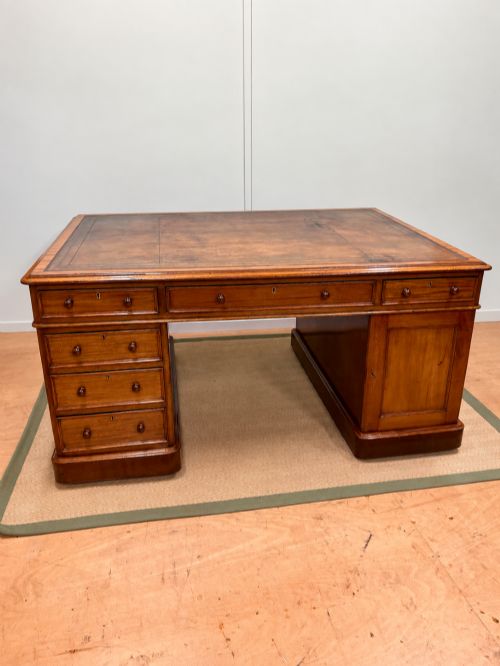
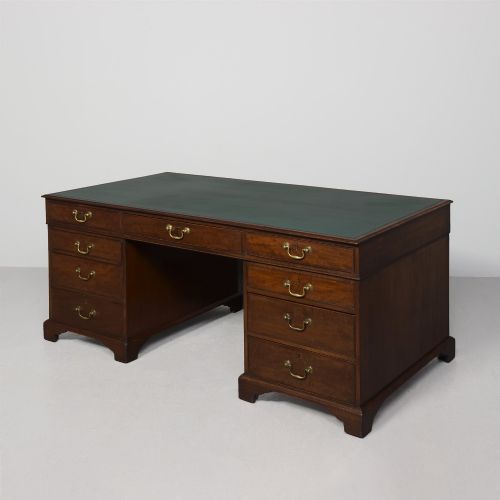
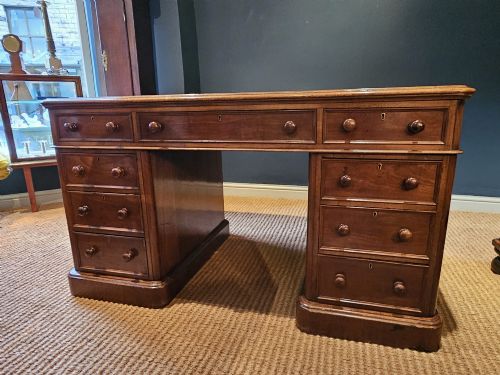
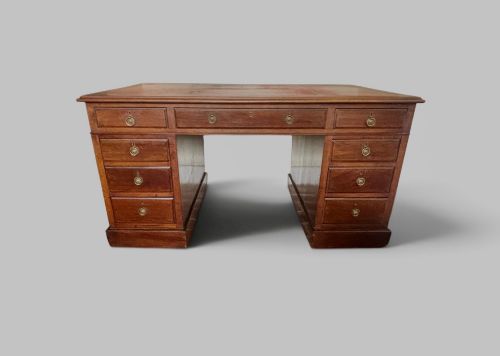
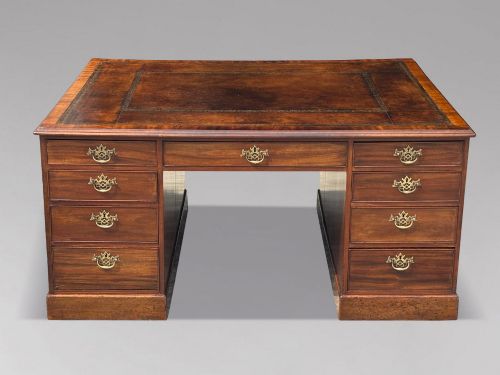

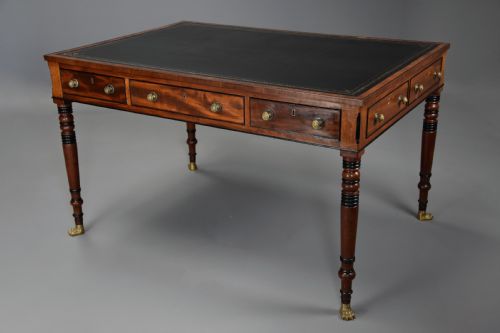
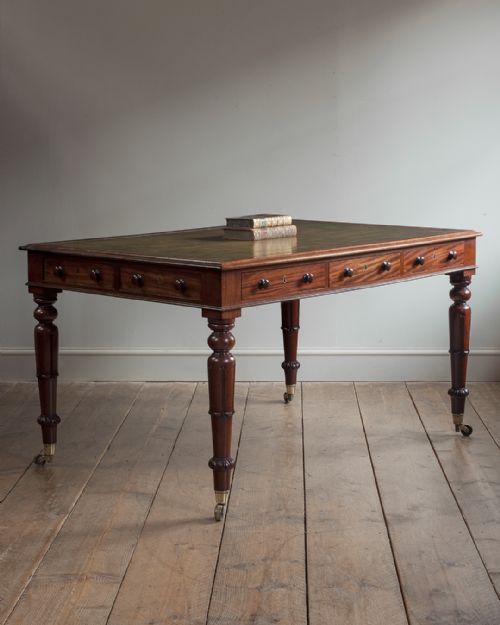


Large Mahogany Partner Table
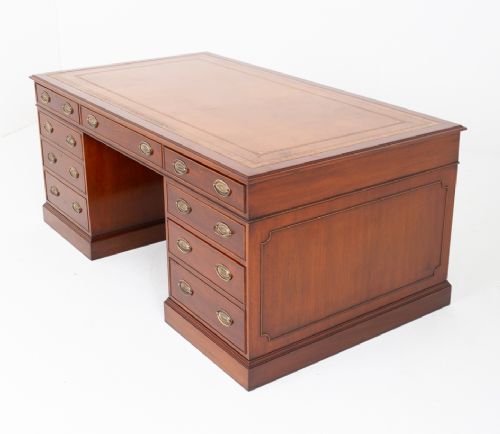
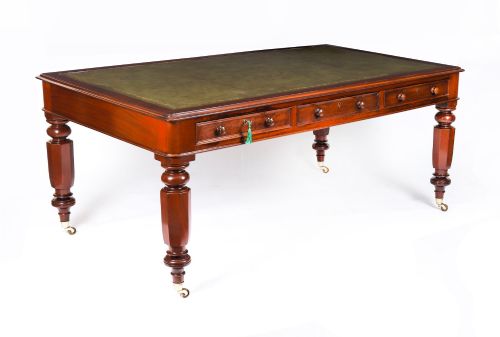
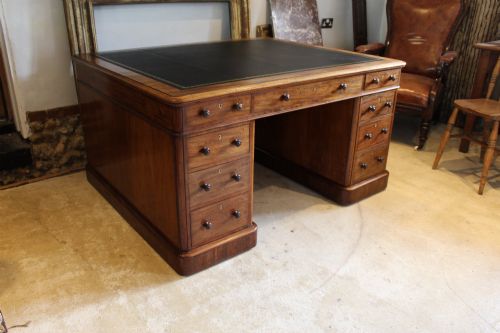
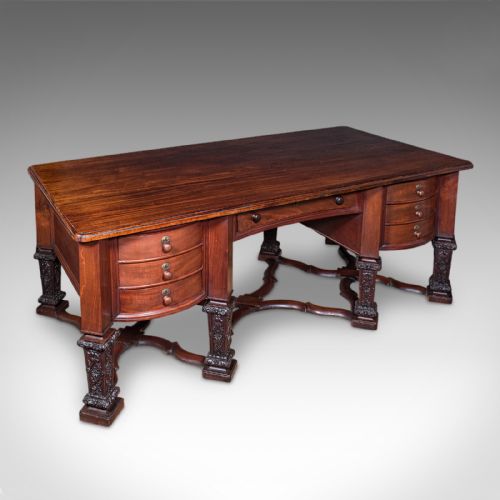
A large mahogany partner table brings dual-sided working space and stately proportions into a study or library.
Large Mahogany Partner Table
A large mahogany partner table provides opposing workspaces designed for two people to sit opposite one another, featuring drawers and cupboards on both sides. These substantial items appear primarily across the 18th century, Victorian, Edwardian and Regency periods in forms ranging from pedestal desks to library tables.
Buyers will most frequently encounter Victorian and Edwardian examples built as pedestal desks with banks of drawers flanking a central kneehole. Georgian and George III pieces also feature prominently, often displaying formal architectural proportions and refined cabinet-making.
Origins span English workshops alongside revival interpretations incorporating French Empire or Chippendale design motifs. The overarching format remains consistent: a generous writing surface paired with deep storage accessible from both flanks.
Quality and Proportion
Quality rests upon the selection of timber figures, where matched flame or curl mahogany veneers demonstrate superior material choice over plain boards. The depth of patination and the preservation of original polished surfaces indicate how well a piece has survived over time.
Structural integrity shows in the precision of the drawer dovetails, the smooth movement of heavy pedestals, and the crispness of carved mouldings or serpentine shaping. Desks retaining original tooled leather inserts and working brass locks command greater appreciation among collectors.
Listings feature mahogany, burr walnut, and ormolu materials across Victorian, Edwardian, and 18th century periods.
Charles Andrea Nosotti·Cookes of Finsbury London·W. Priest
The Large Mahogany Partner Table Glossary
- Partners desk
- A double-sided writing table designed with drawers and cupboards facing both directions so two people can work simultaneously. This form originated to accommodate business associates or banking colleagues.
- Pedestal desk
- A heavy writing desk supported by two vertical columns or pedestals containing drawers. The central space between them forms the kneehole.
- Flame mahogany
- A veneer cut from timber where the grain creates a distinctive flame-like pattern. Furniture makers prized this figure for principal drawer fronts and surfaces.
- Kneehole
- The open space beneath the centre of a desk where a person sits. In partner tables, this area often conceals a recessed cupboard or small drawer.
- Patina
- The surface sheen and mellowing of colour developed by wood over decades of handling and polishing. A good patina reflects age and careful maintenance.
Large Mahogany Partner Table: Frequently Asked Questions
How do I care for the leather top?
Clean the leather surface gently using a damp cloth without harsh detergents, avoiding excess moisture. Apply a specialist leather cream periodically to maintain suppleness and prevent cracking.
Keep the table away from direct sunlight and heat sources to protect both the leather insert and the underlying mahogany timber from drying out.
Can a partner table be dismantled for moving?
Most large examples separate into distinct modular sections for transport. The top usually lifts off the two pedestal bases, and the central modesty panel or modesty stretcher often detaches.
Secure all loose internal drawers before moving any component to prevent damage to the timber carcase and internal runners.
How do I distinguish Georgian from Victorian pieces?
Georgian examples from the 18th century tend to display restrained classical proportions, cleaner lines, and solid timber construction with minimal ornamentation. Secondary woods often include oak or pine.
Victorian and revival pieces from the mid to late 19th century frequently feature heavier mouldings, more pronounced veneer figures like flame mahogany, and elaborate architectural detailing or carving.
Are both sides of the desk identical?
Partner tables generally feature functional drawers or cupboards facing outwards on both long sides, allowing two people to use the desk simultaneously. Some variations substitute faux drawers on one side, though true partner pieces offer working storage front and back.
Examining the keyholes and drawer construction on both flanks confirms whether the storage operates symmetrically.