
Vintage Office Table
A vintage office table serves as a sturdy workspace, combining period timber and leather in forms built for daily use.
Vintage Office Table
When you search for a vintage office table, you encounter substantial writing tables, kneehole desks, and pedestal desks designed for study and commerce. These pieces span the Victorian, Edwardian, and Art Deco periods, offering functional surfaces supported by drawers or pedestals.
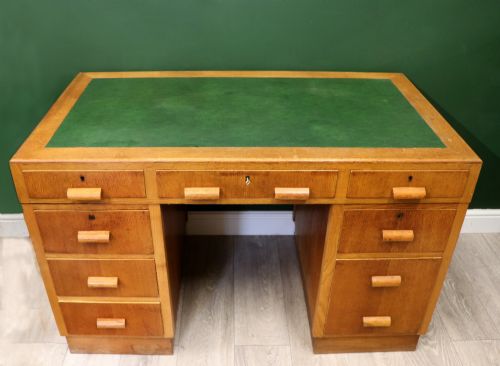
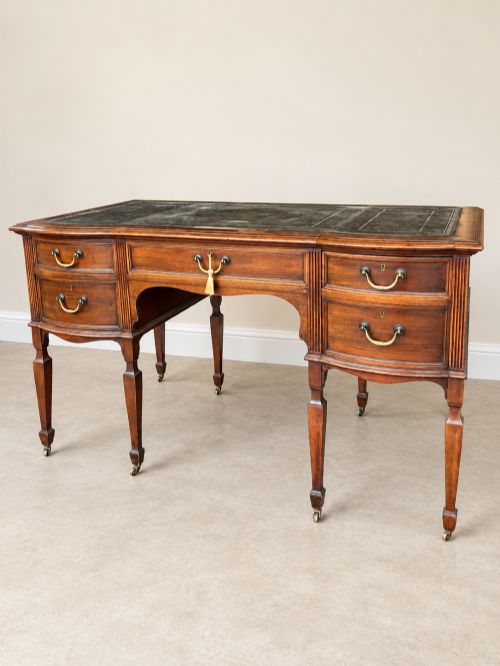
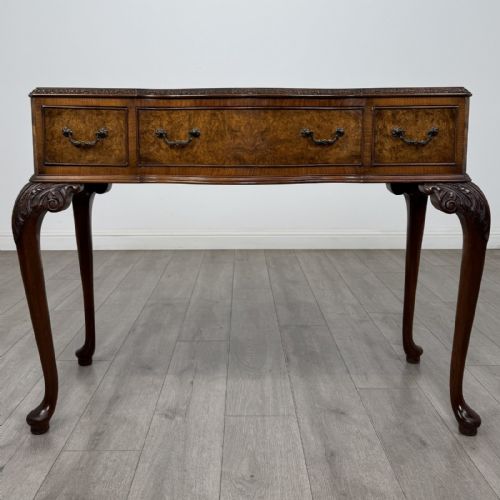
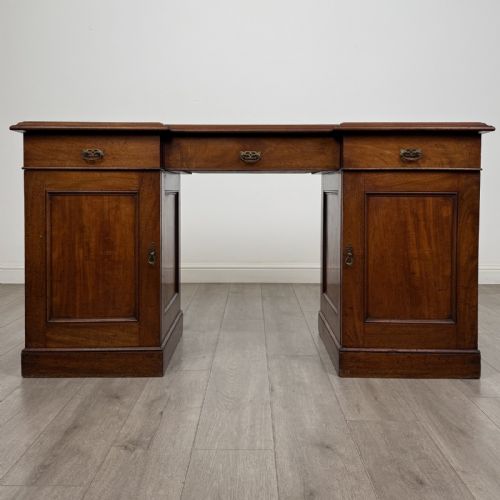
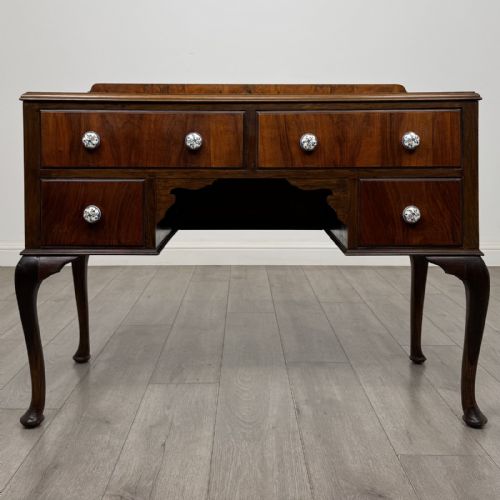
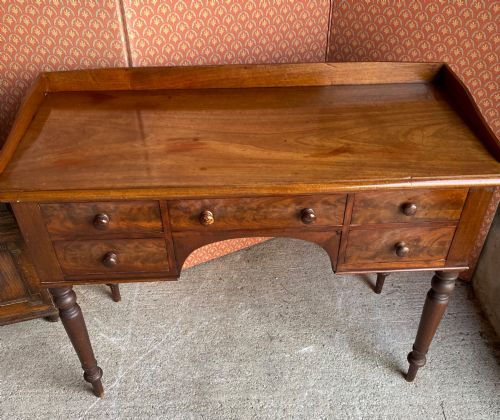
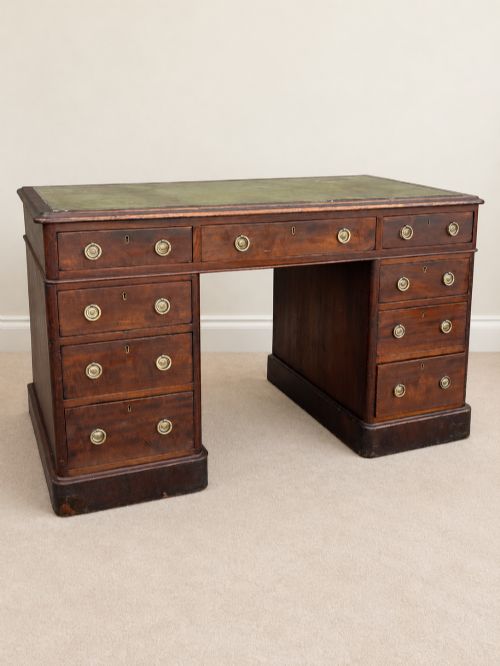
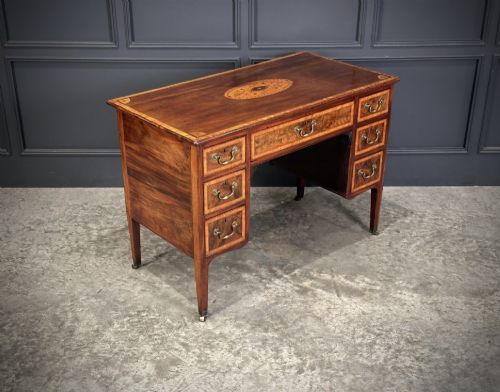
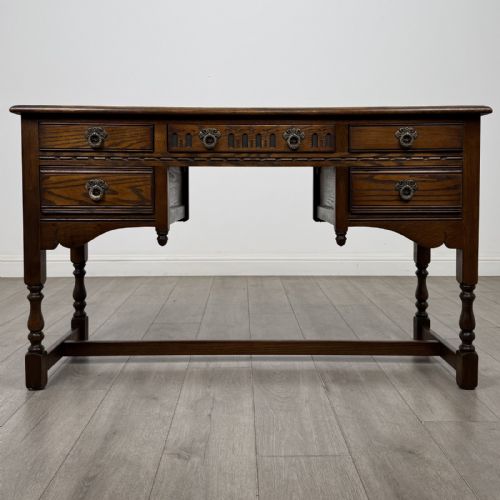
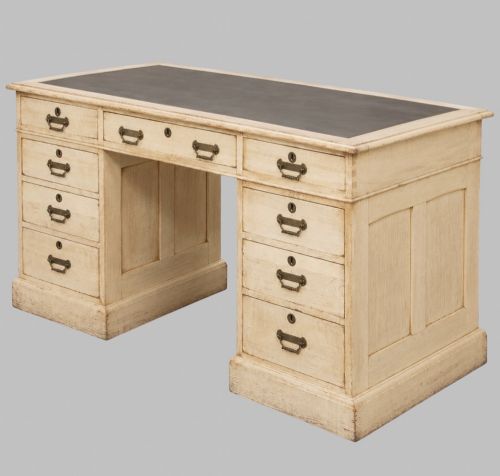
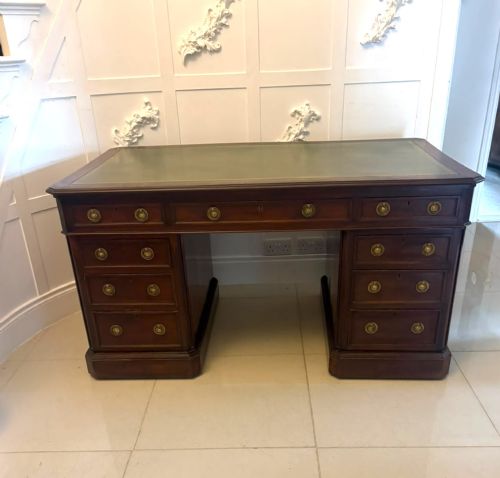
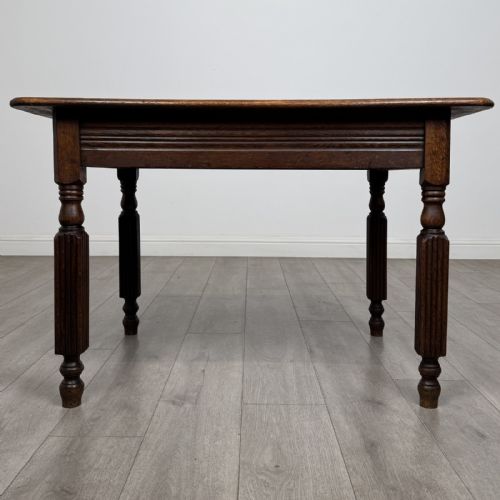
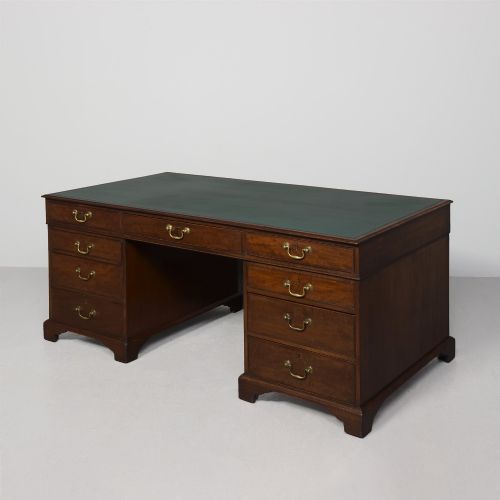
The version you most frequently meet on this page is the mahogany or oak pedestal desk, often fitted with multiple drawers and an inset leather writing surface. Walnut and burr walnut examples also appear regularly, bringing distinct grain patterns to the workspace.
Origins range across English workshops of the nineteenth and early twentieth centuries, encompassing revival styles like Chippendale and Queen Anne alongside clean-lined Art Deco designs. Each piece reflects the working habits and cabinet-making standards of its specific decade.
Distinctions in Quality and Execution
The distinction between standard commercial pieces and superior examples lies in the selection of timber and the crispness of carved or inlaid details. Finer desks display carefully matched grain veneers and substantial secondary woods rather than thin applied surfaces.
Original hardware, including stamped brasses and fitted locks, elevates a piece above those altered or refitted in later decades. The integrity of the internal drawer linings and the retention of the original leather writing surface also define the upper tier of the range.
One persistent archivist found a solitary swivel chair hiding among the sturdy timber tables.
Trollope and Sons·Edwards and Roberts·Maple and Co·James Mein of Kelso
The Vintage Office Table Glossary
- Pedestal desk
- A heavy writing desk supported by two banks of drawers flanking a central kneehole space. These units provide substantial storage beneath the main top.
- Partners desk
- A large double-sided desk designed so two people can work opposite one another. They typically feature drawers and cupboards accessible from both sides.
- Kneehole desk
- A compact desk with a central recess for the sitter's legs, usually flanked by single or double columns of drawers. This form preserves floor space while offering organised storage.
- Linenfold
- A style of carved wood panel ornament resembling folded linen. It appears frequently on the doors and modesty panels of Arts and Crafts or revival furniture.
- Burr walnut
- Timber taken from a tree growth or burl, yielding intricate, swirling grain patterns. Cabinet makers prized this wood for decorative drawer fronts and top surfaces.
Vintage Office Table: Frequently Asked Questions
What is a partners desk?
A partners desk is a large, double-sided workspace designed to accommodate two users facing each other. These tables incorporate drawers and cupboards on both longitudinal sides.
They originated in professional and domestic libraries where secretaries or business partners needed simultaneous access to surface space and storage.
How do I identify an Edwardian desk?
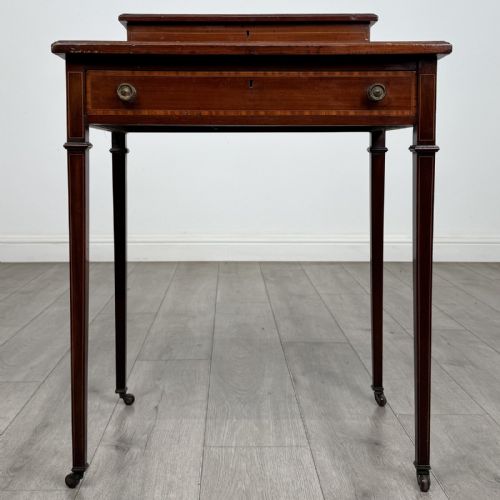
Edwardian desks often display lighter timbers such as mahogany or satinwood, sometimes featuring inlaid stringing or satin birch panels. The proportions tend to be more slender than heavy Victorian counterparts.
They reflect the aesthetic revivals popular at the turn of the twentieth century, balancing traditional forms with refined decorative accents.
Are these desks suitable for daily use?
These tables were built for rigorous administrative work using solid hardwoods and traditional joinery. Their robust construction makes them durable additions to modern studies.
Careful placement away from direct heat sources helps preserve the timber and the inset leather writing surfaces during everyday employment.
What distinguishes Art Deco office tables?
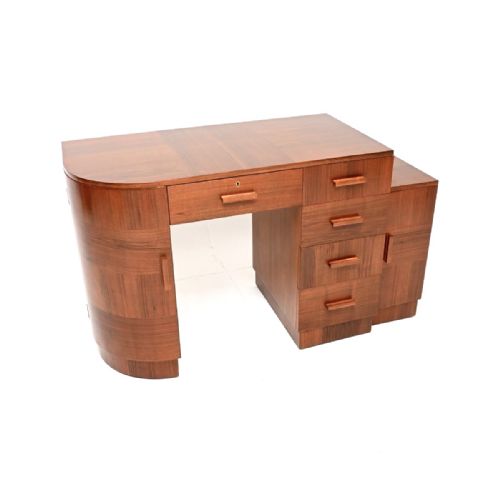
Art Deco office tables showcase streamlined silhouettes, geometric forms, and exotic veneers like burr walnut or satin birch. They omit traditional carved ornamentation in favour of clean architectural lines.
Introduced around nineteen thirty, these pieces emphasise modern materials and functional minimalism suited to twentieth-century interiors.