





Large Japanese Wall Charger
A large japanese wall charger brings dramatic scale and intricate craftsmanship to an interior, making a bold focal point for any room.
Large Japanese Wall Charger
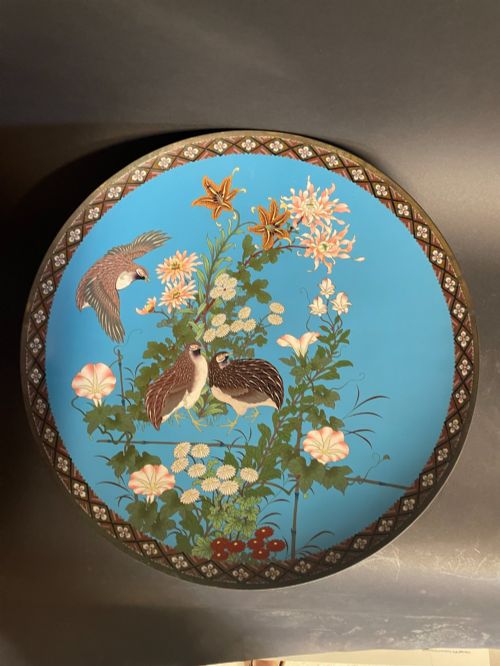
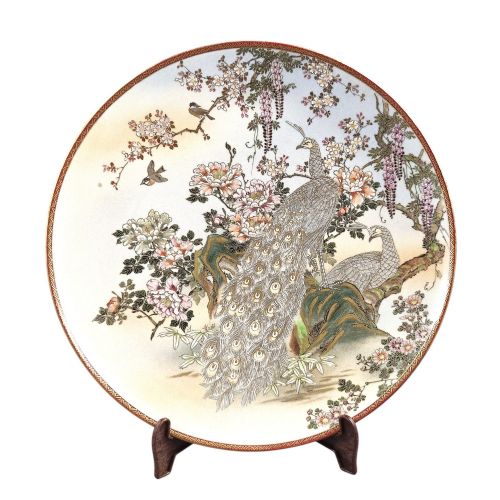
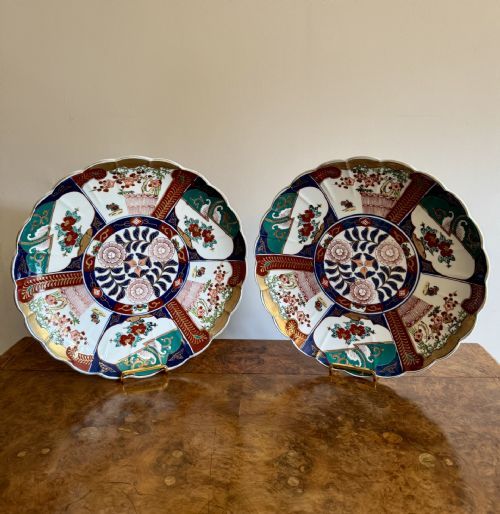
A large japanese wall charger represents a striking category of decorative wall plates and platters, originating predominantly from the Meiji period through to the early twentieth century. These substantial display pieces range across traditional styles including Imari porcelain, Satsuma moriage, and detailed cloisonne enamel.
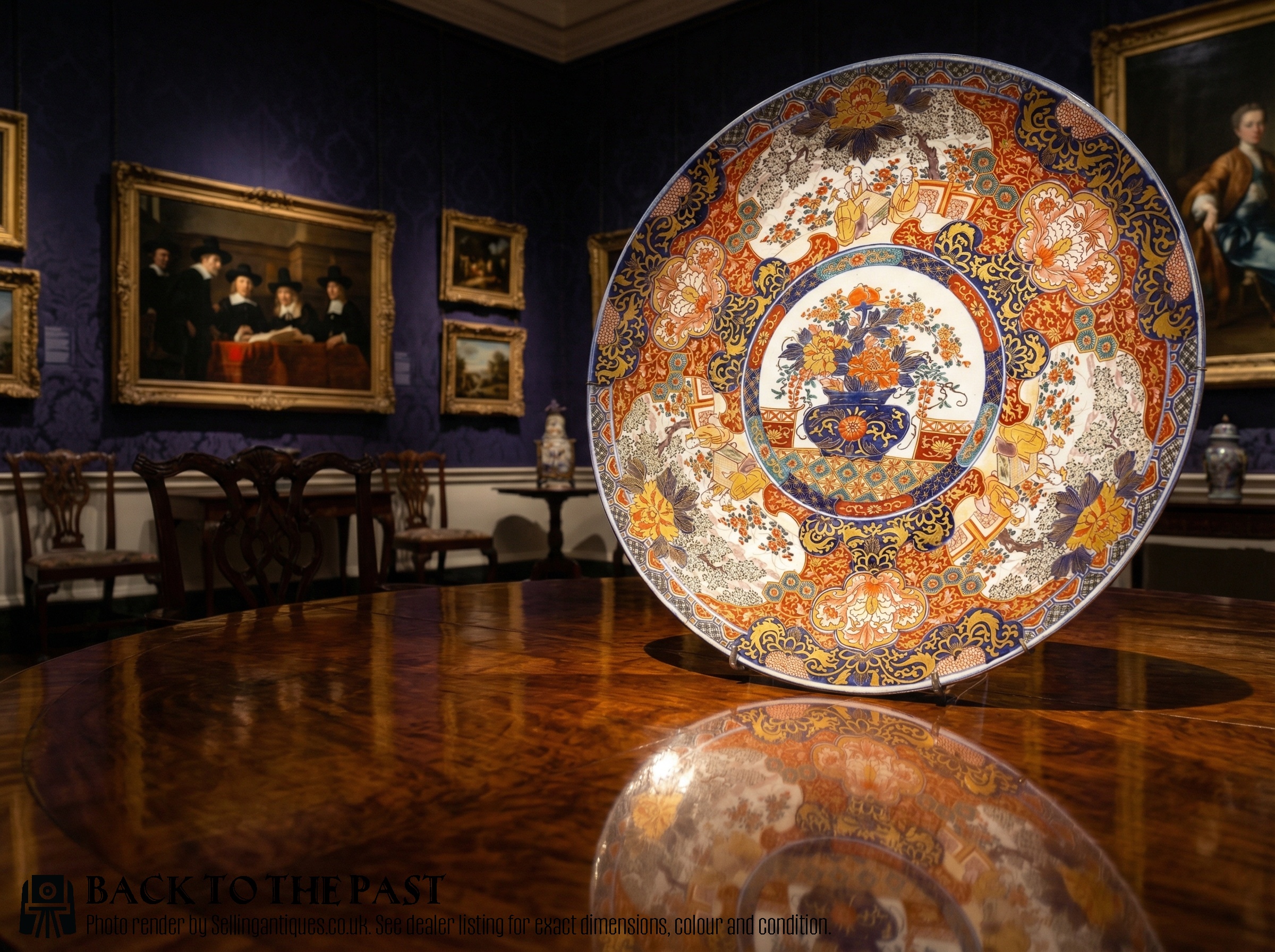
The pieces encountered most frequently on this page are Imari chargers featuring classic blue and white or iron-red and gold palettes, often depicting natural scenes, koi carp, or the Seven Lucky Gods. Alongside porcelain, substantial cloisonne enamel chargers decorated with dragons, birds, or Mount Fuji appear regularly.
Originating from major ceramic and metalwork production centres such as Arita, these items served primarily as grand decorative works rather than utilitarian tableware. Their generous diameters and drilled or mounted rims show they were intended explicitly for display on walls or within cabinets.
Materials and construction methods
Porcelain bodies are shaped and hand-painted with cobalt blue underglaze and iron-red and gold overglaze enamels, then fired at high temperatures to achieve a durable vitreous finish. Imari pieces rely on this dense ceramic base to support rich polychrome ornamentation.
Cloisonne enamel chargers utilise a copper base where thin metal wires form cellular partitions, or cloisons, which are filled with coloured glass pastes and fired repeatedly. Techniques like totai shippo incorporate wirework over a porcelain or earthenware core to mimic tree bark textures.
Surface details often incorporate moriage raised slip ornamentation and applied gold leaf accents to build tactile depth across the pictorial composition of birds, deities, and foliage.
Several chargers feature glaring owls and coiled dragons staring down viewers with immense intensity, proving that nineteenth-century artisans excelled at dramatic stares.
Distinctions in execution and design
Quality separates through the precision and complexity of the hand-painted or enamelled composition, where superior pieces display meticulous control over line work and colour saturation. Simpler decorative schemes contrast with intricate multi-layered depictions of dragons, peacocks, or figures.
The refinement of the metalwork in cloisonne or the clarity of the porcelain glaze dictates the tier of the piece. Artisanal signatures on the reverse or base often indicate higher workshop standards and deliberate artistic intent.
The Large Japanese Wall Charger Glossary
- Imari
- A traditional style of Japanese porcelain featuring a distinctive palette of underglaze blue, iron-red, and gilt highlights. These wares were heavily exported to Europe during the nineteenth century.
- Cloisonne
- A metalwork technique where thin wires are soldered to a copper base to create compartments filled with enamel paste. The surface is then ground and polished smooth.
- Moriage
- A decorative ceramic technique using raised slip to build up tactile, three-dimensional patterns on the surface of the vessel. It frequently appears on Satsuma wares.
- Totai shippo
- A specific Japanese cloisonne method where enamel is applied to a ceramic or porcelain body rather than solid metal. This technique creates distinctive textural contrasts.
- Charger
- A large ornamental plate or platter designed specifically for display on a wall, sideboard, or table centre rather than for holding food.
Large Japanese Wall Charger: Frequently Asked Questions
How do I hang a large Japanese wall charger safely?
These heavy porcelain and metal platters require specialist wall fixings that distribute weight evenly across the rim or base without causing structural stress. A professional spring-loaded hanger or custom-built bracket provides secure support for display.
Ensure the mounting anchor secures directly into wall studs or uses appropriate masonry plugs depending on the wall construction. Regular checks of the hanging hardware ensure the charger remains stable over time.
How should I clean and maintain my charger?
Dust the surface gently with a soft, dry microfibre cloth to prevent the accumulation of particles within the recessed enamel or glaze. Avoid using water, abrasive cloths, or chemical cleaning solutions on antique surfaces.
Keep the piece away from direct sunlight and damp environments to protect delicate gold leaf and enamel pigments from fading or deterioration.
What does a maker signature indicate on these pieces?
Signatures or workshop marks on the reverse of a cloisonne or ceramic charger often denote the artist, studio, or period of production. These marks help historians trace the origin and manufacturing era of the work.
Unsigned pieces remain common and are judged entirely on the merit of their artistry, material quality, and decorative complexity.