





Japanese Painted Ceramic Charger
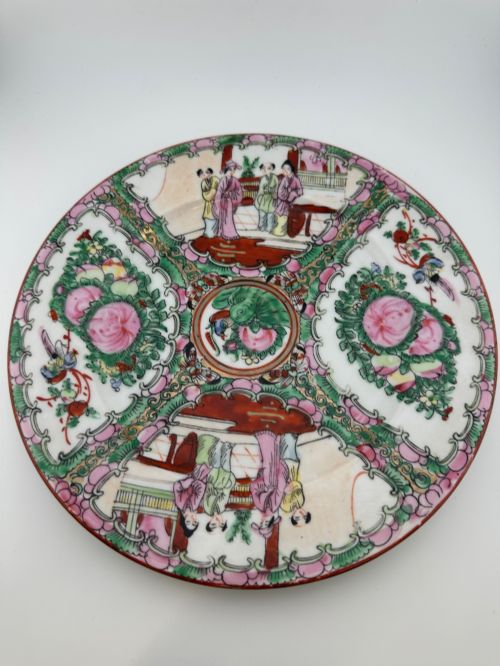
A Japanese painted ceramic charger brings vibrant pattern and substance to a wall or table through traditional East Asian craft.
Japanese Painted Ceramic Charger
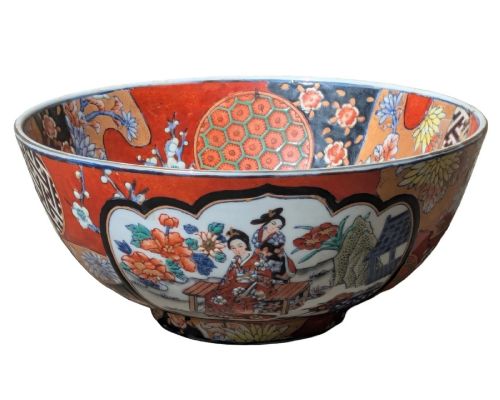
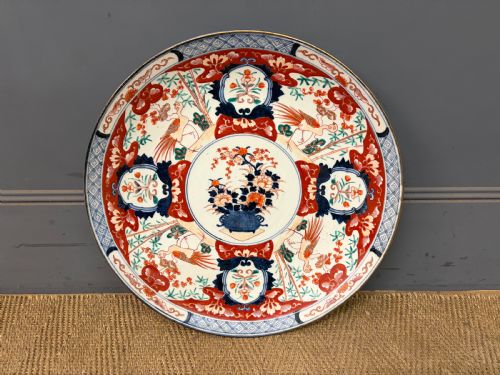
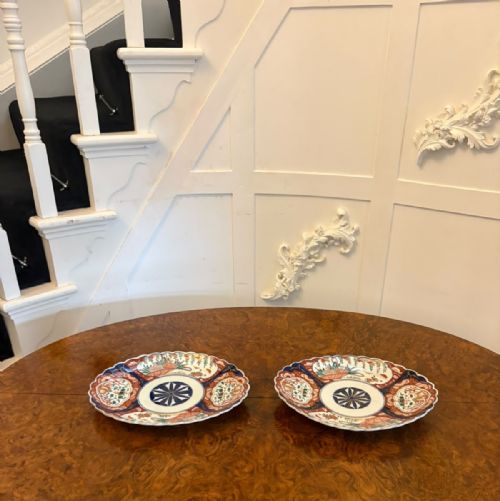
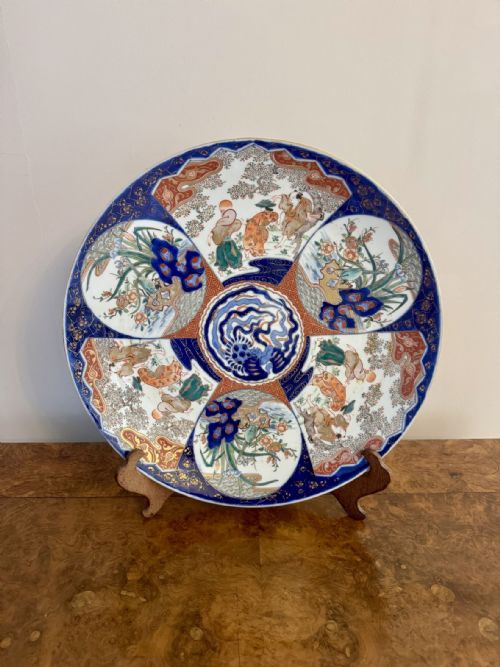
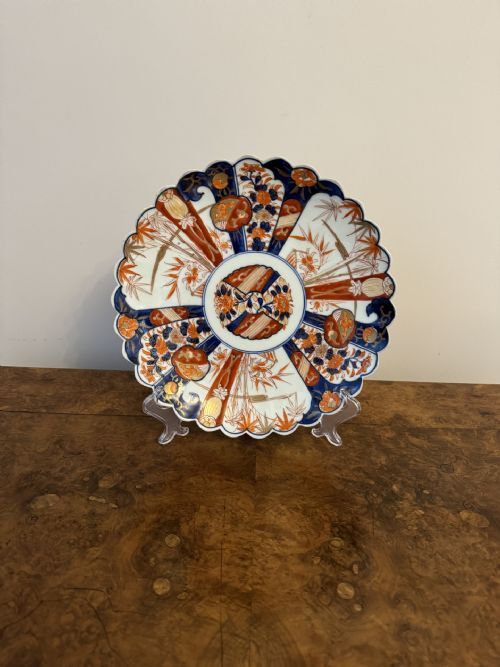
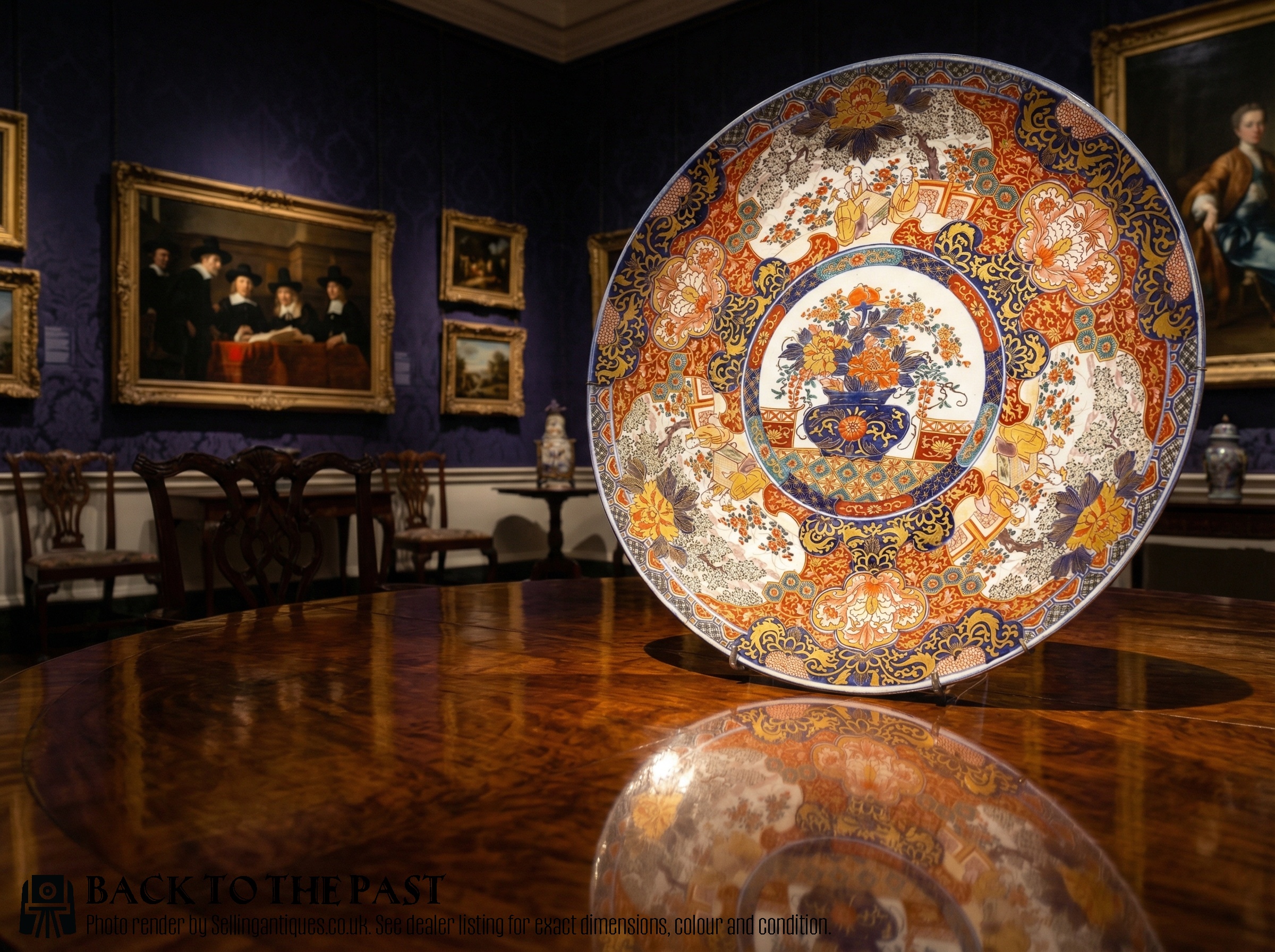
A japanese painted ceramic charger is a large decorative plate or shallow bowl intended for display rather than routine dining. The selection spans the nineteenth and early twentieth centuries, featuring pieces from the Meiji, Taisho, and Victorian periods.
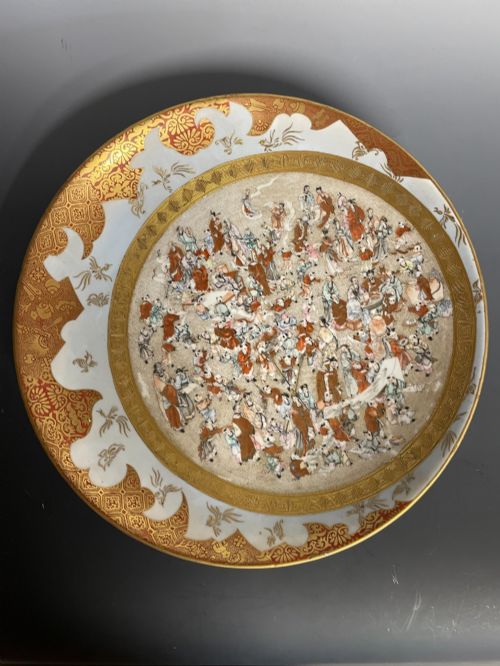
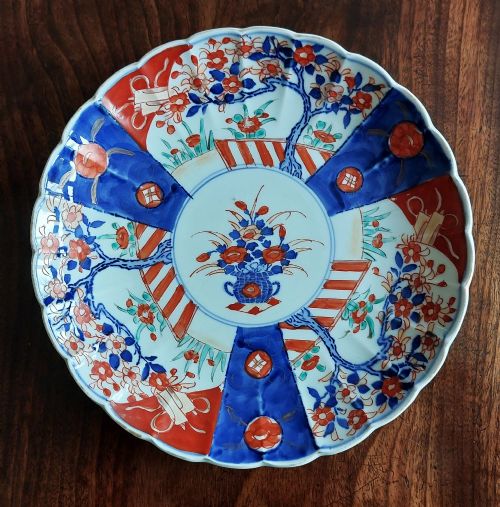
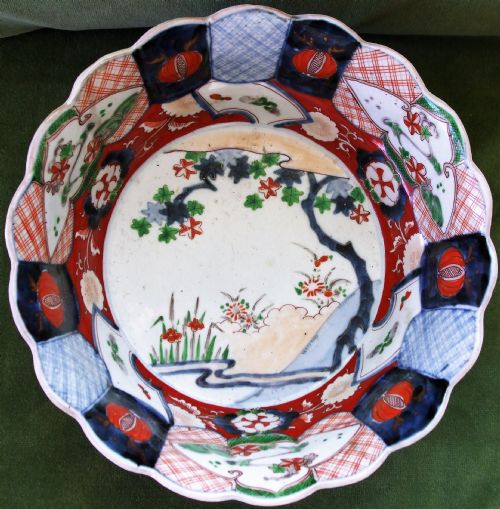
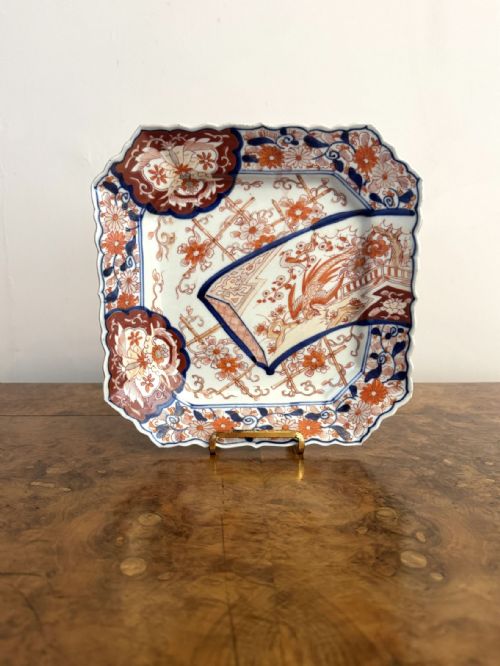
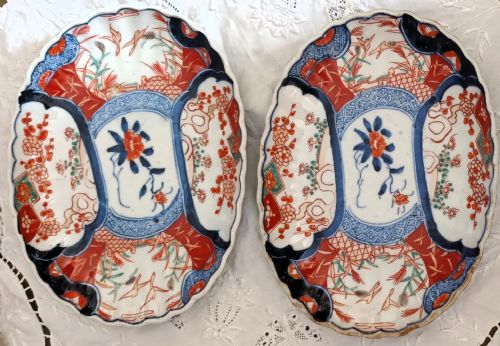
Imari and Kutani styles dominate the offerings alongside Arita wares, often presenting scalloped edges, hexagonal forms, or large circular surfaces. Motifs range from floral and bird designs to depictions of the Seven Lucky Gods.
How they were made
Potters shaped porcelain and earthenware into substantial chargers, bowls, and plates, frequently applying cobalt underglaze for deep blue coloration. Artisans then added enamel pigments and gilt highlights to enrich the decorated surfaces.
Gold leaf and gilding were incorporated alongside detailed hand painting to create complex visual depth across the ceramic bodies.
Several chargers depict the Seven Lucky Gods sharing space with exotic birds and intricate floral borders on a single ceramic plate.
What varies in quality
The refinement of the hand painting sets individual examples apart, particularly in the precision of floral patterns, bird depictions, and figure work. Mastery in the balance of cobalt underglaze with enamel and gilding dictates the visual impact of each charger.
Form complexity also influences the tier of the piece, distinguishing standard circular formats from scalloped, hexagonal, and square shaped plates.
Koshida
The Japanese Painted Ceramic Charger Glossary
- Imari
- A traditional Japanese style of porcelain decoration originating from the port of Imari, typically utilising a palette of cobalt blue, iron red, and gold.
- Kutani
- A style of Japanese coloured porcelain known for bold pictorial designs and rich enamel application.
- Arita
- A Japanese town and production centre renowned for producing some of the earliest and finest porcelain in the country.
- Meiji Period
- The era in Japanese history spanning from 1868 to 1912, characterised by a flourishing of decorative arts for export.
- Cobalt Underglaze
- A blue pigment applied to ceramic bodies beneath a clear glaze before high temperature firing.
Japanese Painted Ceramic Charger: Frequently Asked Questions
How were ceramic chargers used?
These large plates served primarily as decorative centerpieces on tables or dressers rather than functional tableware for dining.
Their substantial size and rich painted designs made them ideal for display in prominent interior spaces.
How do I hang a wall charger safely?
Displaying a heavy ceramic plate on a wall requires a specialist spring loaded plate hanger designed to distribute weight evenly.
Ensure the fixing is secured directly into a wall stud or uses appropriate wall anchors for porcelain objects.
What is the difference between Imari and Kutani?
Imari wares typically combine deep cobalt blue and iron red with extensive gilding in structured geometric and floral panels.
Kutani pieces often feature a more painterly approach with heavy green, purple, and yellow enamels depicting pictorial scenes.
How do I identify a Meiji period charger?
Meiji period ceramics generally date between 1868 and 1912, reflecting the opening of Japanese trade and a rise in elaborate export porcelain.
Look for dense hand painted motifs such as birds, flowers, and traditional figures executed on porcelain or earthenware.