
Large French Farmhouse Table
A large french farmhouse table anchors a room with generations of utility and character, built to seat a crowd for daily meals.
Large French Farmhouse Table
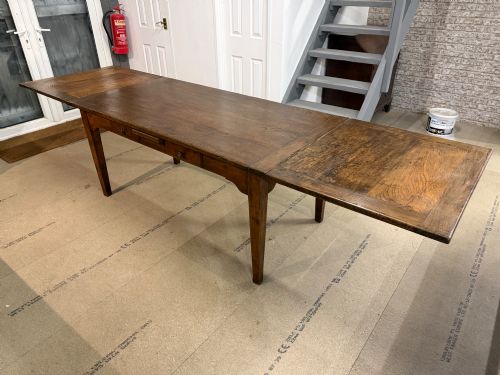
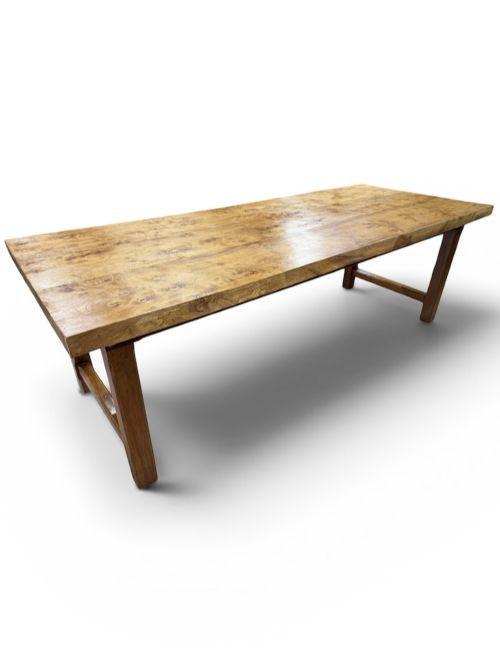
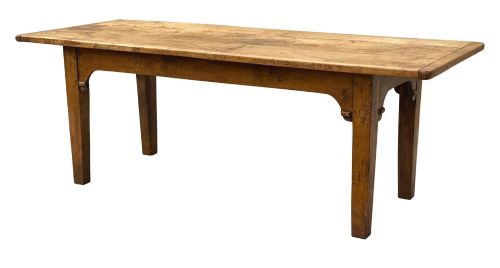
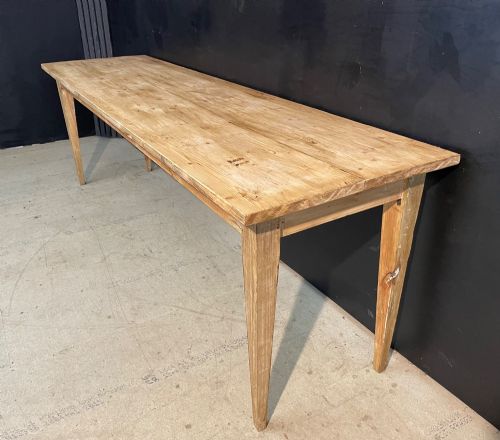
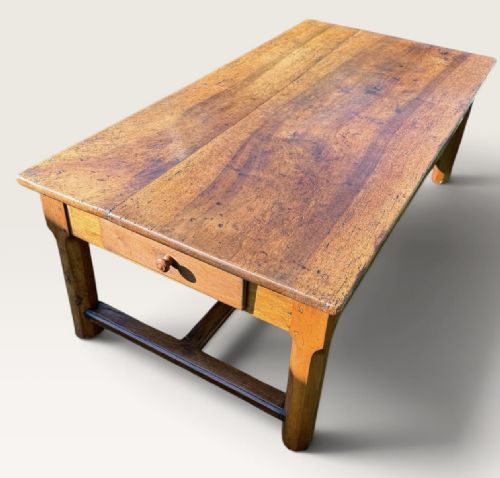
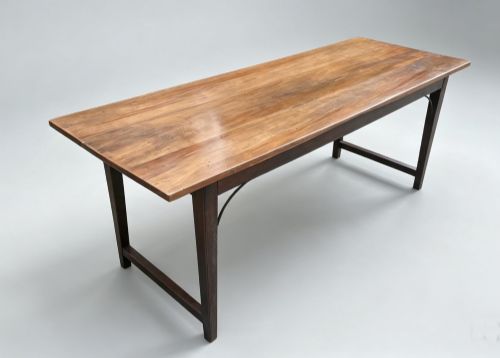
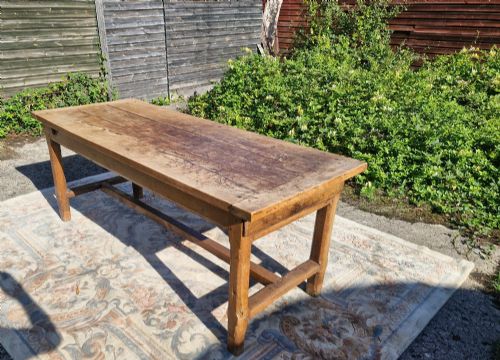
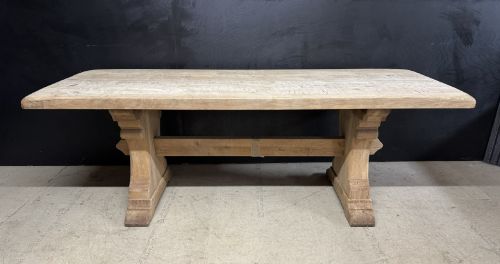
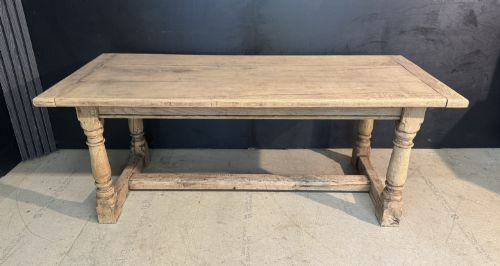
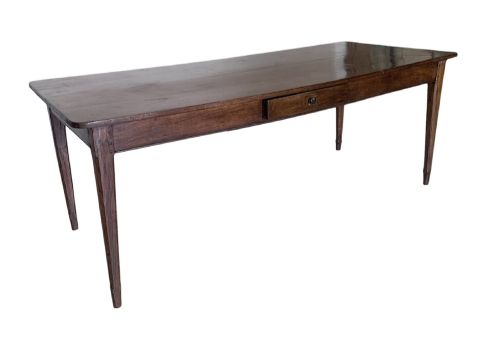
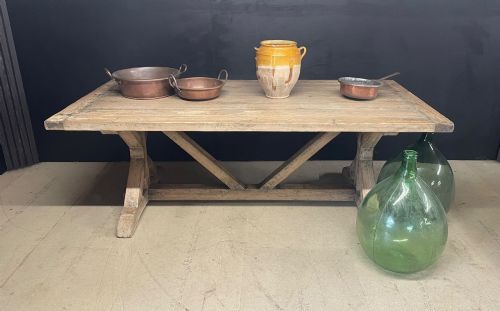
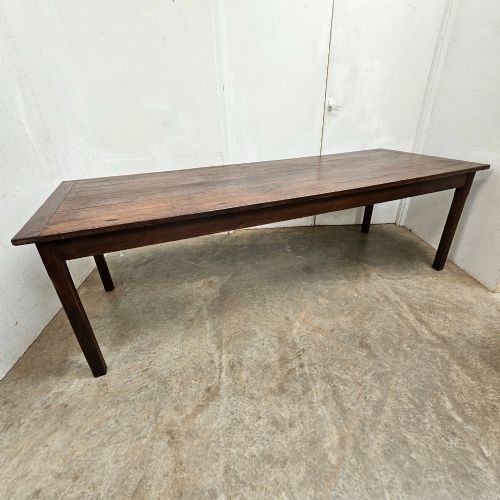
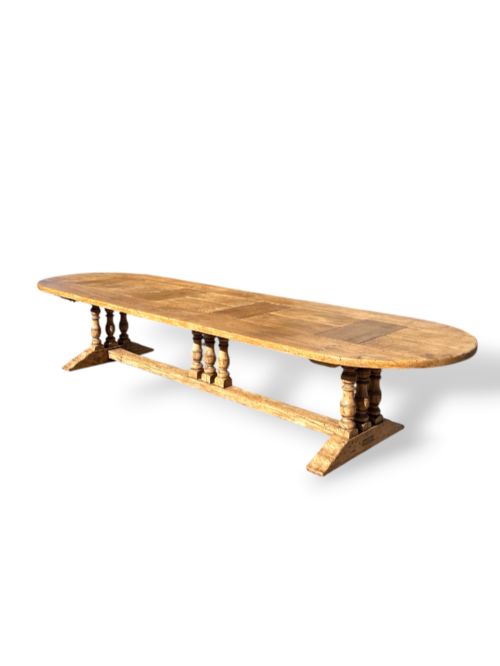
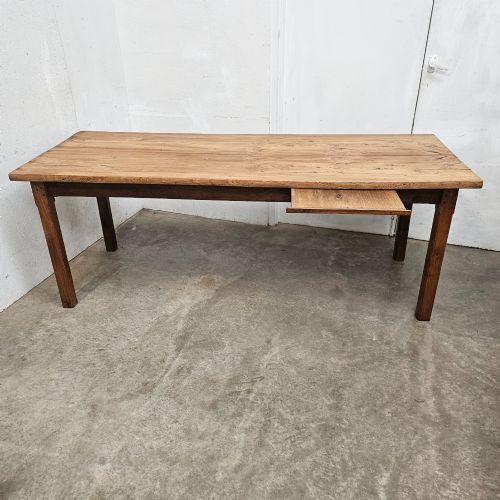
A large french farmhouse table serves as the central gathering place in a home, with proportions designed for heavy daily use. The pieces seen here span robust dining designs, prep tables, and low coffee tables shaped by regional workshops.
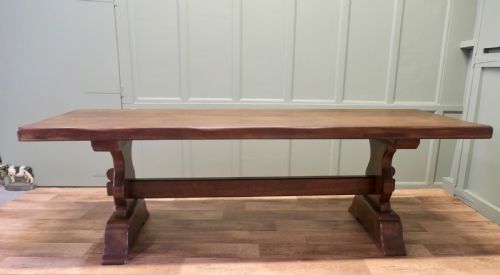
Most examples found on this page date from the nineteenth century or early twentieth century, reflecting an era of solid timber construction. Buyers encounter long oak refectory formats, cherrywood boards, and bleached pine surfaces shaped by decades of domestic work.
The aesthetic leans toward rustic farmhouse and provincial styles where utility dictates the form. Simple structural lines allow the natural grain and signs of past labour to define the character of each piece.
Materials and Construction Methods
Makers relied on dense regional hardwoods like oak, cherrywood, walnut, and fruitwood alongside durable pine and elm. Planks were selected for width and stability, often joined in two-board or multi-board top configurations.
Joinery prioritized strength, utilising thick timber legs, trestle supports, and occasional storage drawers built directly into the aprons. Surfaces show the marks of hand-planing and centuries of daily friction rather than factory finish.
Listings feature timbers including oak, pine, fruitwood, cherrywood, elm, and walnut across dining, prep, and coffee table formats.
Distinctions in Quality and Proportion
Quality rests in the selection of timber and the integrity of the original construction. Tables featuring uncompromised plank tops in dense oak or aged cherrywood command attention for their structural permanence.
Proportion and scale separate standard examples from exceptional pieces. Lengths reaching four metres, balanced leg turnings, and integrated drawer units elevate a piece from simple utility to remarkable craft.
The Large French Farmhouse Table Glossary
- Refectory table
- A long, narrow dining table traditionally used for communal meals. These examples offer extended seating capacity and sturdy timber stretchers.
- Bleached oak
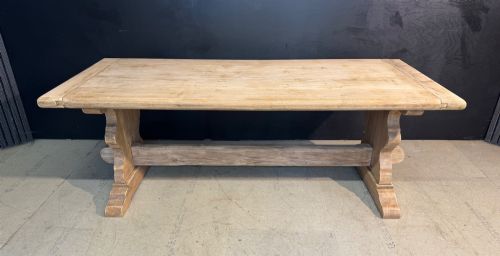
- Timber treated to lighten the natural tone of the grain. This process creates a muted surface popular in provincial interiors.
- Fruitwood
- A collective term for dense timber sourced from fruit-bearing trees such as cherry, pear, or apple. It yields a warm patina over decades of use.
- Two board top
- A table surface constructed from just two wide planks joined lengthwise. This construction method indicates superior initial timber selection.
- Trestle
- A structural support system consisting of two or more vertical frames connected by a horizontal beam. It provides stable leg clearance along the length of large tables.
Large French Farmhouse Table: Frequently Asked Questions
How do I clean a wooden farmhouse table?
Wipe the surface gently with a damp cloth using mild soap, avoiding harsh chemical sprays that strip the natural wax and dry out the timber.
Dry the wood thoroughly afterwards to prevent moisture damage and preserve the historic patina built up over generations.
Can these tables be used outdoors?
These tables are designed for interior domestic use and lack weather-resistant treatments suited to external conditions. Exposure to rain and temperature swings will warp old timber and ruin the finish.
Keep them inside where stable humidity protects the structural joinery and historic wood surfaces.
What chairs work best with these tables?
Pair these pieces with simple ladder-back chairs, benches, or mismatched rustic seating that complements the vernacular style. Avoid delicate modern designs that clash with the heavy proportions of antique timber.
Consider the clearance under the aprons and drawers when measuring chair heights to ensure comfortable seating.
How do I date an antique table?
Examine the underside, tool marks, and fastener types to understand the period of construction. Hand-cut joinery and signs of wear distinct from modern machinery point toward nineteenth-century or earlier origins.
Compare the timber species and leg turning styles against documented regional examples to narrow down the decade.