
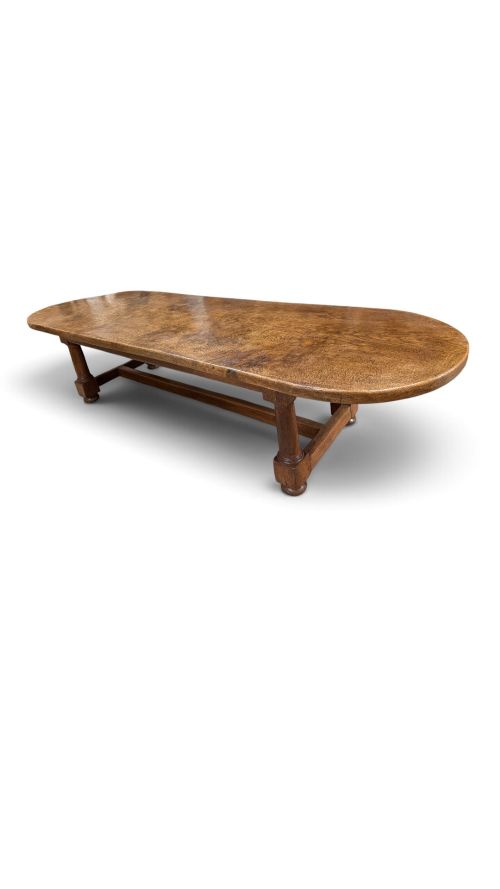
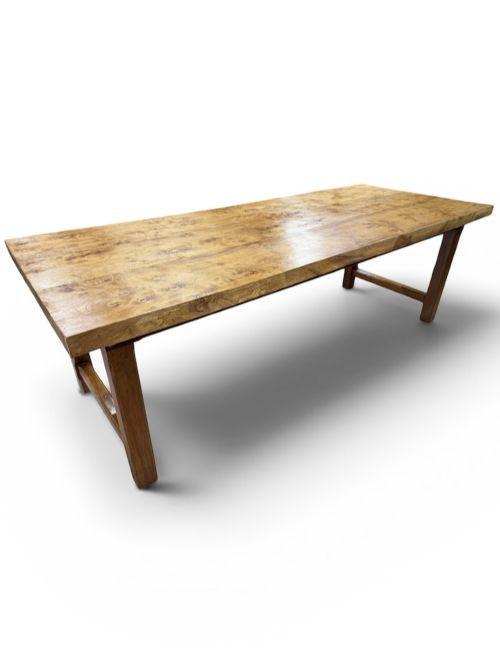
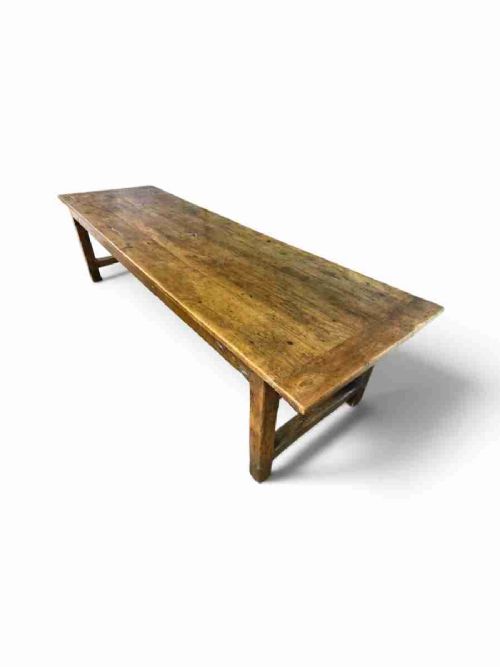
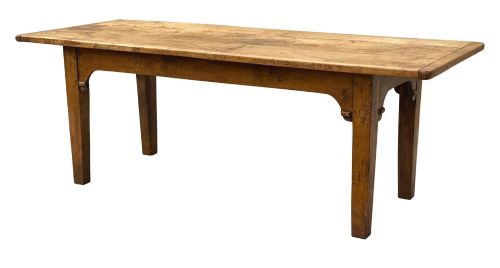
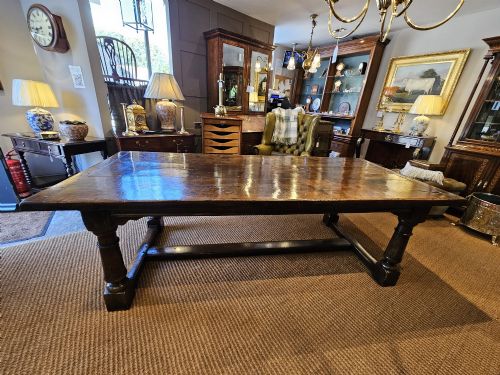
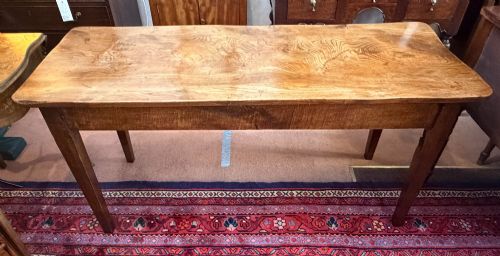
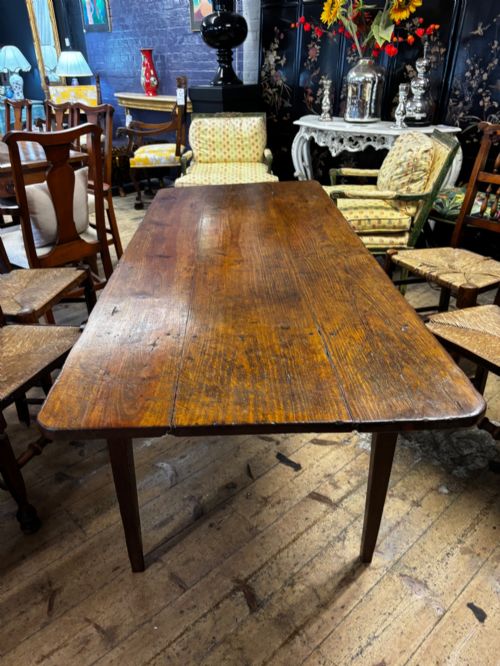
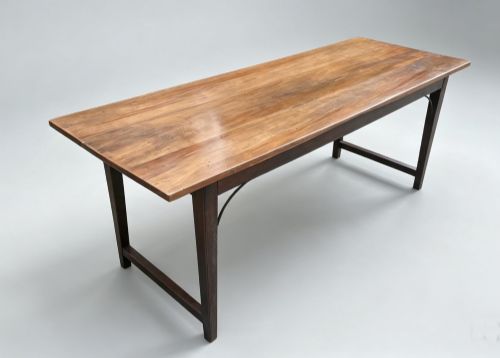
Plank Top Refectory Table
When you search for a plank top refectory table, you are looking for long, sturdy timber boards joined to form a surface built for communal dining.
Plank Top Refectory Table
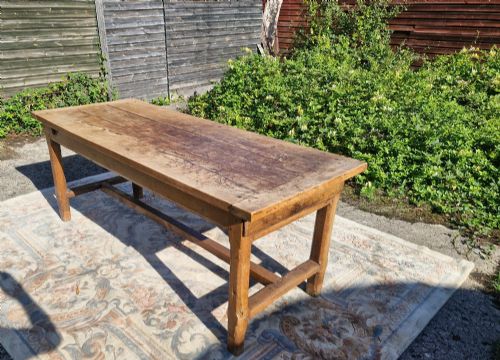
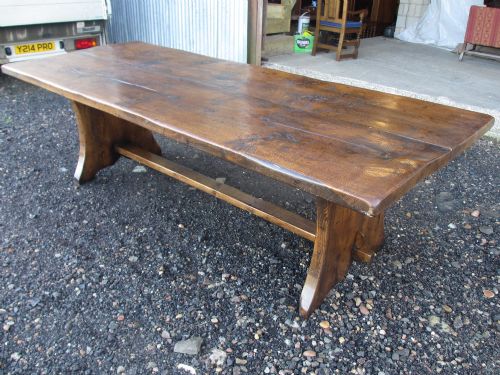
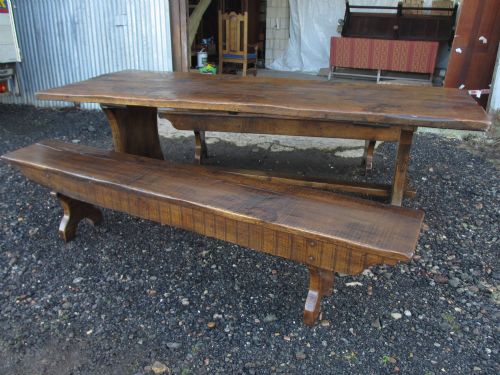
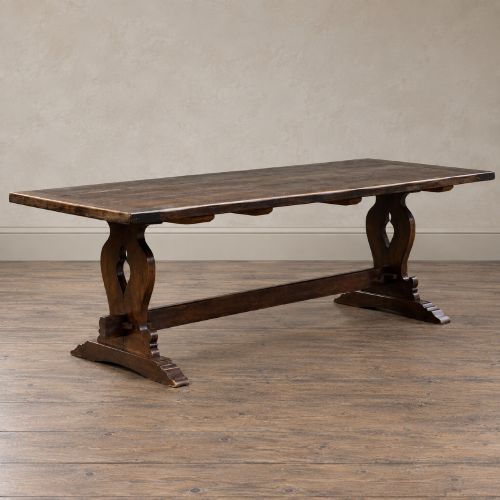
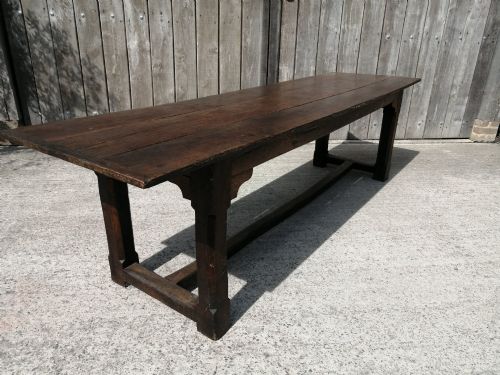
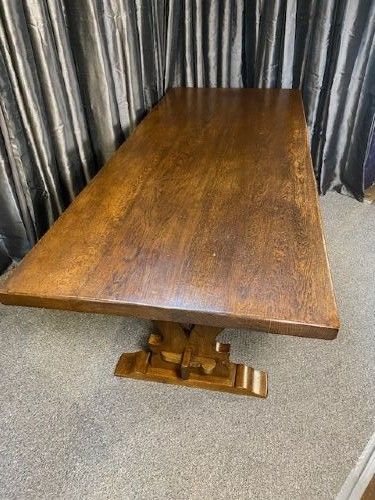
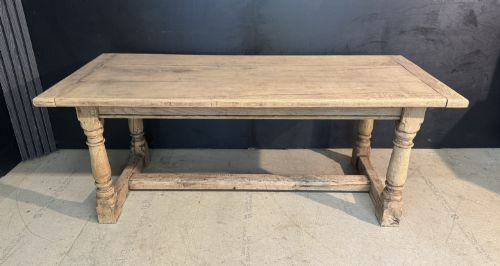
A plank top refectory table is a long, heavy dining or kitchen table built with boards running the full length of the surface. These pieces span centuries of domestic and institutional use, appearing in forms from 17th-century oak designs to 19th-century pine and fruitwood farmhouse examples.
The version you are most likely to meet on this page is an oak or fruitwood table dating from the 18th or 19th century. They frequently feature trestle ends, stretchers, or simple legs, reflecting regional English, French Provincial, and rustic farmhouse origins.
How They Were Made
These tables were constructed primarily using solid timber such as oak, elm, fruitwood, and pine, often joined with pegged mortise and tenon joints for stability. The tops consist of single, two, or multiple planks secured with cleats or stretchers to accommodate the natural movement of the wood over time.
Carpenters relied on hand tools to surface the timber, leaving subtle adze marks and varied grain patterns visible across the expanse of the boards. Secondary woods like beech or chestnut occasionally appear in the frames and undercarriages to support the weight of the heavy tops.
Listings feature oak, elm, fruitwood, pine, and chestnut, paired with styles ranging from Georgian and French Provincial to Gothic Revival.
What Varies in Quality
Quality in these tables rests primarily in the timber selection and the integrity of the original construction. A superior example retains its original plank top without excessive warping or modern replacement boards, showing uniform thickness and balanced proportions across the trestles or legs.
The character of the timber surface and the honesty of the construction dictate the standing of the piece. Tables that maintain their period undercarriages, authentic patination, and minimal structural alterations represent the higher tier of survivors.
The Plank Top Refectory Table Glossary
- Plank top
- A table surface constructed from long boards joined edge to edge rather than multiple small panels. This form allows the natural grain to run uninterrupted down the length of the furniture.
- Refectory table
- A long dining table originally designed for communal eating in monasteries or large halls. They are characterised by their elongated proportions and sturdy supporting stretchers.
- Cleat
- A transverse piece of wood fixed across the ends of tabletop planks. This technique helps keep the main boards flat and stable as humidity changes.
- Stretcher
- A horizontal beam connecting the legs or trestles of a table to provide structural rigidity. They often show wear from the placement of feet over generations of use.
- Trestle
- A supporting framework consisting of a horizontal beam or bar upheld by two pairs of slanting legs. This form distributes weight evenly beneath long surfaces.
Plank Top Refectory Table: Frequently Asked Questions
How do I care for a plank top?
Keep the timber away from direct heat sources and sudden temperature shifts to prevent the boards from splitting.
Apply natural beeswax occasionally to nourish the wood and maintain a protective barrier against everyday moisture.
Can I use these tables daily?
These pieces were built for heavy domestic use and handle daily dining and kitchen activities with ease.
Use felt pads under hot dishes and wipe spills promptly to protect the historic surface from staining.
How do I date a table?
Examine the underside and joints for tool marks, pegged construction, and the type of saw cuts used on the timber. Early examples display hand-riven and adzed surfaces while later pieces show more uniform mechanical milling.
Compare the leg style, stretcher arrangement, and wood species against known period examples to narrow down the decade or century of origin.
What is a bread slide?
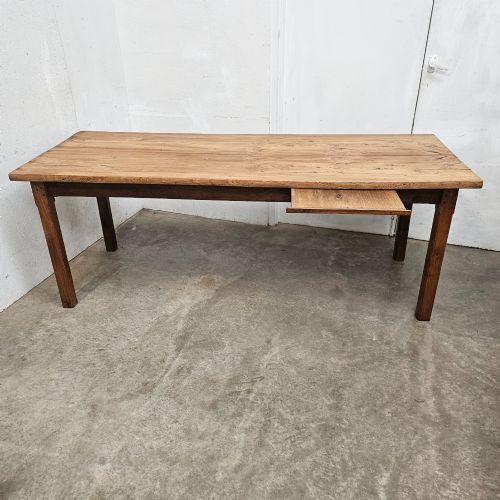
A bread slide is a pull-out wooden board integrated beneath the tabletop, historically used for cooling loaves or preparing food.
This feature appears on specific French farmhouse tables and adds utility as an extra surface during dining.