
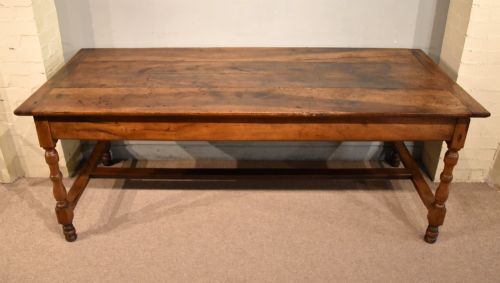
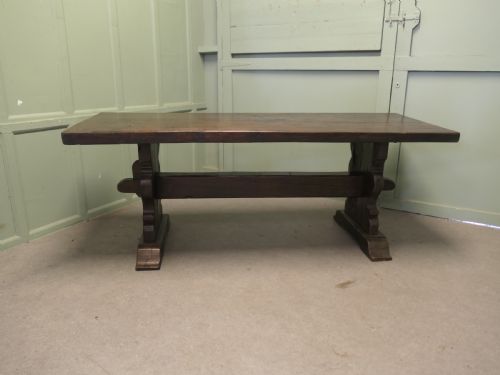
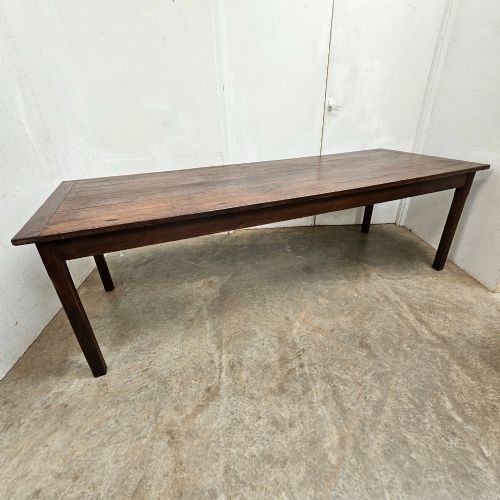
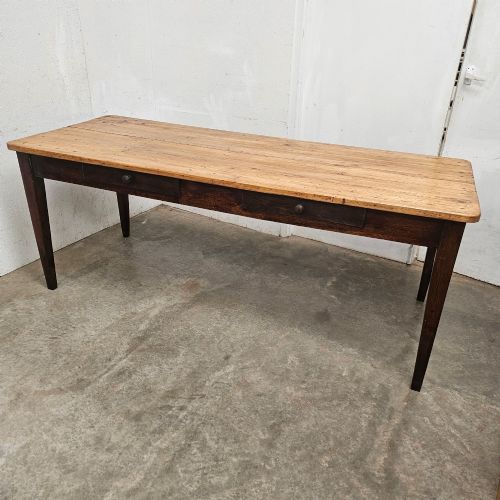
French Provincial Refectory Table
A french provincial refectory table brings sturdy timber craft and long dining traditions into modern homes.
French Provincial Refectory Table
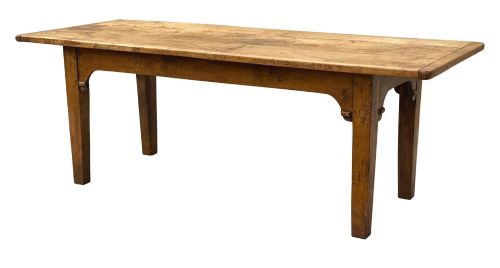
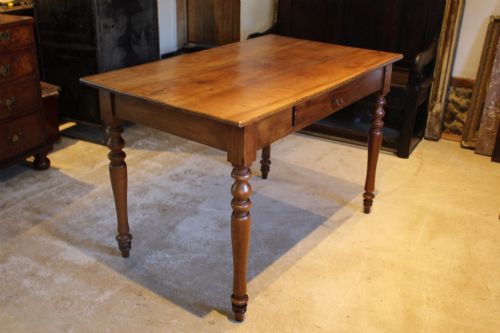
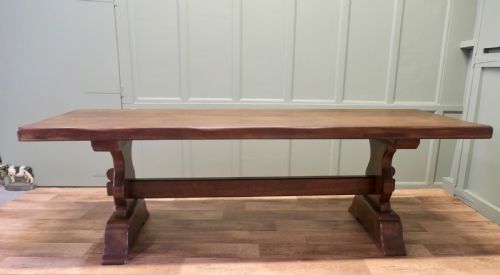
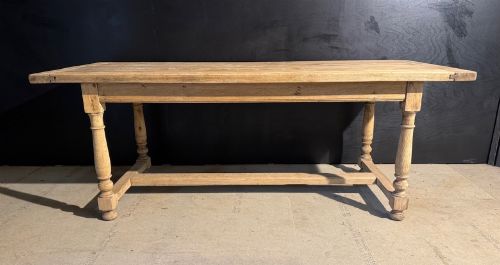
A french provincial refectory table serves as a large dining surface built for communal meals, originating in rural regions. These pieces appear frequently in nineteenth-century oak, cherrywood, and pine forms.
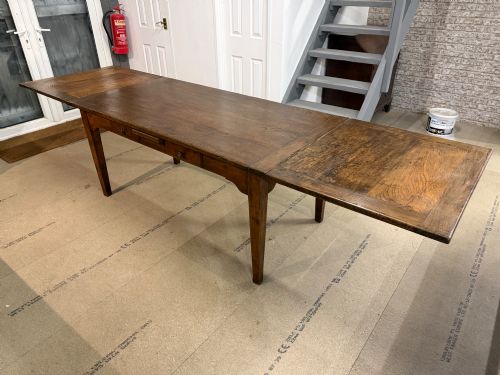
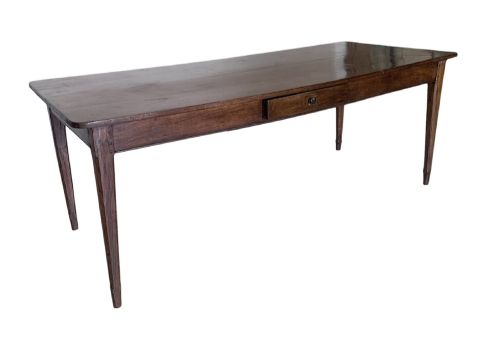
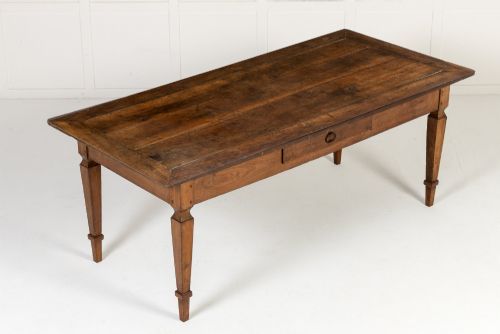
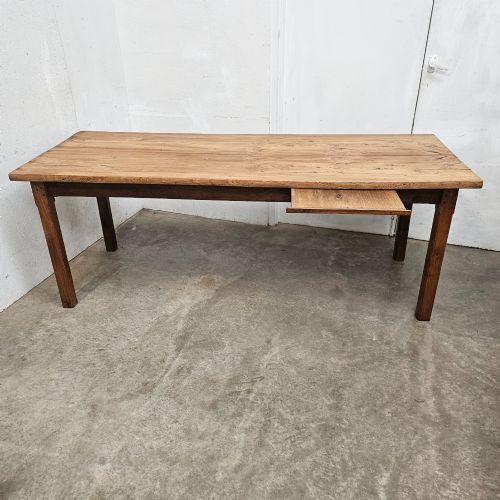
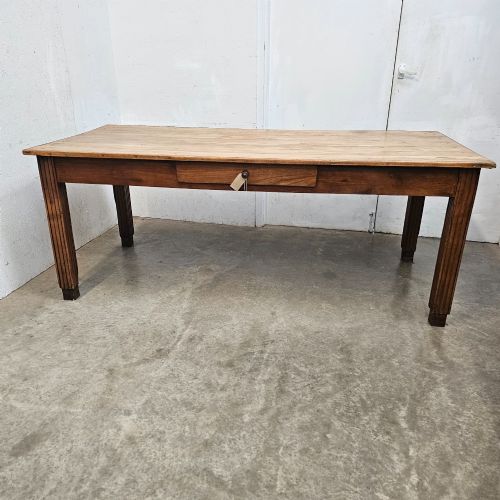
Buyers encounter long plank tops, occasional bread slides, and built-in drawers designed for domestic storage. The construction reflects straightforward utility suited to farmhouse kitchens and dining halls.
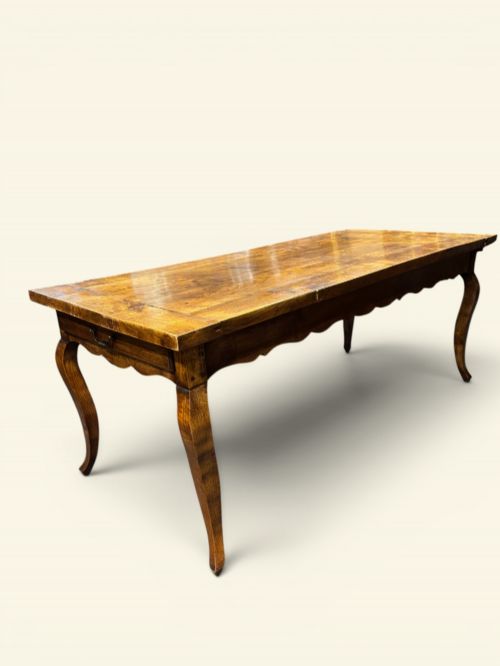
Styles range from rustic farmhouse variants to French country and occasional art deco expressions. Most examples date from the nineteenth century alongside early twentieth-century interpretations.
How they were made
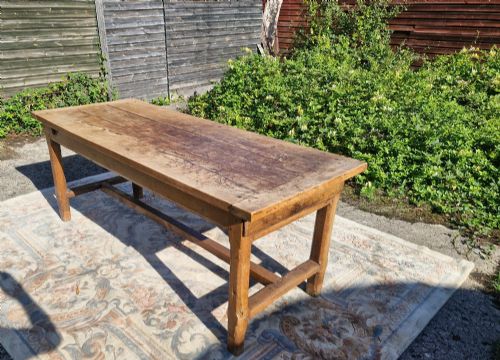
Carpenters utilised solid regional timbers such as oak, cherrywood, walnut, and chestnut for structural stability and longevity. Tops often consist of wide single or double planks joined securely to robust underframes.
Functional additions such as drawers and pull-out bread slides demonstrate practical hardware integration using timber and occasional brass elements. Joinery relies on traditional methods designed to support heavy daily use.
French Provincial Refectory Table Retail Price Guide 2026
Typical asking prices for french provincial refectory table among the pieces listed under this phrase on Sellingantiques today, from the lower quarter to the upper quarter. They describe what is for sale here now, not the wider market.
Several tables include hidden bread slides, proving that eighteenth and nineteenth-century diners took their carbohydrate access very seriously indeed.
What varies in quality
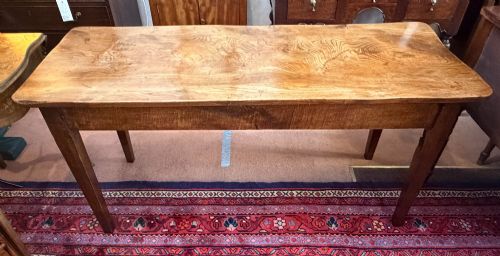
The choice of primary wood dictates much of the character, with dense hardwoods like oak and cherry offering superior durability compared to softer pine alternatives. Timber selection influences grain depth and the patination acquired over generations of service.
Proportions and top construction define the distinction between standard utilitarian items and exceptional larger formats. Tables featuring integrated drawers or draw-leaf mechanisms demonstrate higher complexity in provincial carpentry.
The French Provincial Refectory Table Glossary
- Refectory table
- A long dining table traditionally used in communal dining halls. These forms translate into sturdy domestic furniture within rural French provinces.
- Bread slide
- A pull-out wooden board mounted beneath the tabletop. Bakers utilised this surface for cooling loaves or preparing dough.
- Draw leaf
- An extension mechanism featuring sliding leaves tucked beneath the main top. This design allows the table length to expand on demand.
- Plank top
- A tabletop constructed from several parallel boards joined together. Older examples often showcase wide single boards reflecting mature forest timber.
- Patina
- The surface sheen developed through age, wear, and polishing. This quality indicates natural wood ageing over decades of use.
French Provincial Refectory Table: Frequently Asked Questions
How are these tables cleaned?
Maintenance requires simple dusting with a soft cloth and occasional mild wax application to nourish the timber. Avoid harsh chemical cleaners that strip the aged surface finish.
Keeping the wood away from extreme heat sources prevents splitting and preserves the natural moisture balance within the antique boards.
What woods were used?
Carpenters utilised regional timbers including oak, cherrywood, chestnut, walnut, elm, and pine. Hardwoods provided durable surfaces for daily kitchen preparation and dining.
Pine and fruitwood appeared frequently in provincial workshops, offering accessible materials for local agricultural communities.
Do drawers appear often?
Many examples incorporate one or more drawers built into the frieze for storing cutlery and linens. Some pieces also feature sliding bread boards positioned beneath the main top.
These functional additions highlight the practical nature of rural French dining furniture designed for active households.
How do I date them?
Dating relies on timber species, joinery techniques, hardware details, and overall structural wear observed across the piece. Nineteenth-century examples dominate the available selection alongside select pieces from the early twentieth century.
Archival records and historical styles such as rustic farmhouse or art deco provide further context for establishing a period.