
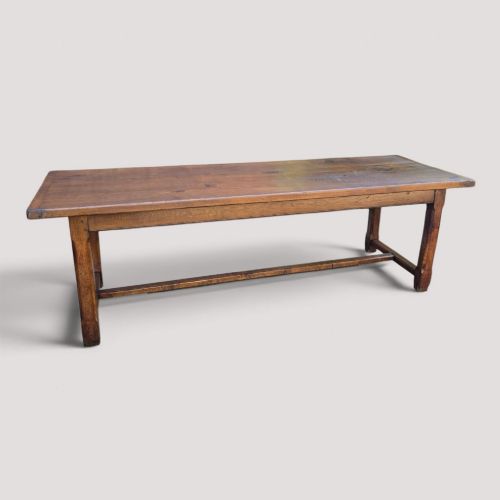
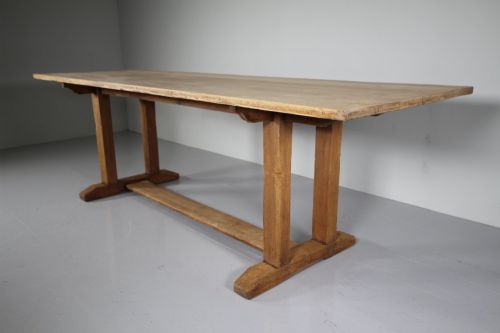
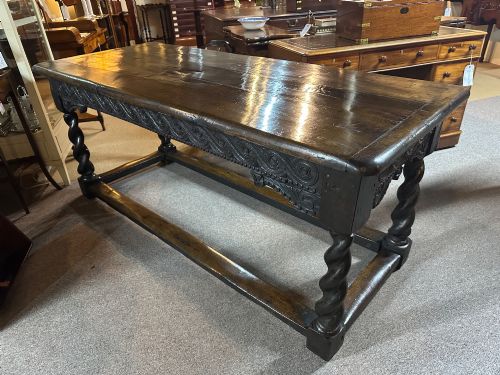
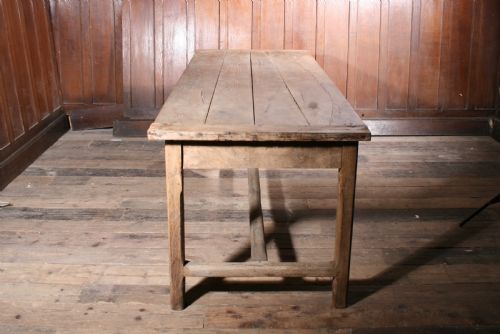
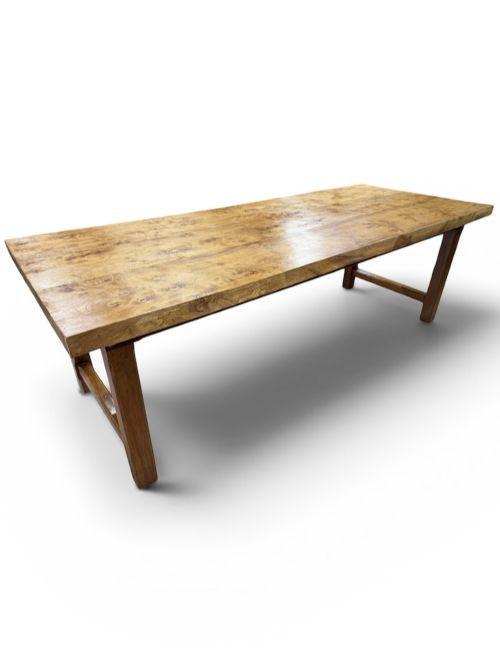
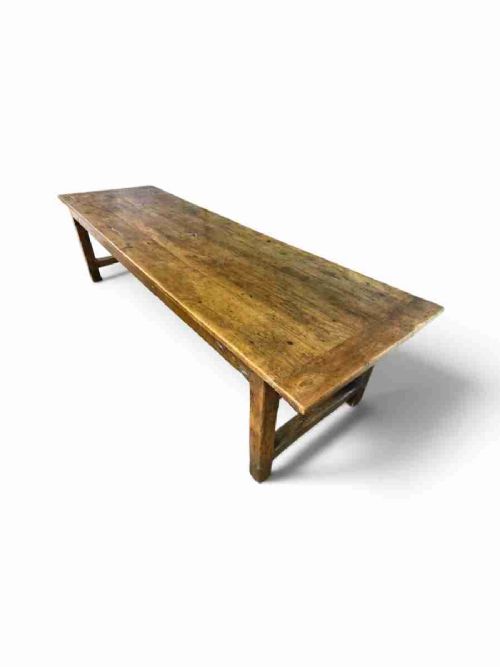
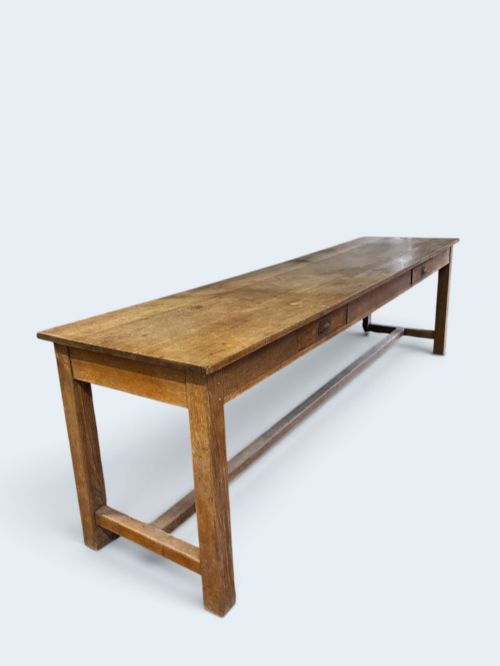
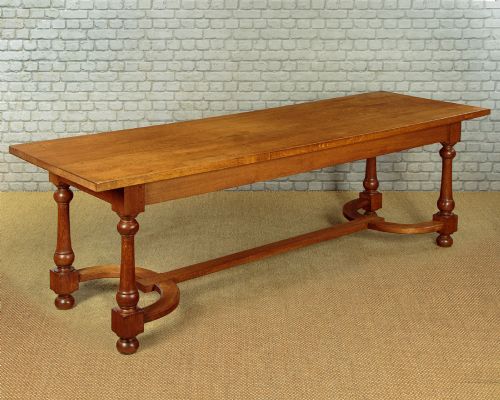
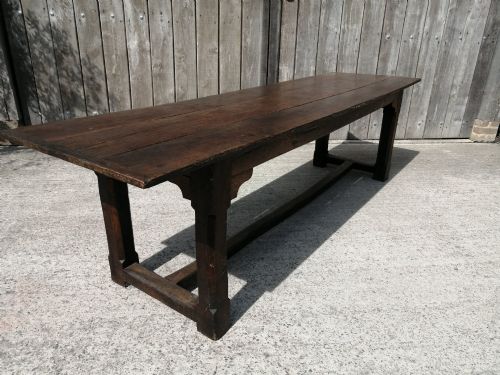
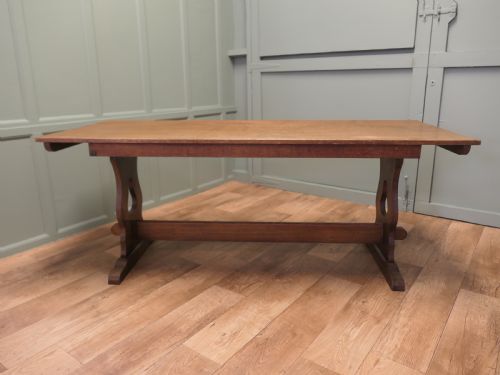
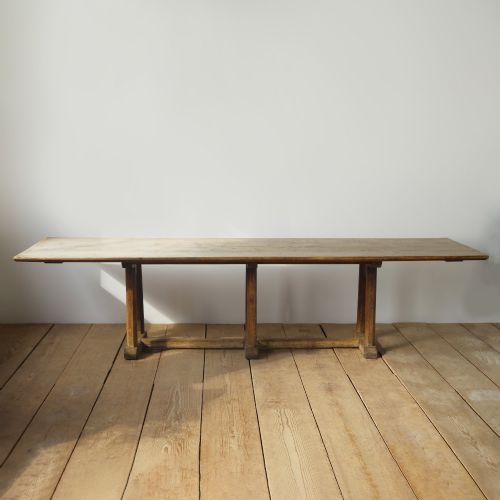
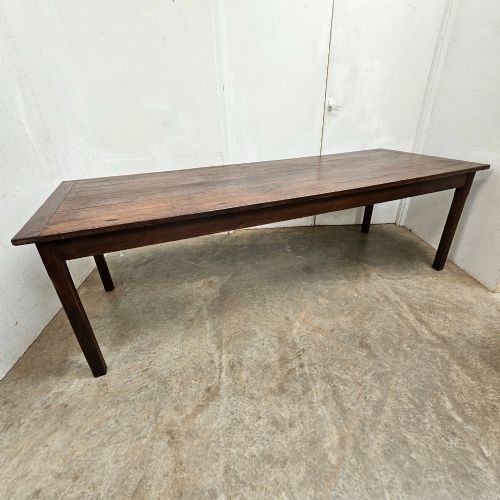

Long Oak Refectory Table
A long oak refectory table grounds a dining room with historical presence, offering substantial proportions and enduring timber construction for everyday gathering.
Long Oak Refectory Table
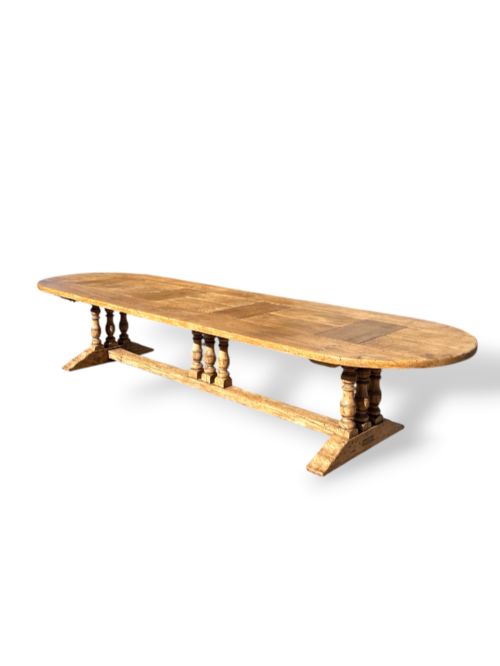
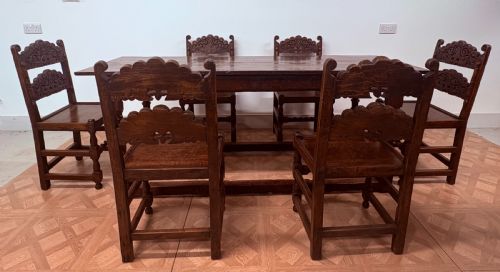
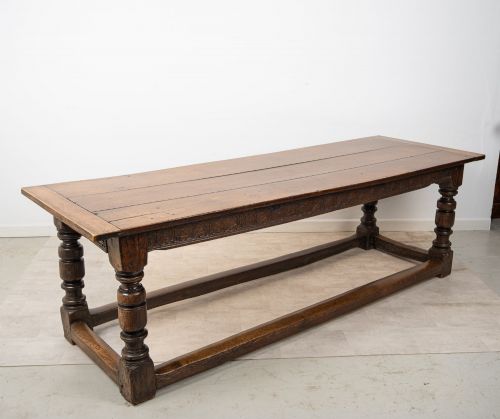
When searching for a long oak refectory table, a buyer encounters substantial dining and serving furniture originating from periods spanning the seventeenth to the twentieth century. These pieces serve as the central gathering place in large kitchens and dining spaces.
The most frequent examples on this page date from the eighteenth and nineteenth centuries, alongside early twentieth-century interpretations influenced by earlier vernacular and Gothic designs. They appear in formats ranging from traditional English refectory layouts to French provincial farmhouse styles.
Makers and craftsmen utilised solid timber to construct these long formats, often incorporating elm, beech, or pitch pine alongside primary oak structures. Formats extend from standard dining heights down to low coffee tables and long serving consoles.
Judging quality and proportion
Quality rests upon the integrity of the timber top and the relationship between the surface boards and the base frame. Tables retaining their original top-to-base configuration demonstrate superior historical continuity compared to assembled or heavily restored variants.
The refinement of the timber grain, the depth of the planks, and the architectural ambition of the underframe - whether simple rustic legs or carved gothic supports - distinguish standard utility pieces from exceptional examples.
Listings for a long oak refectory table span periods from the seventeenth century through the 1930s, featuring solid oak, elm, pine, and iron.
Heals of London
The Long Oak Refectory Table Glossary
- Refectory table
- A long dining table traditionally utilised in communal dining halls and monastic spaces. They are characterised by elongated proportions and sturdy underframes.
- Plank top
- A table surface constructed from solid boards running the full length of the piece. These boards show the natural grain and growth rings of the harvested timber.
- Trestle underframe
- A support structure where the table top rests on horizontal beams connected to vertical feet or uprights. This design allows maximum legroom along the length.
- Vernacular furniture
- Domestic pieces built by regional craftsmen following local traditions rather than strict academic style guides. Such items prioritise utility and available local materials.
- Gothic revival
- An architectural and decorative style popular during the nineteenth century that reinterprets medieval pointed arches, tracery, and heavy framing. It appears on heavy oak underframes and gallery tables.
Long Oak Refectory Table: Frequently Asked Questions
What is a long oak refectory table?
A long oak refectory table is a substantial dining or serving surface designed with elongated proportions, historically used for communal dining.
Today, these tables function as central dining furniture in large residential kitchens and reception rooms, prized for their sturdy timber construction.
How do I date an old refectory table?
Dating relies on examining the timber grain, tool marks, joinery methods, and the configuration of the underframe relative to the top boards.
Earlier examples from the seventeenth century feature pegged joints and heavy oak framing, while nineteenth and twentieth-century pieces often show different secondary woods and softer patination.
Can I use an antique refectory table daily?
These tables were built from solid oak and heavy timbers specifically to withstand robust, everyday communal use over centuries.
Living with them simply requires normal care regarding moisture and heat, as the durable timber and solid construction readily accommodate modern dining.
What woods are found besides oak?
While oak forms the primary structure of these tables, makers frequently incorporated supporting elements in elm, beech, pine, and pitch pine.
Some regional or later pieces combine these secondary timbers in the underframe, drawer linings, or secondary board extensions while retaining an oak surface.