


Large French Bookcase
A large french bookcase brings substantial presence and deep shelving to a room, offering both display and storage across centuries of continental design.
Large French Bookcase
When you search for a large french bookcase, you encounter a variety of substantial timber furniture built to house libraries and display collections. These pieces span centuries from the eighteenth to the early twentieth, drawing on styles such as Louis Philippe, Napoleon III, and provincial traditions.
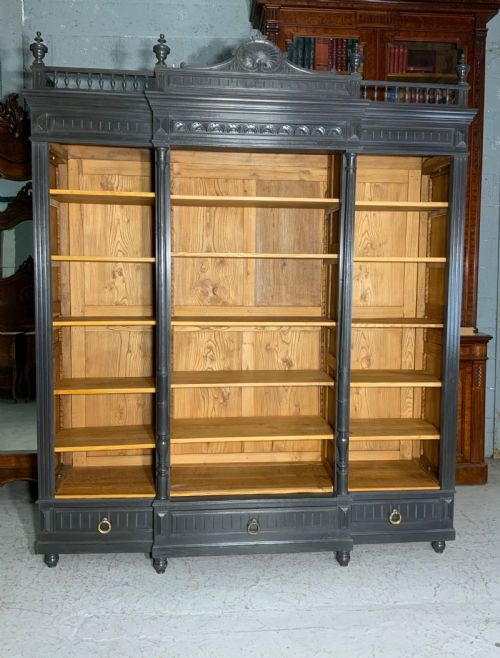
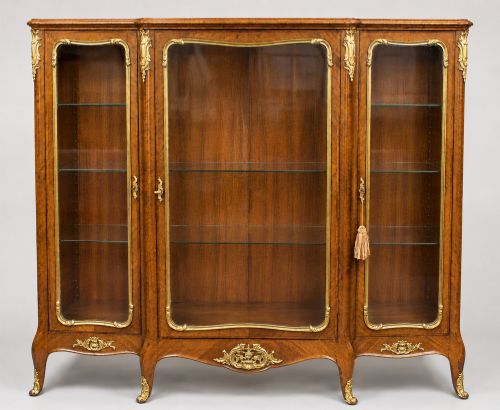
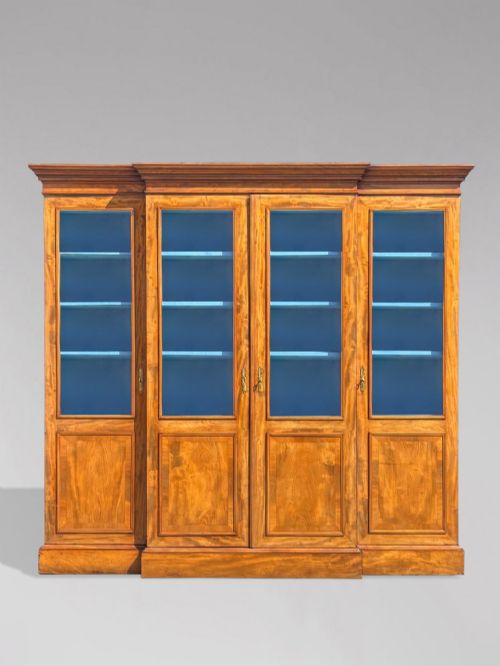
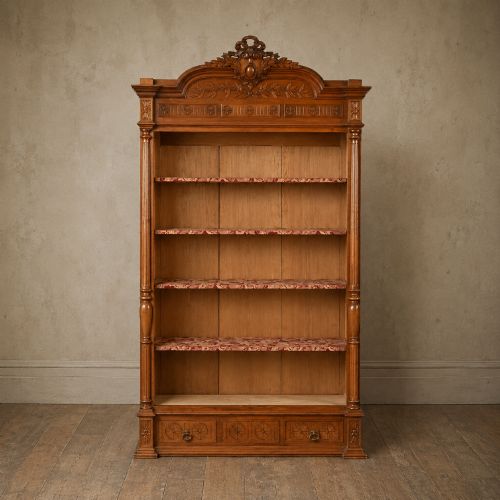
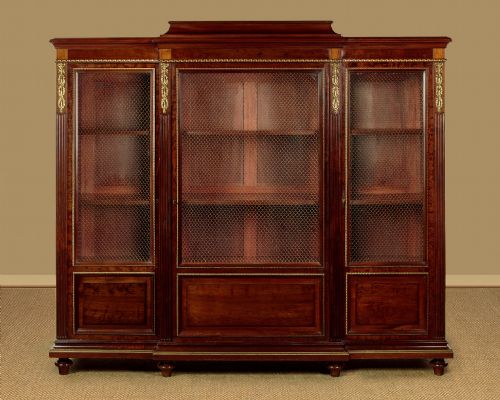
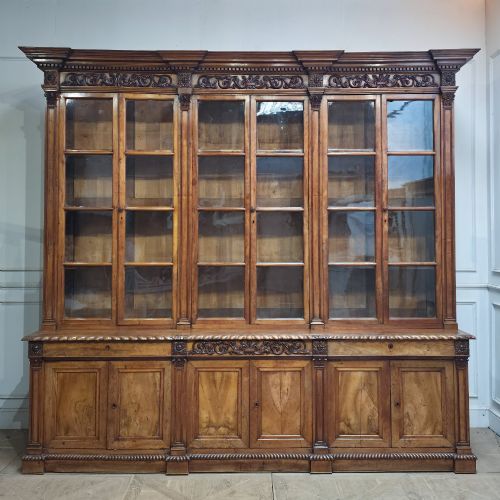
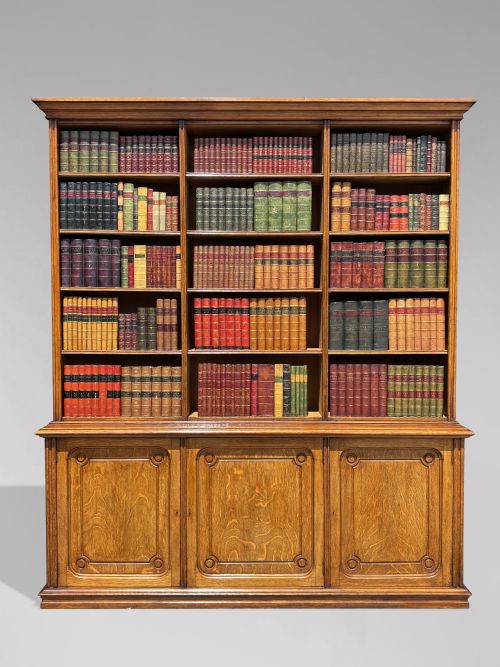
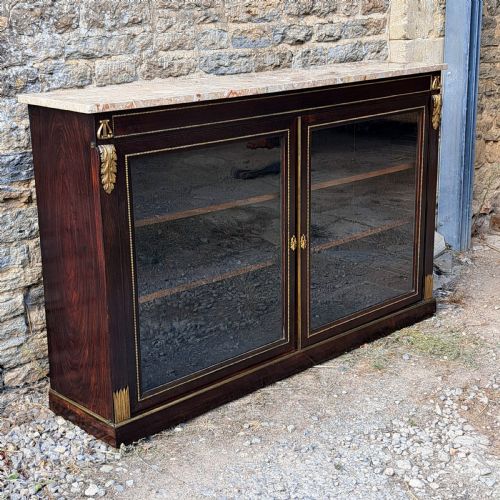
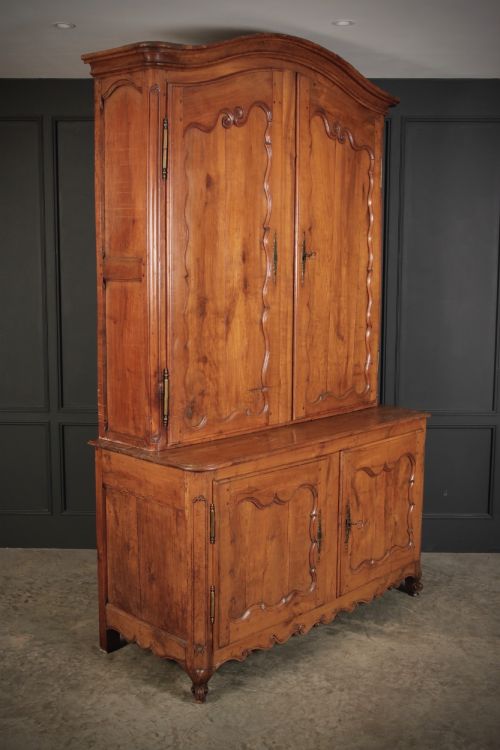
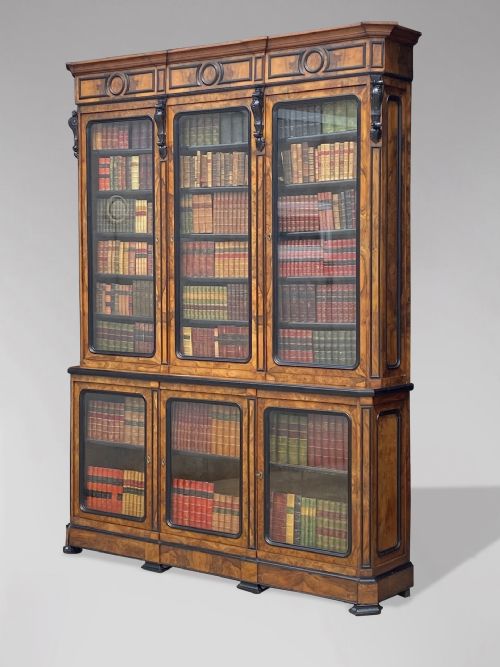
The versions most commonly met on this page include glazed vitrines, breakfront libraries, open library shelves, and multi-door walnut or oak cupboards. Many incorporate glass doors, brass mounts, or painted finishes that reflect both formal salon tastes and practical domestic use.
Materials and Construction
Cabinet makers constructed these large pieces using sturdy carcases of oak, pine, and walnut, often applying veneers of mahogany, kingwood, rosewood, or satinwood to visible surfaces. Solid timber sections provided the structural integrity required for heavy shelving and tall frames.
Decorative detailing relied on brass or gilt ormolu mounts, ebonised wood highlights, and intricate marquetry or boulle work. Painted finishes and bleached oak treatments also appear, showing how makers adapted regional timbers to shifting aesthetic demands.
Formats range from open library shelving and bakers racks to multi-door glazed vitrines and kitchen dressers.
Judging Quality and Execution
Quality rests in the selection of timber figures, such as plum pudding mahogany or figured walnut, and the precision of the cabinet joinery. Superior examples display seamless veneer matching, tight carcase construction, and well-balanced proportions across multi-door facades.
The refinement of the decorative elements further separates standard items from finer works. Finely chased ormolu mounts, intact glass panels, and original brass hardware indicate higher workshop standards.
Linke
The Large French Bookcase Glossary
- Vitrine
- A glass-fronted display cabinet designed for porcelain and objets d'art. These pieces often feature glazed sides to let light pass through the interior shelves.
- Ormolu
- Gilt-bronze mounts applied to furniture for decorative enrichment. Makers cast and chased these metal elements to accent corners, cornices, and key escutcheons.
- Boulle
- Marquetry work utilising tortoiseshell and brass inlay, popularised during the reign of Louis XIV and revived in later nineteenth century French design.
- Breakfront
- A piece of furniture where the central section projects forward from the flanking wings. This architectural arrangement adds depth and visual rhythm to large library cabinets.
- Kingwood
- A dense, richly grained tropical timber used extensively in high-end cabinet making for veneering surfaces. It displays distinctive violet-brown markings.
Large French Bookcase: Frequently Asked Questions
How do I style a large french bookcase?
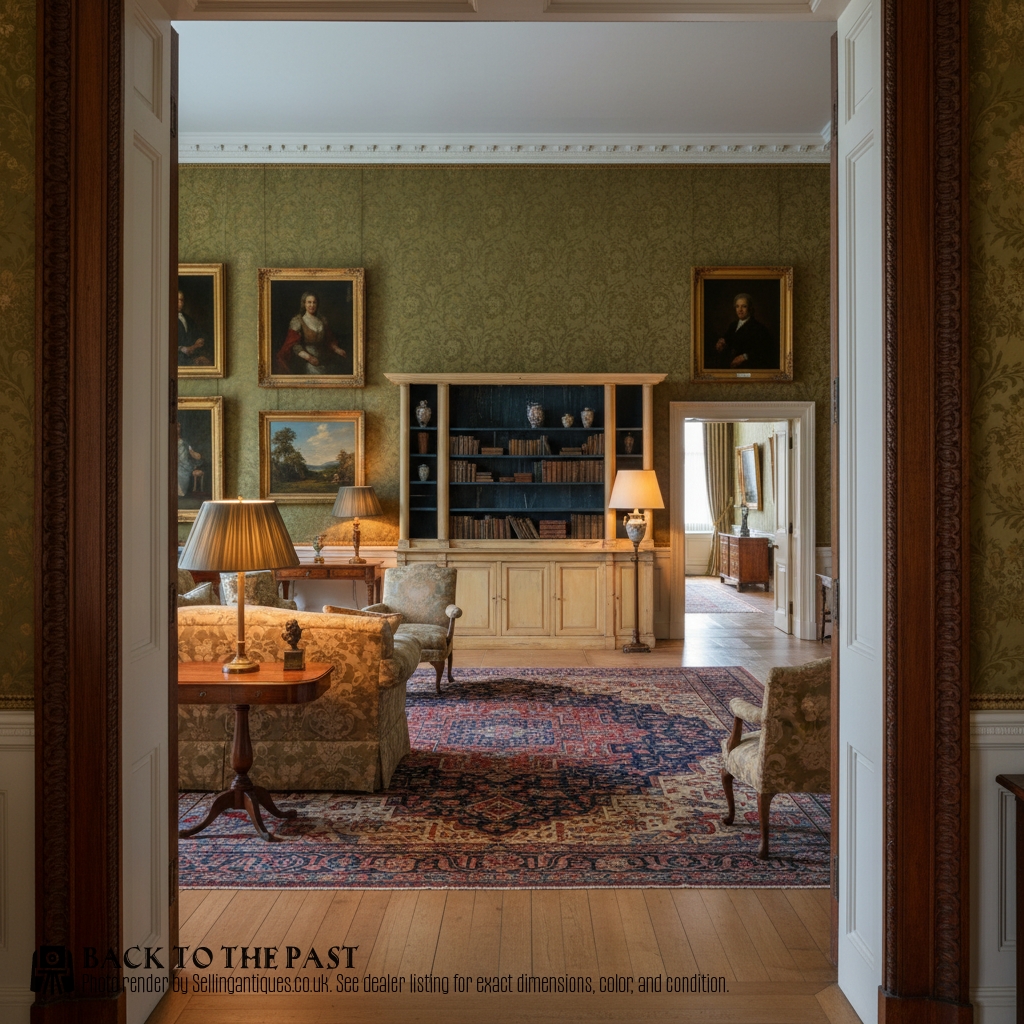
Anchor the piece against a primary wall where its height and width can command the room without crowding surrounding furniture. Balance rows of books with ceramic objects, framed prints, and vessels to break up dense blocks of paper.
Allow breathing room on adjacent walls so the timber grain and mounts remain the visual focus. Good natural light enhances glazed panels and polished walnut or mahogany surfaces.
What is the difference between an open bookcase and a vitrine?
Open bookcases provide direct access to shelves without doors, suiting everyday libraries and working studies. They emphasise the vertical grain of the timber and the arrangement of book spines.
Vitrines feature glazed doors that protect delicate bindings and display collections from dust. This enclosed format often incorporates brass or ormolu mounts and satinwood or kingwood veneers.
How do I identify a Napoleon III bookcase?
Napoleon III pieces frequently utilise ebonised wood, Boulle marquetry, and bright ormolu mounts inspired by earlier royal styles. The aesthetic leans toward ornate display and dark, polished surfaces.
Look for symmetrical brass inlay, glazed doors framed in gilt metal, and heavy architectural cornices. These items date from the mid to late nineteenth century.
Are these bookcases suitable for modern homes?
These large storage pieces anchor high-ceilinged modern rooms by adding warmth and architectural weight. Their deep shelves accommodate standard volumes as well as decorative objects.
Ensure floor levels are even and wall fixings are considered for exceptionally tall pieces. Interior lighting can be integrated discreetly behind glass doors to illuminate displays.