



Painted French Bookcase
A painted french bookcase brings soft colour and practical shelf space to a room, holding rows of books behind glazed doors or open pine shelves.
Painted French Bookcase
When you search for a painted french bookcase, you encounter a range of storage furniture spanning the nineteenth century and early twentieth decades. These pieces bridge formal library storage and regional country utility, appearing in styles from simple provincial pine to elaborate Louis revival designs.
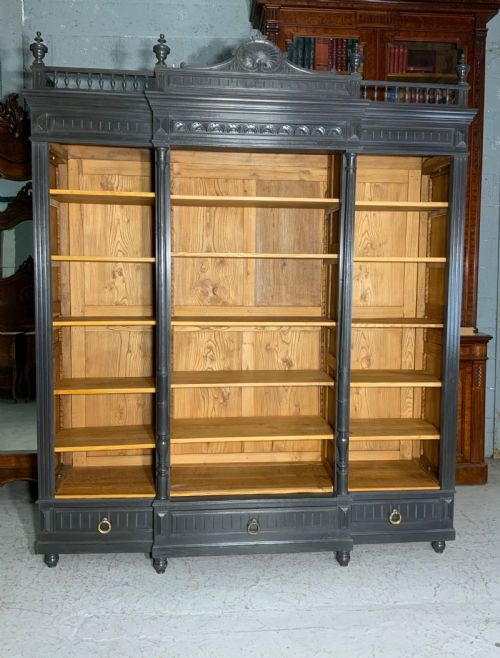
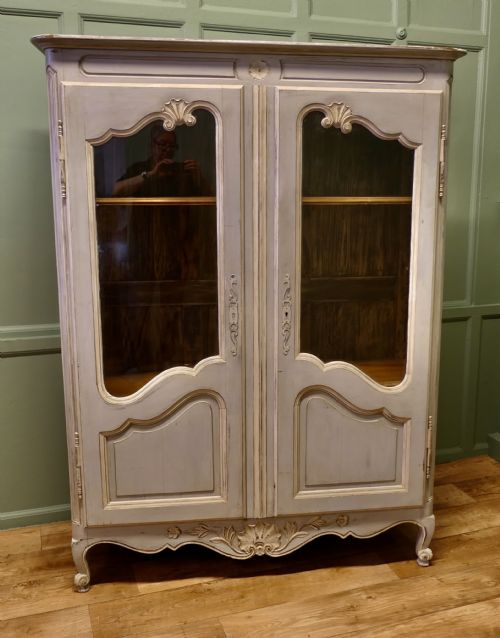
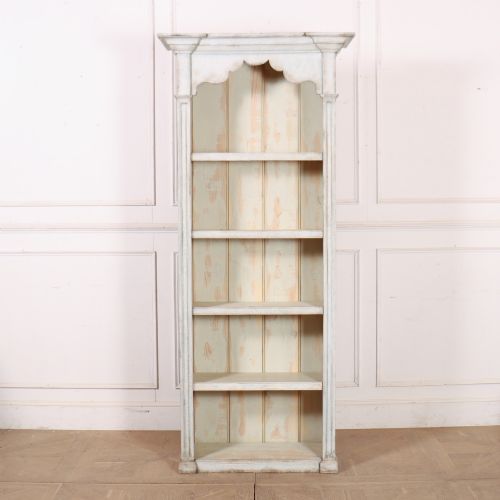
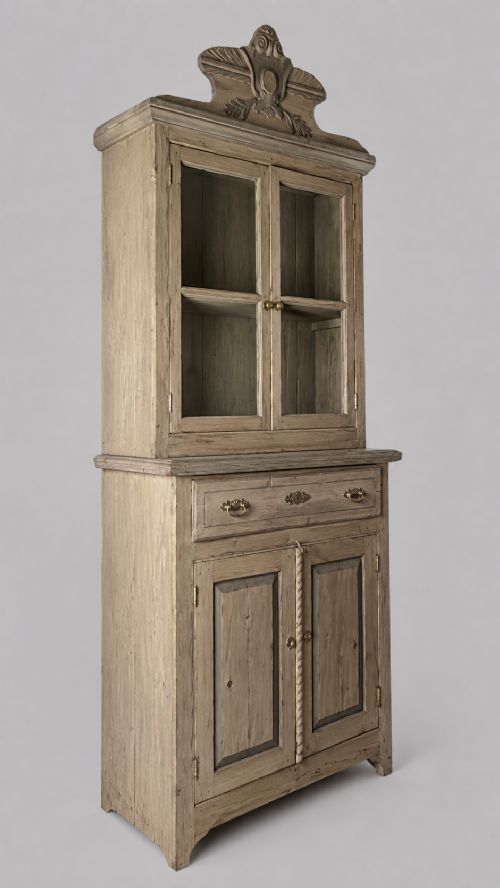
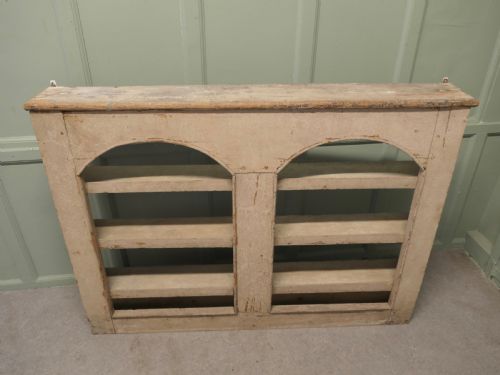
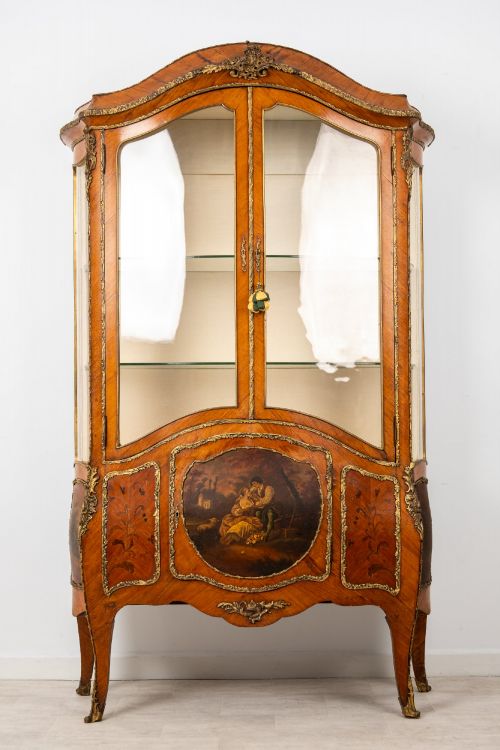
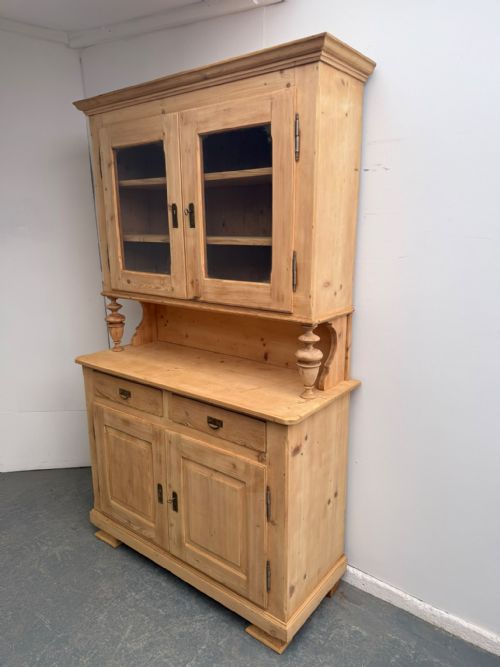
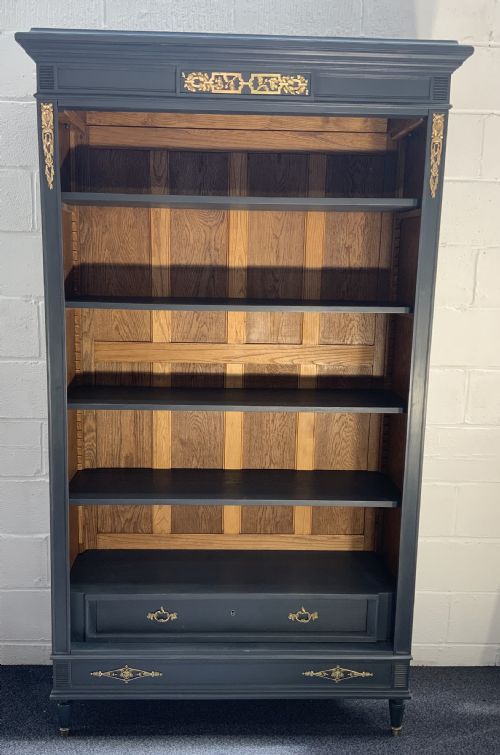
The most common examples on this page are upright glazed cupboards, open shelving units, and double-door vitrines finished in historic paint schemes. They range from modest alcove cabinets to substantial library pieces, all designed to display volumes while keeping interiors protected.
Origins stretch across French workshops, utilising native softwoods and hardwoods decorated with hand-applied paint, parcel gilt, or vernis martin panels. Buyers select them to soften interior walls with gentle patinated surfaces whilst providing functional book storage.
Materials and Construction
Makers constructed these carcasses using pine, oak, kingwood, and mahogany, applying layered paint finishes directly to the wood or over earlier grounds. Glass panes, brass mounts, iron hardware, and ormolu embellishments complete the structures.
Surface decoration involves decorative paintwork, hand-painted panels, and parcel gilding to accent carved details. Glazed doors incorporate timber framework holding glass plates, while adjustable wooden shelves rest on interior support systems.
Evaluating Quality and Execution
Superior execution shows in the precision of the joinery, the weight and proportion of the timber, and the subtlety of the painted finish. Finer examples retain original hand-painted decorative panels, high-grade brass or ormolu mounts, and well-balanced door alignments.
Simpler provincial pieces rely on honest pine construction and straightforward painted surfaces rather than complex carved ornamentation or exotic veneers. The distinction lies in whether the decorative detailing and structural joinery remain harmonious and intact.
The Painted French Bookcase Glossary
- Vitrine
- A glass-fronted cabinet designed for displaying books or decorative objects. These pieces often feature glazed doors and painted frames.
- Vernis Martin
- A simulated Japanese lacquer finish popular in eighteenth and nineteenth-century French furniture. The technique produces glossy painted panels with delicate pictorial scenes.
- Ormolu
- Gilded bronze mounts applied to furniture for decorative effect. These metal ornaments accent corners, cornices, and door edges.
- Louis XV Revival
- A style drawing on mid-eighteenth-century French design characteristics. Pieces display curved lines, cabriole legs, and rococo decorative motifs.
- Breakfront
- A piece of furniture where the central section projects forward from the flanking outer sections. This architectural form adds depth and visual interest to larger bookcases.
Painted French Bookcase: Frequently Asked Questions
How do I style a painted french bookcase?
Pair the soft tones of the painted woodwork with neutral walls and traditional room layouts to let the cabinet anchor the space. Mix rows of books with ceramic objects or glassware behind the glazed doors to balance utility and display.
Allow the natural patina of the paintwork to dictate the surrounding interior choices. These pieces work well in both sitting rooms and home libraries where functional storage meets decorative presence.
Are these bookcases suitable for heavy books?
Many nineteenth-century examples feature sturdy pine or hardwood shelving built to hold substantial library volumes. Adjustable shelf systems found in several pieces allow you to customize vertical spacing for different book sizes.
Check the internal support methods of individual cabinets before loading dense collections. Solid wood construction provides reliable weight-bearing capacity for everyday reading materials.
How do I identify the period of a painted french bookcase?
Examine the construction methods, timber choices, and hardware styles to determine the likely era of manufacture. Nineteenth-century pieces often display hand-cut joints and authentic period paint finishes rather than modern synthetic coatings.
Stylistic cues such as Louis XV or Rococo revival motifs point towards specific decades of the nineteenth or early twentieth century. Comparing the door hinges and glass characteristics further clarifies the age.
Can I adjust the shelves inside these cabinets?
Several pieces on this page feature adjustable shelving mechanisms designed to accommodate varying book heights. This adaptability makes them practical for organising mixed collections of large folios and standard volumes.
Fixed-shelf cupboards offer permanent compartment heights determined by the original maker. Review the specific description of each cabinet to confirm its internal configuration.