
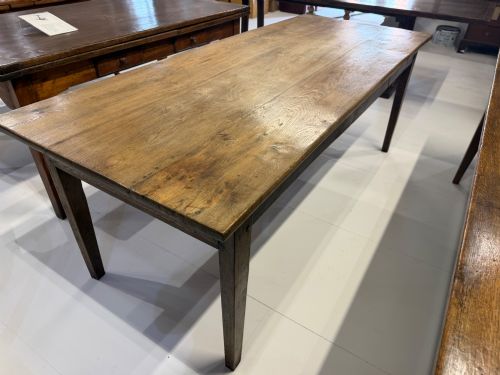
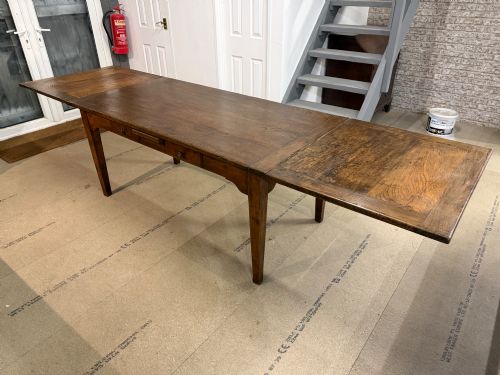
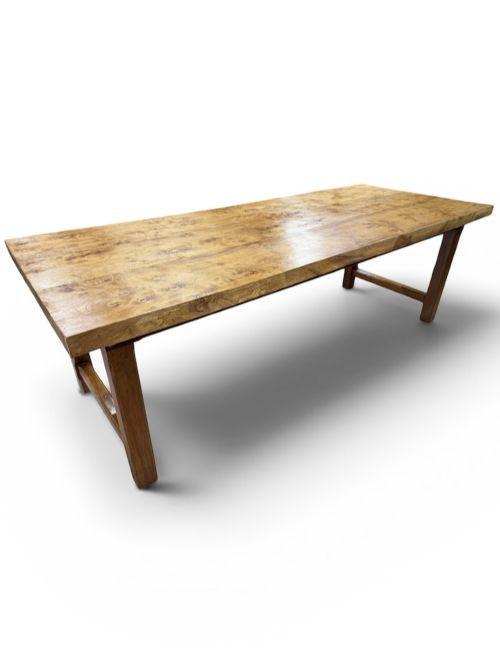
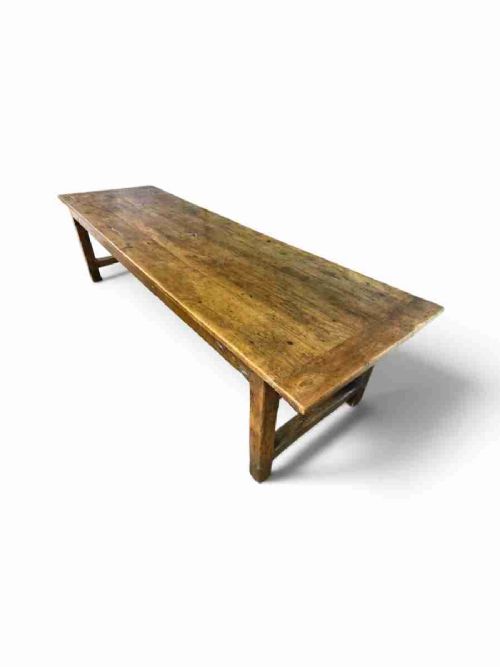
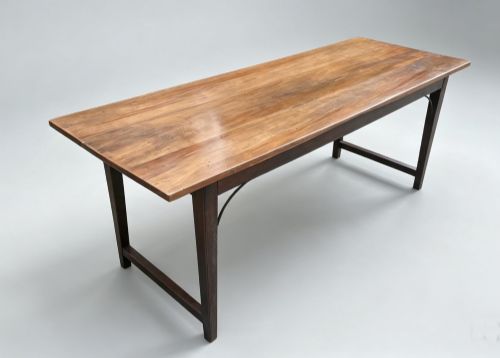
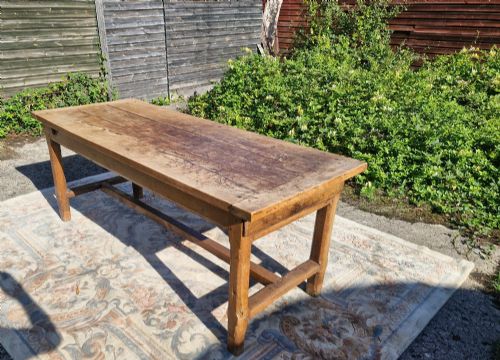
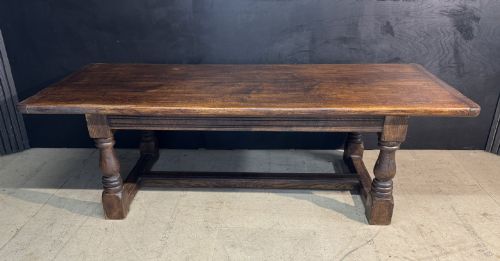
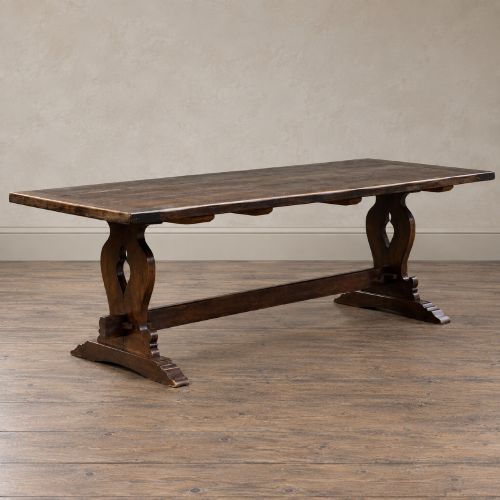
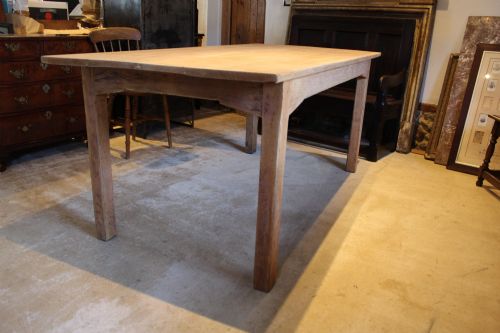
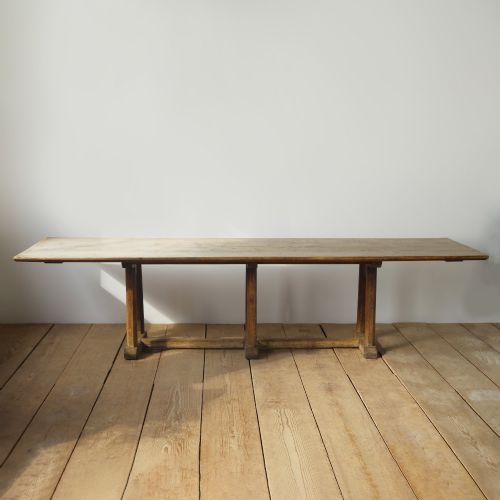
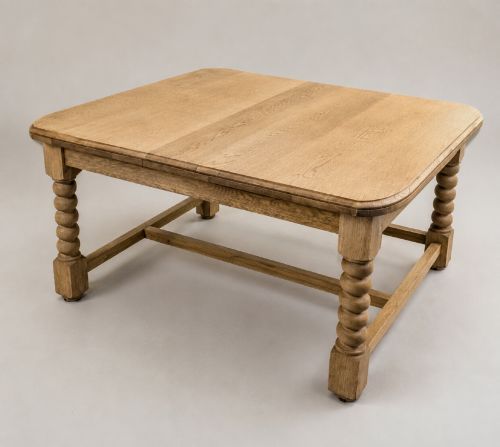
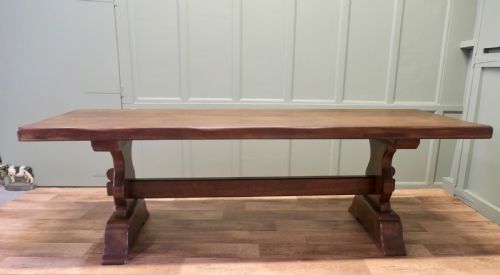
Large Farmhouse Dining Table
When you need a large farmhouse dining table, you are looking for a robust centrepiece built for daily family life in country kitchens.
Large Farmhouse Dining Table
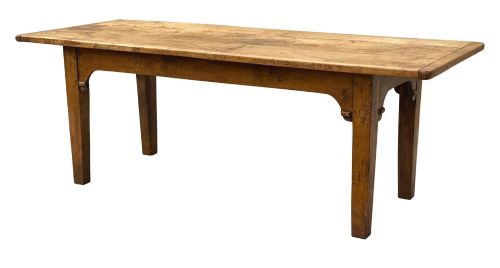
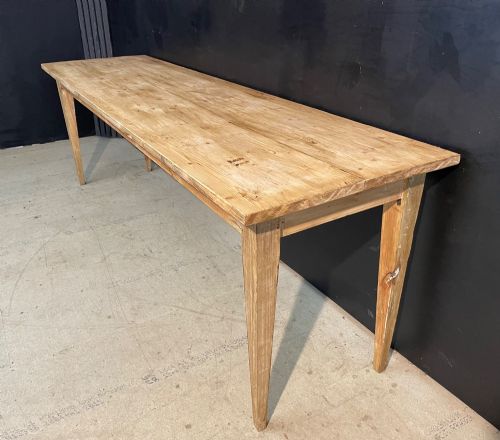
A large farmhouse dining table provides generous seating for eight to twelve people, designed originally for hearty communal meals in rural homes. These pieces combine long boards and sturdy legs to support heavy everyday use over centuries.
The versions most common on this page span the eighteenth, nineteenth, and early twentieth centuries, drawing heavily on English and French provincial styles. Oak and pine dominate the listings, offering either a dark wax finish or a contemporary bleached surface.
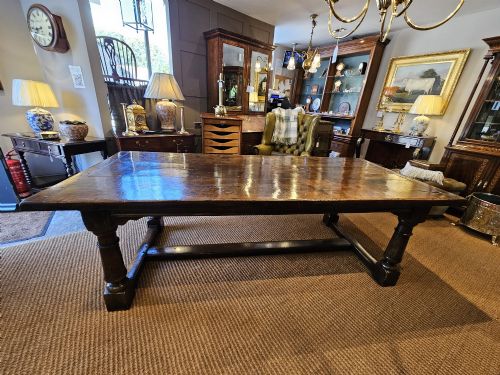
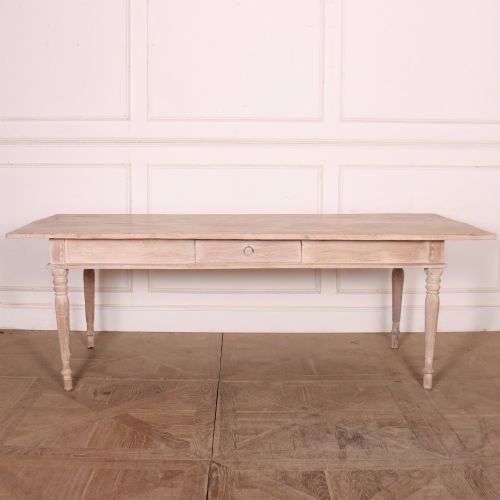
Makers shaped these utilitarian boards for utility first, resulting in refectory formats, harvest tables, and occasional variants fitted with practical storage drawers. Their enduring appeal lies in the visible marks of age, from deep grain patterns to softened edges.
How They Were Made
Carpenters built these tables using solid native hardwoods and softwoods, selecting oak, elm, cherrywood, and pine for their availability and strength. Planks were joined side by side to form wide surfaces, often secured underneath with heavy stretchers and substantial corner posts.
Joinery relied on pegged mortise and tenon joints to withstand the expansion and contraction of unseasoned timber over decades. Surface treatments ranged from natural wax and French polishing to plain scrubbed finishes that exposed the raw grain.
What Varies in Quality
Quality rests in the selection of timber, where quarter-sawn oak or old-growth pine boards display superior density and stability compared to younger utility wood. The thickness of the top planks and the integrity of the original underframe dictate how well the table endures heavy seating arrangements.
Proportion and restraint separate ordinary utilitarian benches from finer country pieces, seen in slender turned legs, subtle pegging, and minimal structural alterations. Tables retaining their original height, unclipped boards, and honest surface patination command greater regard from collectors.
The Large Farmhouse Dining Table Glossary
- Refectory table
- A long, narrow dining table originally designed for monastic dining halls and later adopted in domestic country kitchens. These pieces typically feature sturdy stretcher bases to keep the legs clear of diners' knees.
- Harvest table
- A narrow wooden table featuring drop leaves or long boards, historically used during seasonal agricultural gatherings. They offer flexible seating arrangements for large groups.
- Bleached oak
- Timber treated to lighten its natural dark tone, creating a pale, neutral finish popular in modern rustic interiors. This process softens the visual weight of heavy nineteenth-century boards.
- Breadboard end
- A transverse piece of wood pinned across the ends of tabletop planks to prevent warping and conceal end grain. This traditional construction method accommodates natural wood movement.
- Two-board top
- A tabletop constructed from just two wide planks joined lengthwise, indicating timber from mature trees of significant girth. Such surfaces are prized for their clean expanse and scarcity.
Large Farmhouse Dining Table: Frequently Asked Questions
How do I seat twelve people comfortably?
Look for refectory formats measuring over eight feet in length, which provide adequate leg clearance between the structural stretcher bases. Tables featuring recessed legs or removable leaves offer the most flexible seating for large gatherings.
Ensure you measure the width of the room to allow at least ninety centimetres of clearance around the edges for chairs to pull out easily.
Are pine tables durable enough for daily use?
Pine provides a sturdy surface that absorbs the knocks and dents of daily family life while developing a rich, patinated skin over decades. Dense old-growth pine holds up exceptionally well to regular dining and kitchen preparation.
Regular waxing protects the soft timber from moisture and staining while maintaining a warm, tactile finish.
What is the difference between English and French styles?
English country tables often utilise dark oak or heavy pitch pine with straightforward, utilitarian framing intended for robust farmhouse use. French provincial variants frequently appear in lighter fruitwood, cherry, or bleached oak with softer cabriole or turned supports.
Both traditions prioritise functionality, but French examples tend to display slightly more ornamental leg turnings and drawer configurations.