
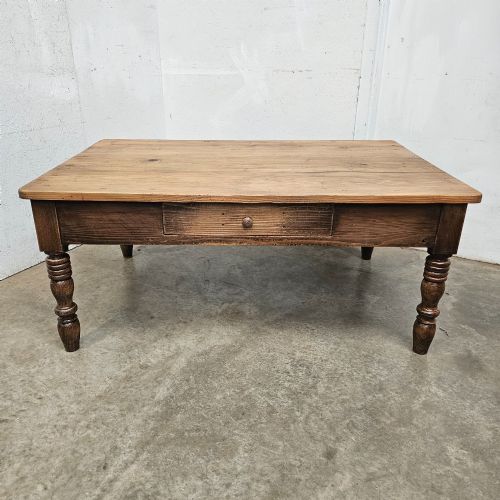
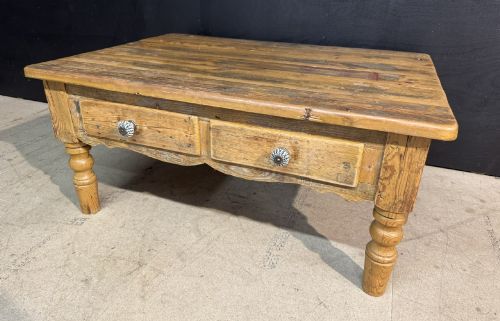
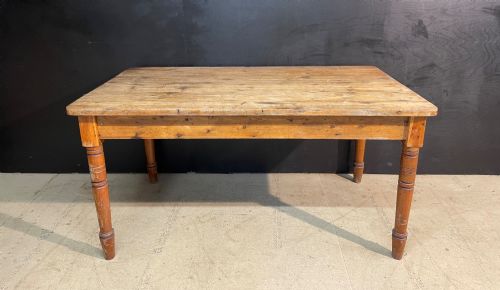
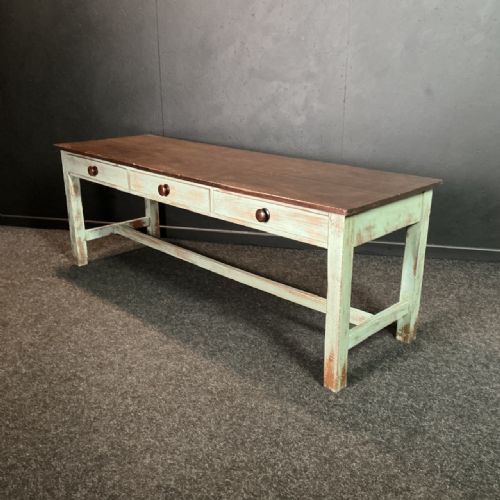
Vintage Pine Table
A vintage pine table brings working-room utility and honest timber warmth to the kitchen or dining space.
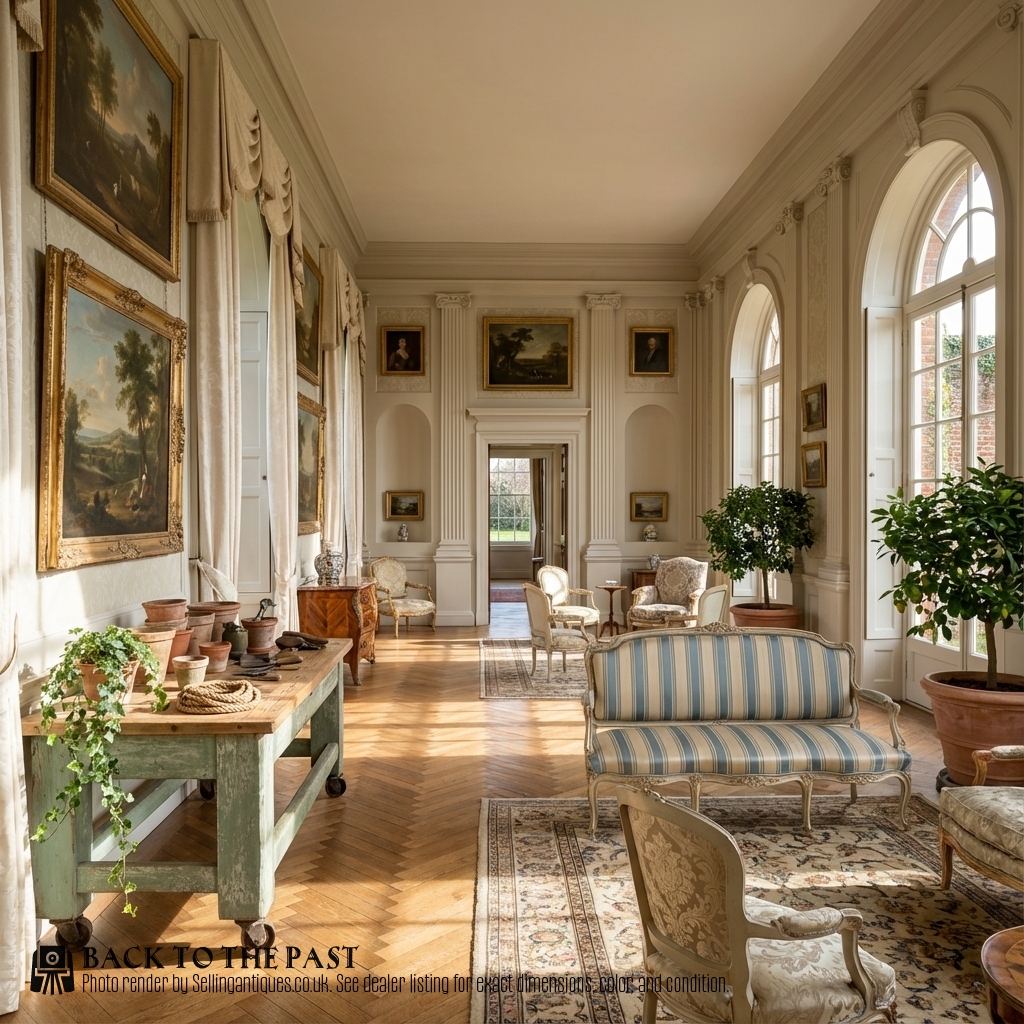
Vintage Pine Table
A vintage pine table encompasses sturdy dining boards, kitchen work surfaces, and side pieces originating from the nineteenth and early twentieth centuries. These boards reflect the practical domestic and commercial needs of Victorian and Edwardian households, schools, and dairies.
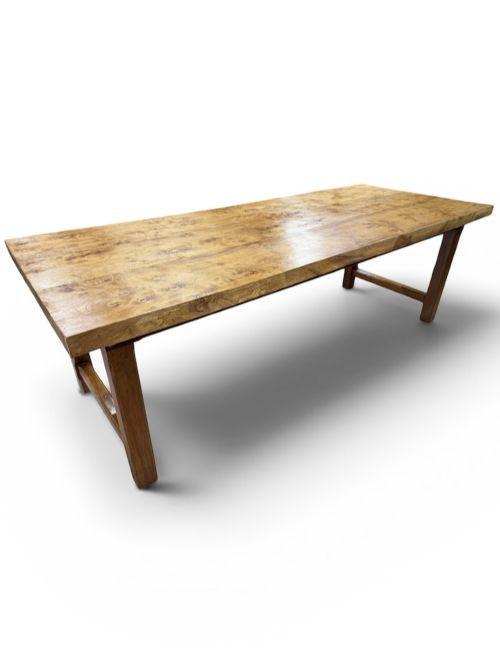
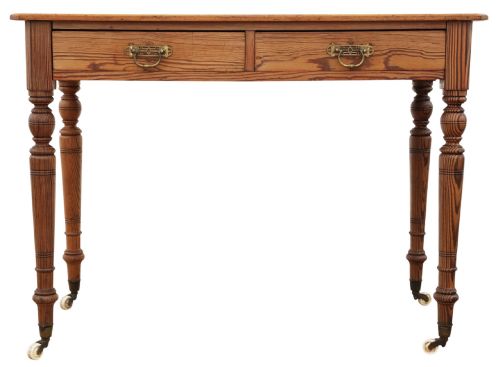
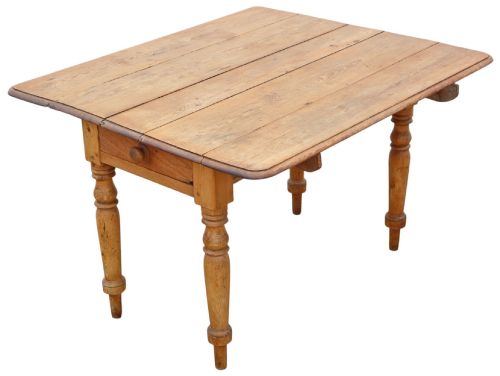
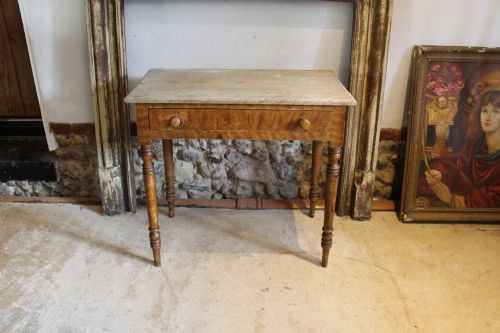
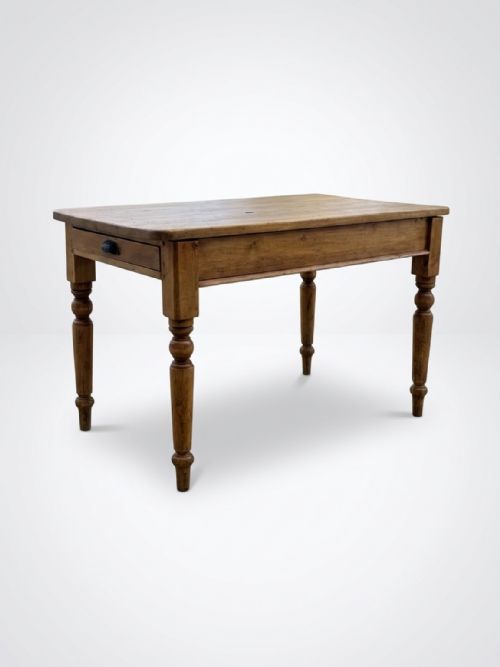
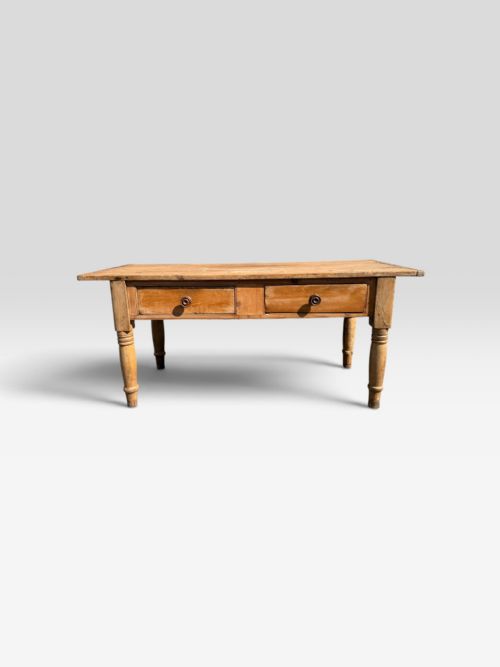
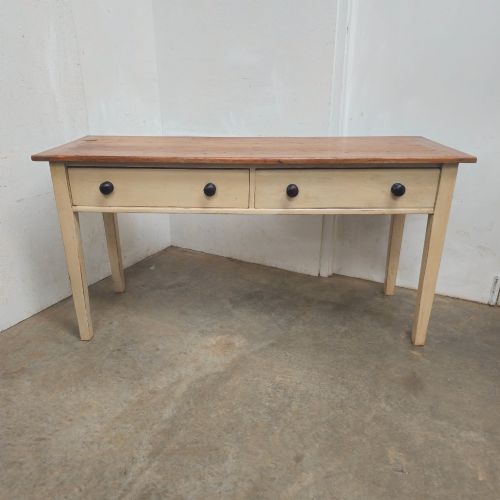
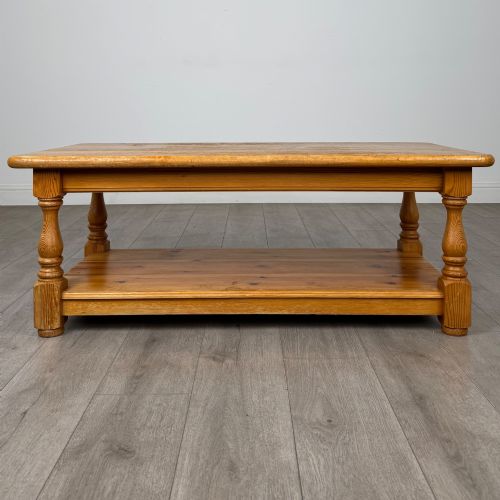
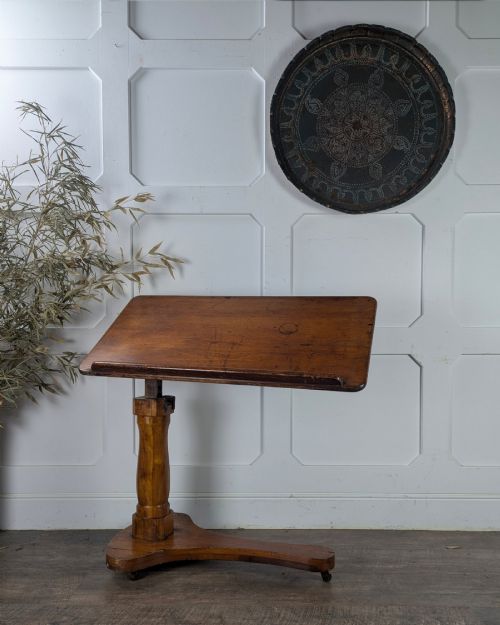
Buyers seeking a vintage pine table frequently encounter farmhouse kitchen dining boards, scrub-top surfaces, and drop-leaf variations fitted with single or multiple drawers. These formats served daily domestic life, resulting in surfaces bearing the scars of preparation, writing, and family meals.
Origins stretch across English, Welsh, French, and Scandinavian workshops, manifesting in styles ranging from rustic country and Victorian to Gothic Revival and Arts and Crafts. Pitch pine, standard white pine, and mixed woods form the physical backbone of these surviving examples.
Materials and construction
Makers utilised softwoods primarily, selecting durable pine and denser pitch pine for structural stability and heavy daily use. Oak, ash, and ceramic components occasionally appear in supporting frames, handles, or secondary surfaces.
Joinery methods relied on sturdy pegging, turned legs, and dovetailed drawers designed to withstand decades of kitchen or workshop labour. Iron brackets, brass fittings, and original painted finishes or scumble glazes provided additional reinforcement and decoration.
Vintage Pine Table Retail Price Guide 2026
Typical asking prices for vintage pine table among the pieces listed under this phrase on Sellingantiques today, from the lower quarter to the upper quarter. They describe what is for sale here now, not the wider market.
One school dining table managed to escape the classroom to serve dinner centuries later.
Determinants of quality
Quality rests in the integrity of the timber, the presence of original painted or waxed surfaces, and the restraint of past restoration work. Dense pitch pine and well-figured standard pine command attention through tight grain patterns and solid framing.
Proportion and purpose dictate distinction, distinguishing utilitarian school or dairy tables from finer domestic writing desks and harvest tables. Unaltered drawer linings, original brass or iron hardware, and untouched surface patination separate superior survivors from heavily altered items.
The Vintage Pine Table Glossary
- Pitch pine
- A dense, resinous softwood variant featuring prominent grain patterns and greater durability than standard white pine. Cabinet makers utilised this timber for surfaces requiring high resilience.
- Scumble
- A translucent or semi-opaque decorative paint layer applied over a base coat to simulate finer wood grains. Artisans employed this technique during the nineteenth century to elevate inexpensive timber.
- Scrub top
- A bare wooden tabletop designed to be repeatedly scoured clean with water and sand. This surface treatment appears frequently on nineteenth-century kitchen and dairy tables.
- Cricket table
- A small, lightweight occasional table supported by three splayed legs. This traditional form provided stability on uneven flagstone floors.
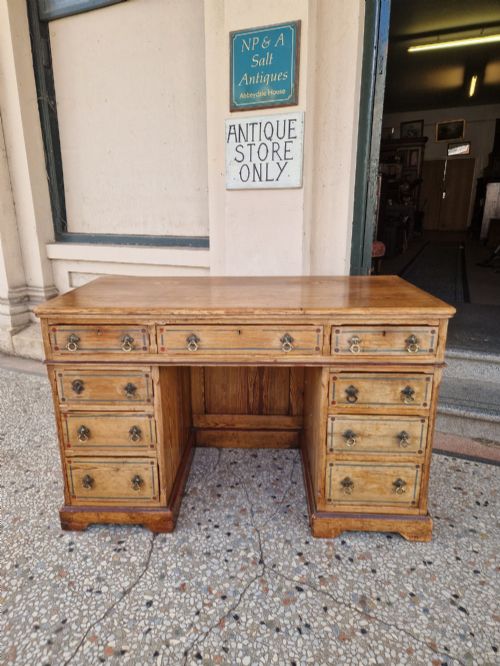
- Kneehole desk
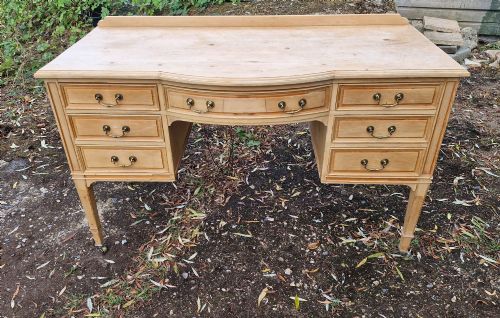
- A writing table featuring a central recess for the user's legs flanked by banks of drawers. Edwardian and Victorian iterations often integrated pine carcasses with brass handles.
Vintage Pine Table: Frequently Asked Questions
How do I clean a vintage pine table?
Clean wooden surfaces using a slightly damp cloth and mild soap, avoiding harsh chemical sprays that strip historic wax or paint finishes.
Nourish dry timber periodically with traditional beeswax to maintain the natural lustre and protect the grain.
Can I use a vintage pine table daily?
These tables were built for heavy domestic labour in kitchens, dairies, and schools, making them robust enough for modern family meals.
Use coasters and placemats to protect historic scrub tops or waxed finishes from moisture rings and heat damage.
How do I date a vintage pine table?
Examine the construction methods, such as hand-cut dovetails in drawers, turned leg profiles, and the type of fixings like iron or brass.
Compare the timber density and surface wear against documented Victorian, Edwardian, and early twentieth-century design characteristics.
What is the difference between pine and pitch pine?
Standard pine is a lighter, more pliable softwood used widely for general domestic furniture and painted side tables throughout the nineteenth century.
Pitch pine contains a higher resin content, yielding a heavier, harder board with a distinctively rich, amber-toned grain structure.