
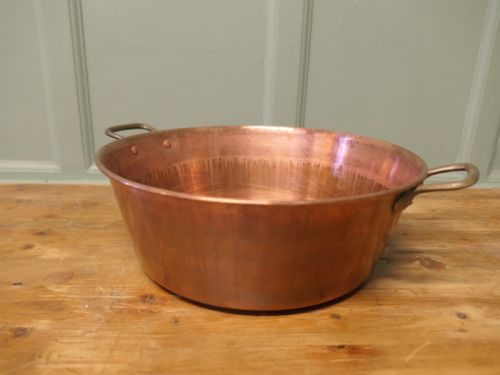
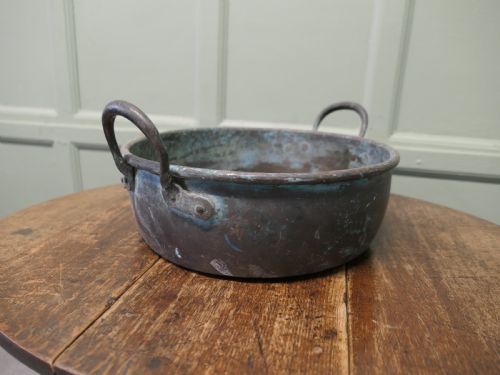
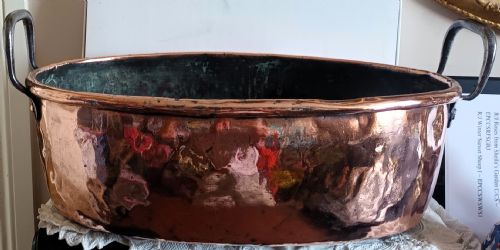


Large Copper Preserve Pan
A large copper preserve pan brings warmth and honest utility to any room, combining robust metalwork with centuries of kitchen history.
Large Copper Preserve Pan
When you search for a large copper preserve pan, you are looking at substantial vessels designed for heavy culinary tasks like boiling fruit, jam, and cream. These utilitarian pieces appear in forms such as jam pans, cream setting pans, cooking pots, and large bowls.
The versions you are most likely to meet on this page span the Georgian, Victorian, and early twentieth-century periods. They originate from British country houses and rustic farmhouse kitchens, carrying the marks of genuine domestic service.
How they were made
These vessels rely primarily on heavy copper construction, paired with handles fashioned from brass, iron, or wrought iron. Some interiors feature tin linings to prevent direct contact between food and the reactive copper metal.
The fabrication combines durable metalworking techniques suited to utilitarian cookware, resulting in thick walls capable of distributing heat evenly across open hearths and stoves.
Listings on this site span the nineteenth and twentieth centuries, incorporating Georgian and Victorian styles alongside rustic farmhouse copper cookware.
What varies in quality
The distinction between standard kitchenware and superior examples lies in the thickness of the metal and the substance of the handles. Heavier gauge copper and robust double handles indicate vessels built for sustained, demanding use.
Maker marks and inscriptions elevate certain pieces, distinguishing anonymous vernacular items from stamped products of established London stores and cooperative societies.
Hodges & Sons
The Large Copper Preserve Pan Glossary
- Preserving Pan
- A wide, open vessel designed for boiling fruits with sugar to make jam or jelly. Its shallow depth allows steam to escape efficiently during prolonged simmering.
- Cream Setting Pan
- A specialised vessel utilised in dairies to allow cream to rise to the surface of fresh milk. These pieces tend to be wide and shallow.
- Wrought Iron
- A tough, malleable iron alloy beaten into shape by hand, frequently used for the robust handles riveted to heavy kitchen vessels.
- Georgian
- The period spanning the reigns of the four British monarchs named George, characterised by functional elegance in domestic objects.
Large Copper Preserve Pan: Frequently Asked Questions
What is a large copper preserve pan used for?
These vessels were originally built for boiling down soft fruits with sugar to create jams, jellies, and preserves in domestic kitchens. Their wide rims allowed moisture to evaporate quickly during the intense heating process.
Today, they find a second life as decorative display pieces in kitchens, or as generous containers for logs, plants, and umbrellas.
How do I date a copper preserve pan?
Dating relies on observing construction details such as hand-beaten hammering marks, the shape of the riveted handles, and any stamped maker names or retail marks. Georgian and Victorian examples often display heavier metal gauges and distinctive handle placements.
Comparing the form to documented pieces from the nineteenth century helps narrow down the decade of manufacture.
Are these copper pans safe for cooking?
Many antique copper pans require a fresh tin lining applied to the interior surface before they can safely come into contact with food. Without this protective barrier, copper can react with acidic ingredients during cooking.
Many buyers choose to use them strictly for display, floral arrangements, or non-culinary storage in the home.
How do I clean antique copper?
Cleaning depends on whether you prefer a bright, polished metallic finish or a deep, aged patina accumulated over generations of use. Gentle commercial copper cleaners or traditional pastes of salt and lemon juice will remove tarnish.
Avoid harsh abrasives that might scratch the soft copper surface or wear away remaining antique markings.