


Heavy Copper Preserve Pan
These heavy copper preserve pan examples are robust kitchen workhorses offering tactile warmth and utility for any kitchen.
Heavy Copper Preserve Pan
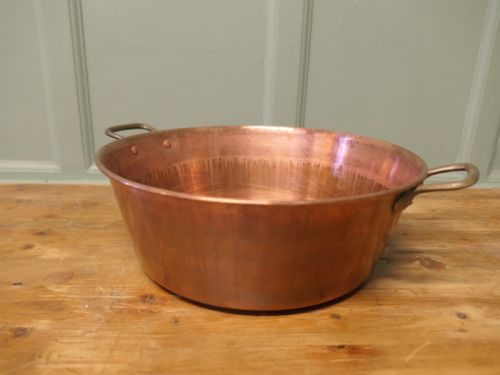
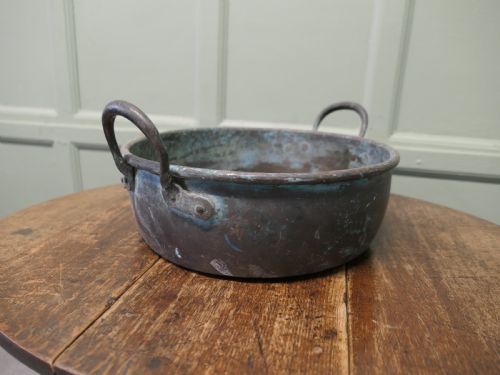
A heavy copper preserve pan is a traditional kitchen vessel designed for fruit boiling and jam making, appearing across the Georgian and Victorian periods in various rustic forms. These utilitarian items include large preserving pans, jam pans, and cooking vessels alongside cream setting pans and roasting dishes.
Most pieces seen here belong to the nineteenth century, spanning from George III examples up to nineteen-thirty productions. The typical form involves a generous rounded bowl designed for efficient heat distribution during stovetop or hearth cooking.
How they were made
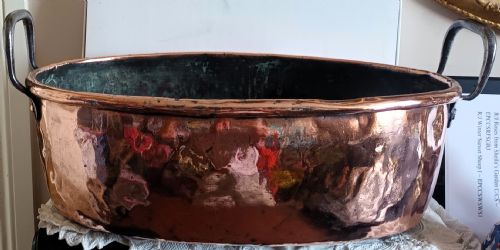
Construction relies primarily on hammered copper sheets, frequently complemented by brass, iron, or wrought iron for handles and structural reinforcement. Some variants incorporate bronze or tin linings, showing the practical metallurgical choices of nineteenth century metalworkers.
Many vessels feature robust riveted construction and swing handles, reflecting the durable manufacturing standards required for heavy kitchen tasks. The shaping process combines heavy gauge metal forming with secure handle attachment to withstand intense daily use.
Listings span the Georgian and Victorian eras, primarily featuring copper alongside iron, brass, bronze, and tin components.
What varies in quality
Quality rests in the thickness of the metal plate and the integrity of the riveted joints, which determine the structural heft of the vessel. Heavier gauge copper maintains better thermal properties and structural stability under regular heat.
Finishing details such as hand-beaten surfaces and the robustness of iron or brass handles separate standard utilitarian items from finer workshop examples. The purity of the materials and the skill in forming the curved basin dictate the overall calibre of the piece.
Hodges & Sons
The Heavy Copper Preserve Pan Glossary
- Preserving pan
- A wide, open vessel designed for boiling fruit and sugar to make jams and preserves. Its shallow depth allows steam to escape efficiently.
- Cream setting pan
- A wide, shallow dish utilised historically for letting milk settle so the cream could rise to the surface. These pieces often share similar proportions to jam pans.
- Riveted
- A method of joining metal plates where a metal pin is inserted and hammered flat to secure handles or seams permanently. This technique provides immense mechanical strength.
- Swing handle
- A movable arched handle attached to opposing sides of a pan, allowing the vessel to be lifted or suspended easily. They appear in both brass and iron variants.
Heavy Copper Preserve Pan: Frequently Asked Questions
How do I clean a copper preserve pan?
Traditional copper cleaner or a mixture of salt and vinegar removes tarnish effectively without scratching the metal surface. Rinse thoroughly with warm water afterwards.
Avoid abrasive scouring pads that can thin the historic copper layer over time. Regular gentle polishing maintains the natural warm glow.
Can I still use these for cooking?
Many of these vessels remain entirely suitable for culinary use, particularly jam making where copper's heat conductivity excels. Check the interior condition before preparing food.
Some collectors prefer to use them strictly for display or botanical planting. Their robust construction ensures they function just as they did centuries ago.
How do I date a copper pan?
Dating relies on observing construction methods, such as early hand-beaten marks versus later machine rolling, alongside handle styles and rim forms. Georgian and Victorian pieces often show distinct dovetail seams or hand-cut rivets.
Comparing the specific weight, metal composition, and patination helps narrow down the era. Stamped maker marks, where present, offer the clearest chronological clue.
Why are some pans heavier than others?
Weight differences depend on the thickness of the copper sheet utilised by the maker and the presence of iron or brass reinforcement bands. Heavier gauge metal was specified for professional or heavy domestic duty.
Lighter vessels were intended for standard household tasks. The extra mass in substantial pans ensures even heat distribution.