


Copper Hearth Basket
A copper hearth basket brings warmth and texture to a fireside, holding logs or coal while catching the eye with metallic depth.
Copper Hearth Basket
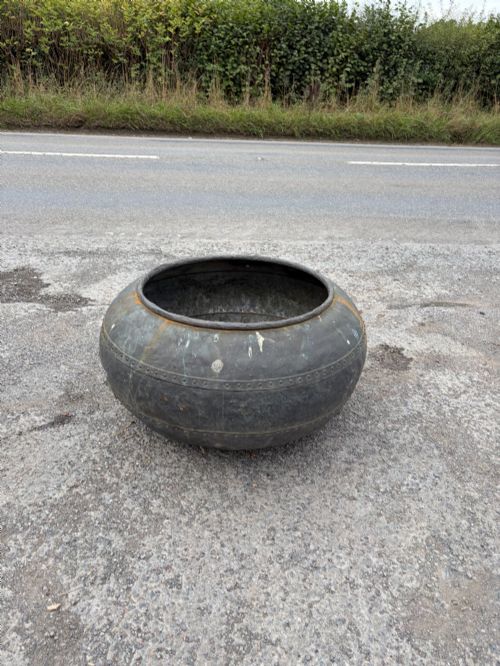
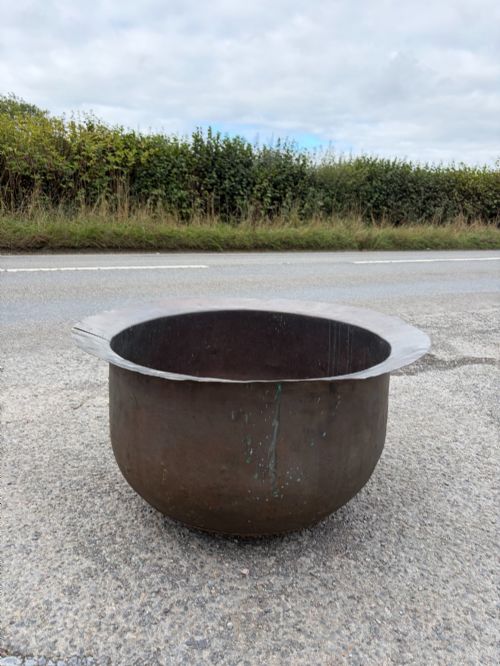
A copper hearth basket serves a practical role beside an open fire, holding logs or coal while doubling as a decorative fireside accessory. These vessels range from sturdy coal buckets and scuttles to large log bins, cauldrons, and planters.
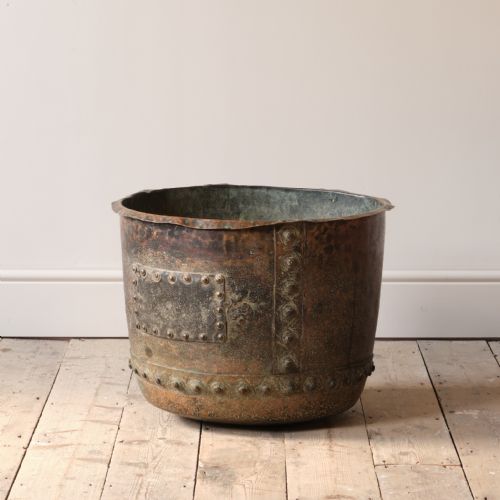
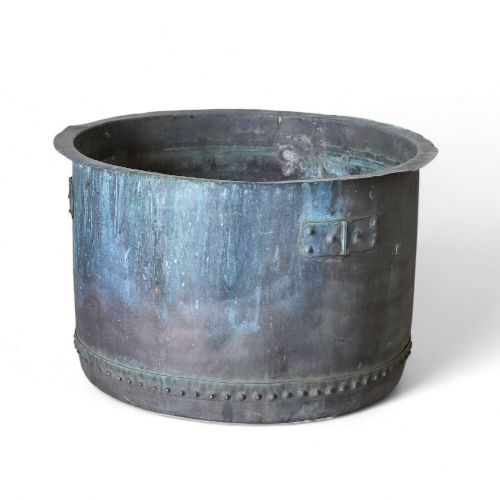
The version you are most likely to meet on this page is a nineteenth-century or Georgian piece, often formed with riveted joints and paired with iron or brass handles. Many examples double in purpose, shifting easily from holding firewood to acting as a garden planter.
How they were made
Craftsmen built these vessels primarily from sheet copper, joining the heavy metal plates with visible rivets to ensure strength under the weight of coal or timber. Iron and wrought iron provided structural rigidity for swing handles and support frames.
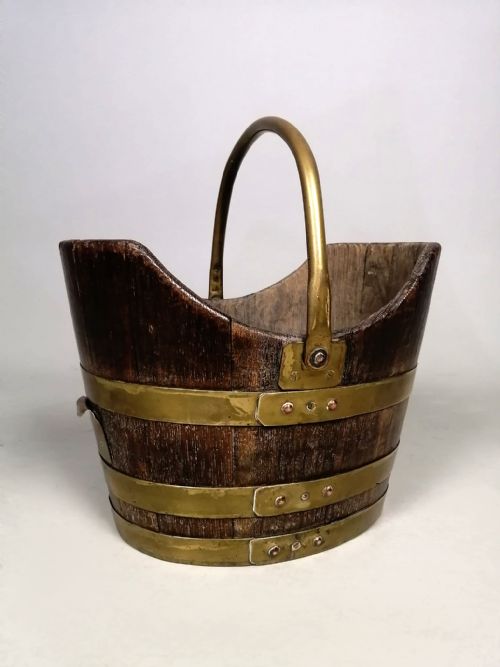
Makers integrated brass bands, handles, and feet for contrast and durability, occasionally incorporating oak or leather elements on specific buckets and bins. The exterior surfaces developed a natural patina over decades of handling and heat exposure near the hearth.
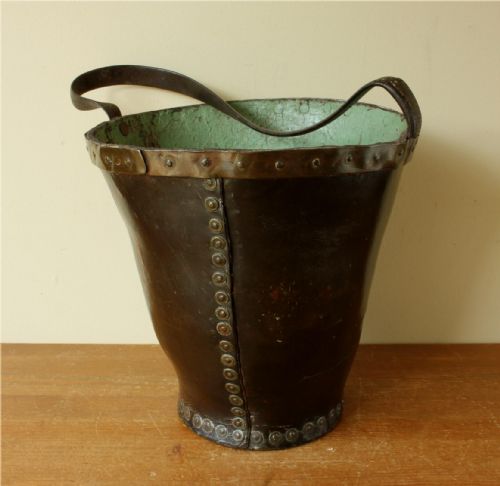
Some nineteenth-century leather fire buckets found a second life as waste paper baskets after their firefighting days ended.
What varies in quality
The distinction between ordinary utility items and superior examples lies in the weight of the metal and the neatness of the hand-riveting. Heavier copper gauges resist denting and hold their shape better over centuries of domestic service.
Design execution also dictates standard, with well-proportioned Georgian and Arts and Crafts models displaying thoughtful shaping and harmonious brass or iron additions rather than plain functional assembly.
The Copper Hearth Basket Glossary
- Patina
- The surface oxidation and mellow sheen that develops on copper over long periods of exposure to air and handling. This aged skin indicates genuine age and use.
- Coal scuttle
- A container specifically designed for carrying and storing coal near a fireplace, frequently featuring a shaped lip or a hinged handle for pouring. These often take the form of helmets or buckets.
- Cauldron
- A large round metal pot with a wide opening and a swing handle, traditionally used over an open fire for boiling or heating. In a domestic interior, these serve well as large log bins.
- Riveted
- Joined together using metal bolts hammered flat at the ends to hold overlapping plates securely. Hand-riveted construction is a hallmark of older metalwork.
- Arts and Crafts
- A design movement valuing hand craftsmanship and honest materials over mass production. Pieces from this period often display simpler, bolder forms.
Copper Hearth Basket: Frequently Asked Questions
How do I clean a copper hearth basket?
Maintenance depends on whether you prefer a bright polished shine or a dark historical patina. Most collectors choose to leave the accumulated age intact, wiping the surface only with a soft dry cloth.
If you prefer brightness, a mild proprietary metal cleaner removes oxidation. Avoid harsh abrasives that scratch the soft copper surface.
Can I use these for logs today?
These vessels were built specifically to hold heavy loads of timber and coal next to an open fire. Their robust construction handles everyday use beside a modern hearth without issue.
Line the interior with a protective layer if the logs are damp to prevent moisture damage to the metal base over time.
How do I tell a Georgian piece from a Victorian one?
Georgian examples, dating from the eighteenth century into the early eighteen hundreds, frequently display hand-beaten surfaces, heavy brass banding, and distinct proportions. They tend to feel heavier and show simpler, utilitarian lines.
Victorian and later nineteenth-century pieces often incorporate factory-standardized rivets, swing handles, and stylistic nods to Arts and Crafts or Art Nouveau aesthetics.
Why do some log bins have iron frames?
Iron frames provided extra structural support for exceptionally large copper vessels that needed to bear heavy weights of coal or timber. The combination of black wrought iron against warm polished copper also created a striking visual contrast favored by makers.