




Large Circular Wall Mirror
These large circular wall mirror pieces bring commanding focus to a room, offering the convex reflection typical of Regency and nineteenth-century examples.
Large Circular Wall Mirror
A large circular wall mirror centres a room with its distinctive round plate, often encountered in Regency and nineteenth-century forms across these listings. These pieces function as both optical devices and strong decorative statements, catching light from across the interior.
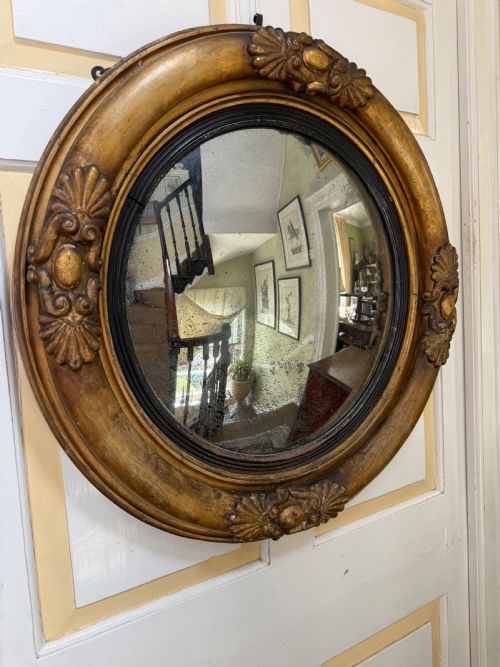
Most examples appearing here take the form of convex wall mirrors framed in giltwood or mahogany. The visual weight of these frames matches the substantial scale of the round glass plates.
Materials and construction
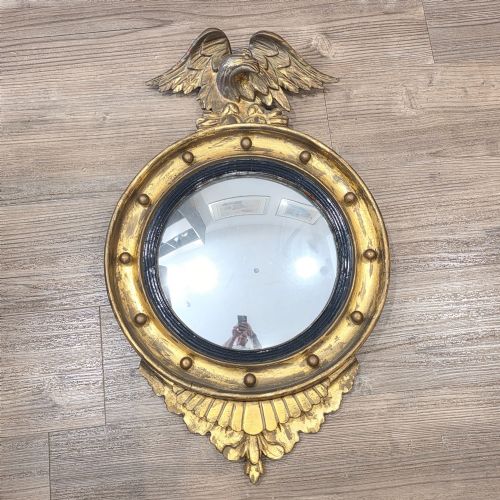
Frames rely on carved giltwood, ebonised wood, and solid mahogany, shaped to hold heavy round glass plates. Gesso and plaster build up the intricate mouldings found on gilded and eagle-mounted specimens.
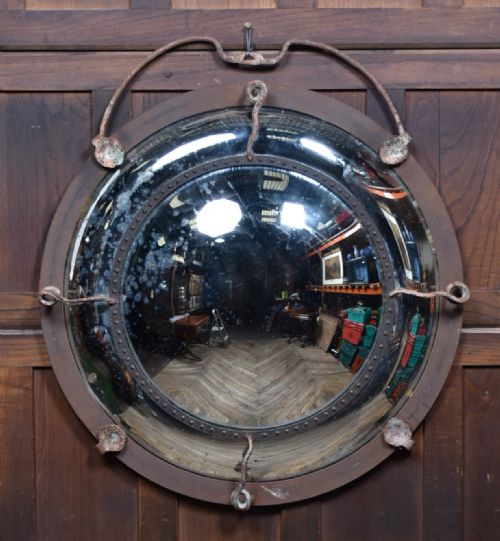
Wrought iron and copper appear in industrial or alternative styles, providing different structural weights alongside traditional timber frames. The combination of carved wood, applied gesso, and gilded surfaces defines the primary method of manufacture.
Several mirrors feature fierce spread eagles perched on top, watching over the room with unblinking nineteenth-century vigilance.
Judging quality
Quality rests on the crispness of the carved details within the giltwood frame and the preservation of the original gilded surface. Deeply modelled enrichments and well-proportioned mouldings distinguish the finer pieces.
The clarity of the mirror plate and the integrity of the timber or gesso ground dictate the overall standing of the object. Heavier scales and sophisticated ornamentation separate the most ambitious examples from simpler utility mirrors.
The Large Circular Wall Mirror Glossary
- Convex mirror
- A round mirror with an outward-curving glass plate that produces a wide, distorted panoramic reflection of the interior. These were popular in the Regency period for monitoring a room.
- Giltwood
- Timber covered with a thin layer of gold leaf over a prepared gesso ground. This finish provides the bright reflective surface characteristic of formal wall mirrors.
- Ebonised wood
- Timber treated with a dark stain or finish to imitate ebony. This technique creates a stark, formal contrast against gilded details or white walls.
- Gesso
- A plaster-like mixture applied to wood frames to provide a smooth base for carving or gilding. It allows for sharp, intricate ornamental relief work.
- Regency
- An architectural and decorative style dating from the early nineteenth century. Pieces from this era often feature bold classical motifs, convex plates, and eagle crestings.
Large Circular Wall Mirror: Frequently Asked Questions
Where should I hang a large circular wall mirror?
These mirrors command attention above mantelpieces, in grand hallways, or on principal dining room walls where their reflective capacity can open up the space.
Because of their substantial weight and scale, they require secure fixings directly into structural wall anchors rather than standard plaster fixings.
How do I care for antique giltwood frames?
Dust the carved surfaces gently with a soft, dry brush to prevent the accumulation of dirt within the intricate gesso mouldings and leaf work.
Avoid liquid cleaners entirely, as moisture can damage the delicate water gilding and underlying plaster ground.
What is the difference between convex and flat mirror plates?
Convex mirror plates curve outward to capture a wide-angle view of the entire room, functioning historically as security and decorative devices.
Flat mirror plates provide a standard, undistorted reflection and generally belong to different stylistic traditions than the round convex forms.
How can I identify a Regency period mirror?
Regency mirrors frequently feature circular convex plates within giltwood frames, sometimes surmounted by carved eagles or ball-and-leaf appliques.
The overall construction relies on early nineteenth-century timber framing, heavy gesso ornamentation, and deep circular bezels.