
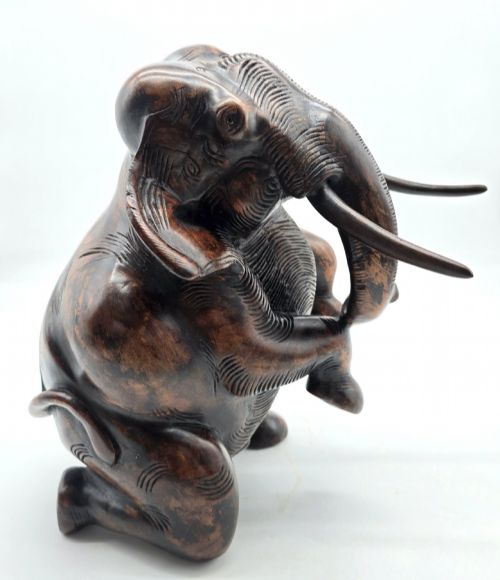
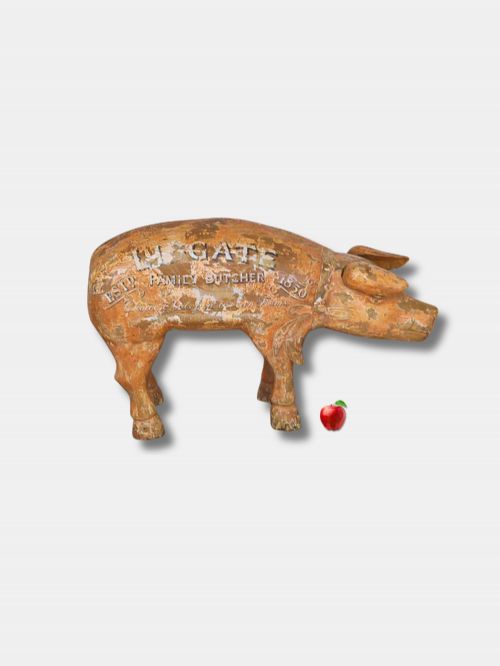


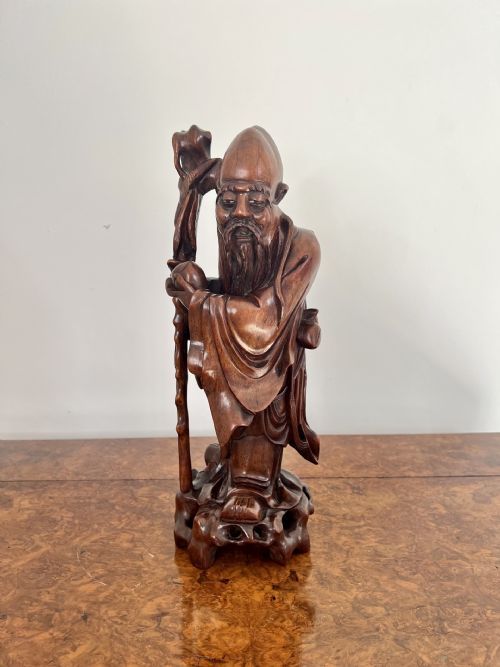


Large Carved Wood Statue
A large carved wood statue brings substantial presence to a room, spanning centuries of global craftsmanship from Black Forest animals to Asian religious figures.
Large Carved Wood Statue
A large carved wood statue commands attention through scale, often measuring substantial heights as figures, animals, trade signs, or architectural elements. Buyers seek these pieces to anchor a space, drawn to the tangible evidence of hand tool work left behind by historical carvers.
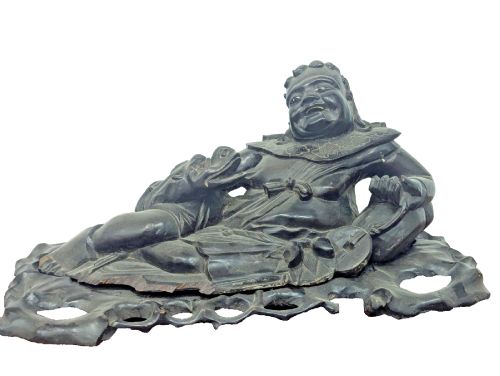
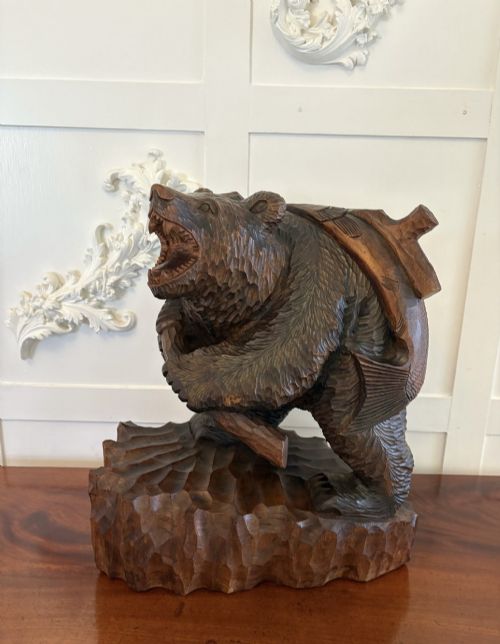
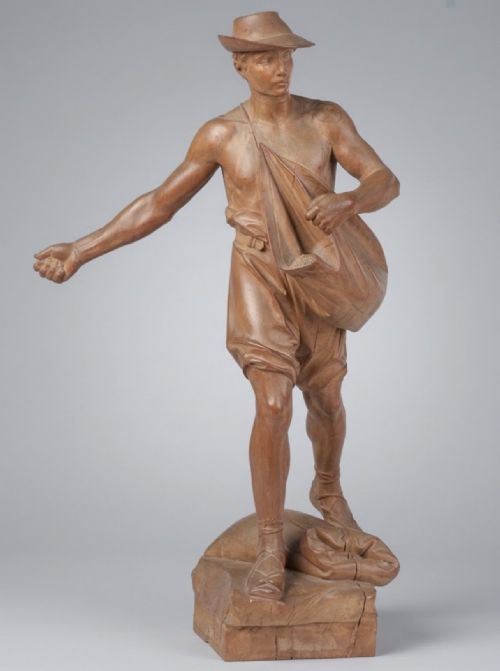
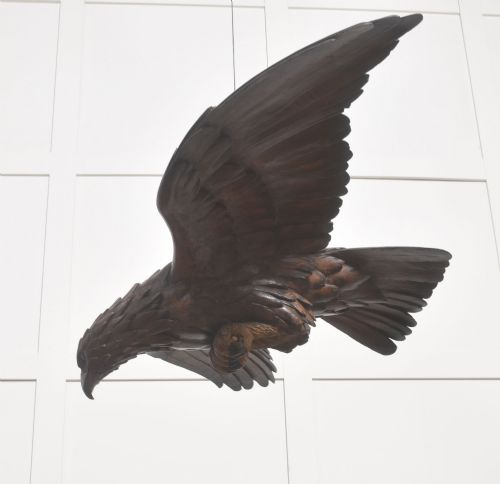
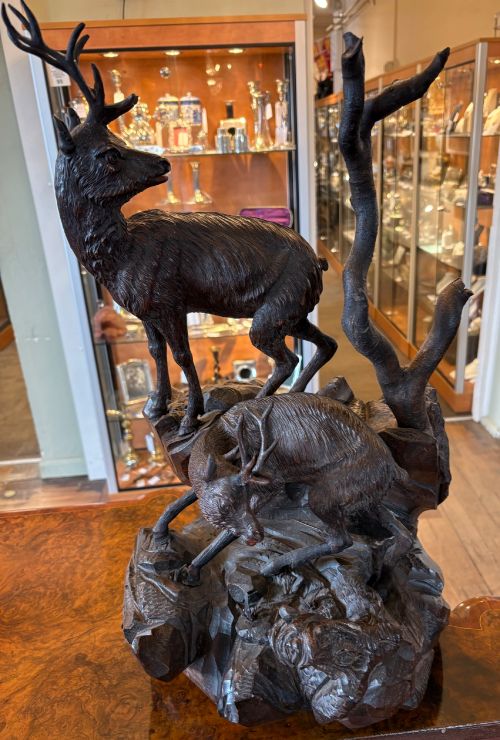
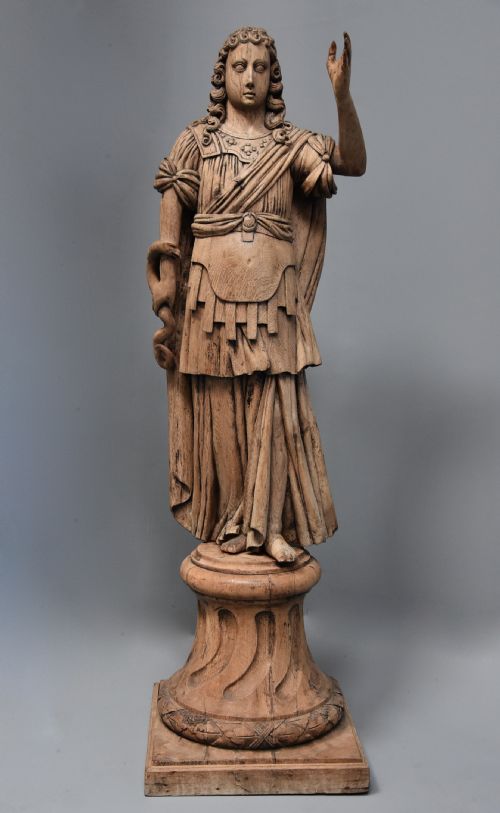
The selections available range widely in origin and subject matter, including Qing Dynasty Buddhas, Black Forest bears and eagles, religious saints, and ethnographic figures. Pieces from the eighteenth and nineteenth centuries appear alongside early twentieth-century works from China, India, Japan, and Europe.
Forms vary from life-size human figures and deities to processional horses and trade signs such as butchers' boards. Most examples utilise dense hardwoods or softer fruitwoods, sometimes finished with polychrome paint, gesso, or gold leaf.
How they were made
Makers shaped these statues from diverse woods including oak, limewood, fruitwood, and heavy Asian hardwoods, selecting timber based on regional availability and the intended scale of the sculpture. Carvers utilised gouges, chisels, and mallets to rough out the form before defining facial expressions, drapery folds, or animal anatomy.
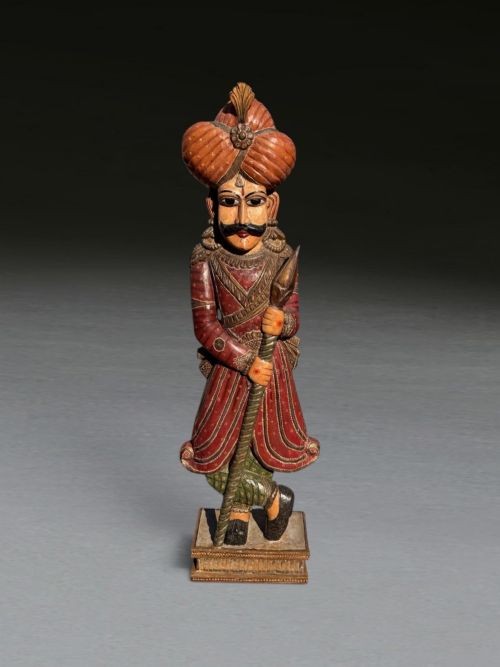
Many surfaces received applied decoration such as gesso grounds, polychrome paint schemes, or gold leaf gilding to enhance visual impact and protect the wood. Figures such as trade signs and religious statues frequently show layers of historical pigments applied over the carved substrate.
Bears carved from linden wood stand ready to hold cards or fish, proving historical woodworkers enjoyed a sense of humour.
What varies in quality
Condition and the preservation of original surfaces heavily influence standing. Pieces retaining their primary polychrome paint, gesso, or gold leaf without heavy overpainting command greater interest from collectors who value undisturbed historical patination.
Jules Buste Labatut·Gyoko
The Large Carved Wood Statue Glossary
- Polychrome
- Painted in several colours. This term describes statues decorated with historical pigments over wood or gesso.
- Gesso
- A plaster mix applied to wood surfaces as a smooth base for gilding or painting. It provides a flat ground that holds fine detail.
- Giltwood
- Wood that has been coated with thin gold leaf. This finish adds reflective brilliance to religious and decorative figures.
- Hardwood
- Dense timber from broad-leaved trees. Carvers utilised these heavy woods for intricate figures that required durable structural integrity.
Large Carved Wood Statue: Frequently Asked Questions
Where were large carved wood statues placed?
Historically, these statues occupied diverse settings ranging from Buddhist temples and European churches to trade storefronts and domestic drawing rooms. Religious figures stood upon altars or shrines, while decorative animals and architectural carvings adorned grand estates.
Today, buyers place them as freestanding floor sculptures or on sturdy pedestals where their height and weight can be safely accommodated.
How do I care for a wood statue?
Maintaining wooden sculptures requires stable indoor humidity and protection from direct sunlight, which causes timber to dry, crack, and fade historical pigments. Dusting should be done gently with a dry, soft brush rather than liquid cleaners that might harm older paint or gilt surfaces.
Positioning the piece away from direct heat sources ensures the wood remains stable over decades of display.
How do I identify the period of a statue?
Dating relies on tool marks, wood species, regional carving styles, and the composition of underlying gesso or paint layers. Eighteenth-century and nineteenth-century pieces often display distinct chisel characteristics and wear patterns that differ from later twentieth-century production.
Comparing stylistic conventions of specific origins, such as Meiji period Japanese work or Qing Dynasty figures, provides a reliable framework for age.
Are painted statues original?
Many statues retain their primary polychrome or gilt schemes applied by the original workshop, though trade signs and religious figures were often repainted during their working lives to maintain appearance. Close examination under magnification reveals whether paint layers are contemporary to the carving or added later.
Unaltered surfaces exhibit craquelure and wear consistent with the age of the wood beneath.