



Continental Oak Sculpture
Continental oak sculpture brings centuries of carved devotion and architectural presence into a room through figures and corbels fashioned from hardy timber.
Continental Oak Sculpture
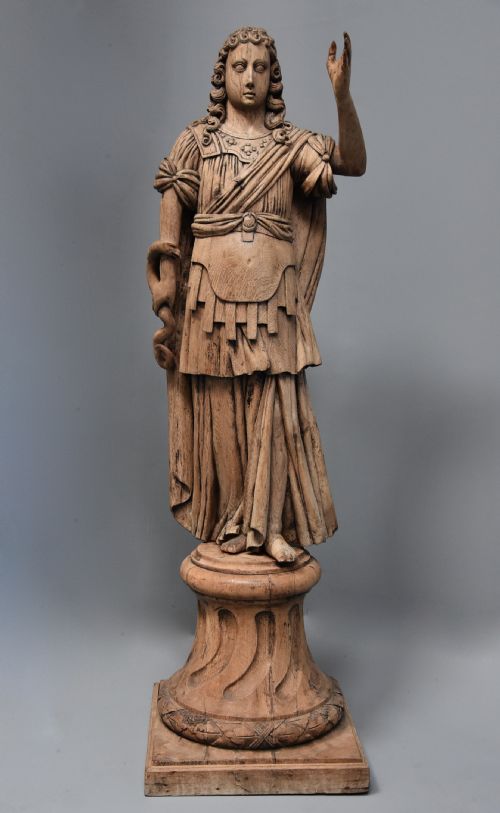
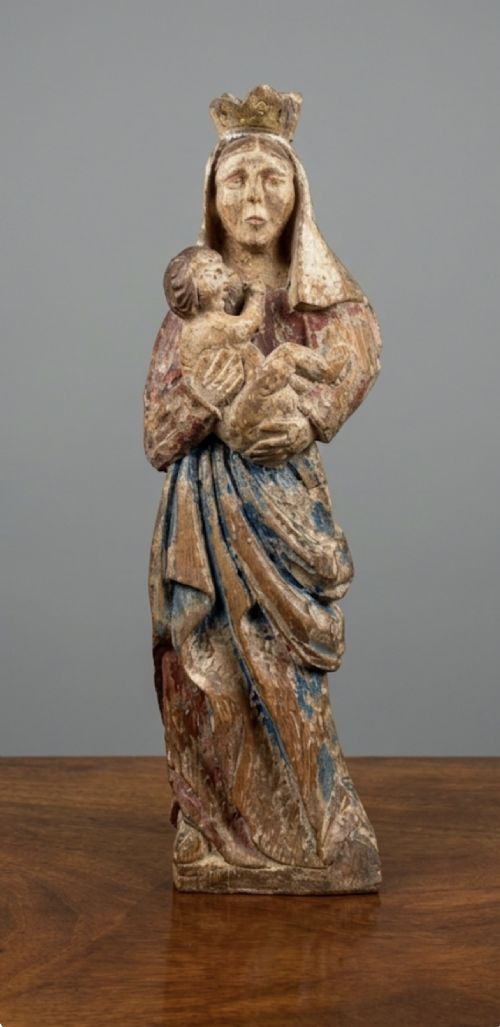
Continental oak sculpture encompasses carved figures, statues, and architectural elements originating from European workshops across several centuries. When exploring continental oak sculpture, you encounter religious figures, saints, Madonna and child groups, and structural fragments such as corbels.
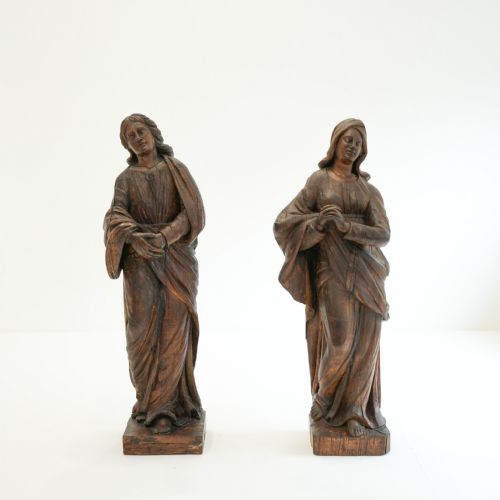
The pieces on this page span from pre-sixteenth century medieval works to nineteenth-century interpretations, touching on styles like Gothic Revival, Renaissance, and Baroque. Forms range from life-size standing figures and paired angels to wall carvings and architectural salvage.
Religious subjects dominate the selection, reflecting the ecclesiastical origins of many surviving carvings. Makers from various European regions utilised dense timber to immortalise biblical narratives and holy figures for churches and private devotional spaces.
Materials and construction
Carvers worked primarily with oak, along with general carved wood and occasional walnut, shaping dense timber using gouges and chisels. The natural grain and structural strength of oak allowed artisans to create substantial statues and load-bearing architectural corbels.
Many surfaces received applied treatments including polychrome paint, gesso, and gold leaf to enhance the visual impact of religious figures. These finishes added colour and divine radiance to saints and cherubs, though centuries have often left them weathered or partially stripped.
Listings feature oak, walnut, and polychrome surfaces spanning the sixteenth to the nineteenth centuries.
Assessing quality and craftsmanship
The integrity of the remaining surface treatment also distinguishes the range. Original polychrome and gilding preserved beneath centuries of patina hold greater artistic weight than later overpainting or stripped, featureless timber.
The Continental Oak Sculpture Glossary
- Corbel
- A structural piece of stone or wood projecting from a wall to support a weight. In these listings, carved oak corbels often take human or grotesque forms.
- Polychrome
- The practice of decorating architectural elements, sculpture, or pottery in a variety of colours. On these carvings, traces of old paint bring medieval and baroque subjects to life.
- Gesso
- A paint mixture consisting of a neutral binder mixed with chalk, gypsum, or pigment. It served as a smooth preparation layer for gilding and painting on wood.
- Baroque
- A highly ornate and extravagant style of architecture, art and sculpture prevalent in Europe from the early seventeenth until the mid-eighteenth century. It imparted dynamic movement and emotional intensity to religious figures.
- Anna Selbdritt
- A subject in Christian art depicting Saint Anne with her daughter the Virgin Mary and the infant Jesus. This iconography appears in late medieval wood carvings.
Continental Oak Sculpture: Frequently Asked Questions
How old are these sculptures?
The pieces span from the late fifteenth century through the sixteenth, seventeenth, and eighteenth centuries, extending into nineteenth-century revivals.
Dates are determined by stylistic markers, costume details, and the tool marks left behind by the carvers.
Where were they originally displayed?
Many items originated inside European churches, cathedrals, and abbeys as devotional statues or altarpiece components.
Others functioned as architectural salvage, serving as structural corbels or wall carvings within domestic and ecclesiastical buildings.
How do I care for antique oak?
Keep the wood away from direct heat sources and sudden humidity fluctuations to prevent splitting or warping.
Dust gently with a dry, soft cloth and avoid applying modern polishes or oils to historic, untreated, or painted surfaces.
Are the paint finishes original?
Some sculptures retain remnants of early polychrome and gesso, while others show the bare oak after centuries of wear or restoration.
Close inspection often reveals layers of historic pigment beneath later patination.