


Classical Carved Wood Figure
These pieces of classical carved wood figure bring antiquity and myth into rooms through carved oak, limewood and chestnut.
Classical Carved Wood Figure
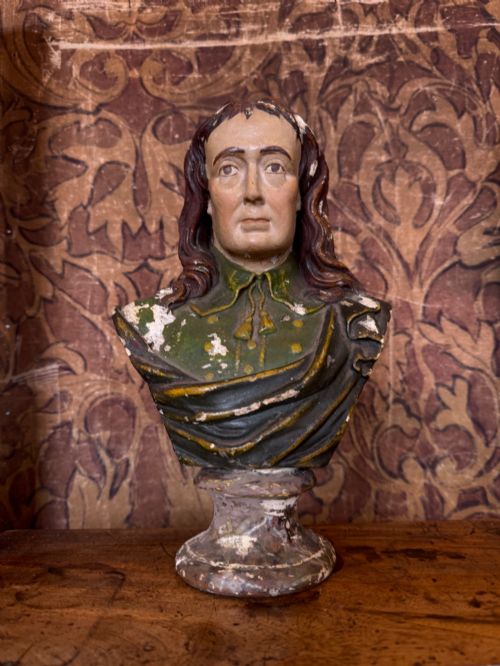
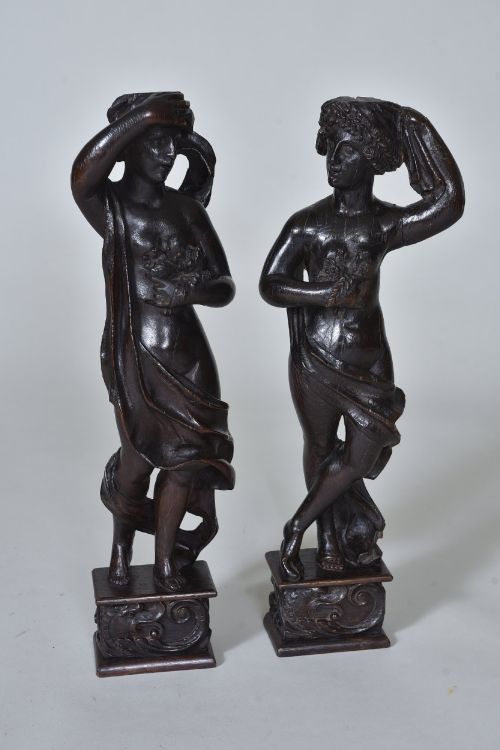
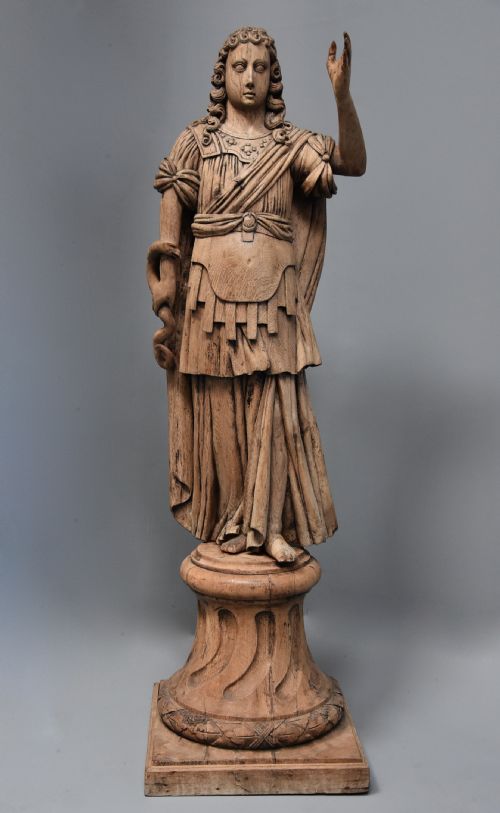
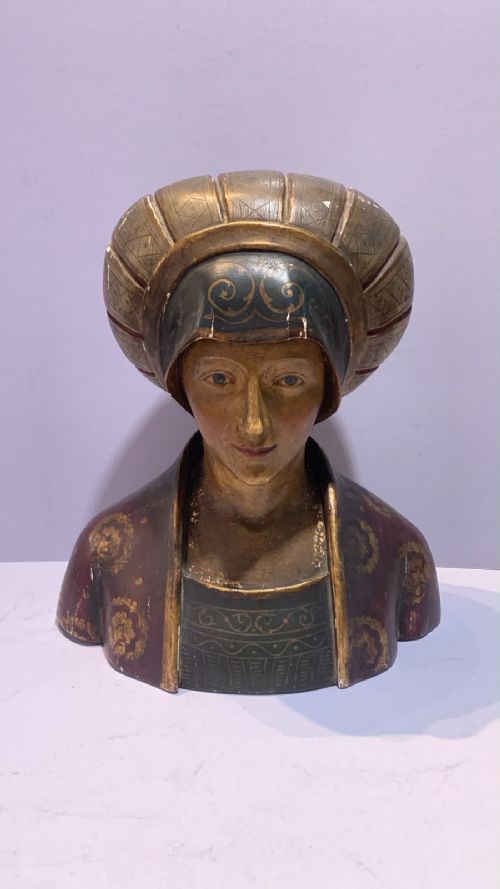
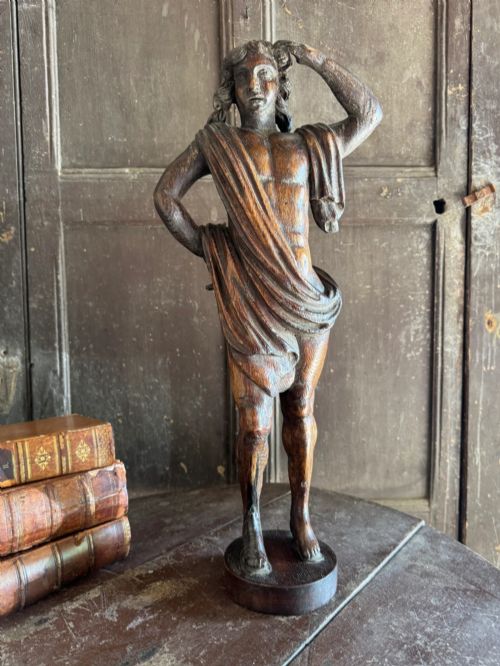
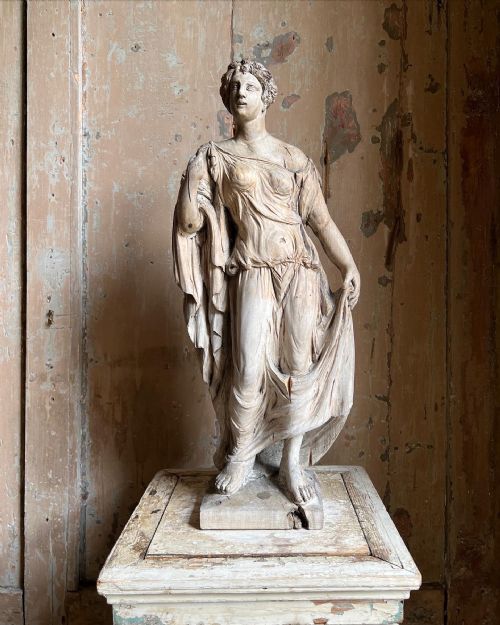
A classical carved wood figure draws on neoclassical and 18th century continental traditions to represent deities, nobility and architectural supports. The selection here ranges from life size continental oak figures to Grand Tour busts and wall plaques.
Buyers encounter forms spanning floor lamps, candlesticks, architectural salvage and full scale sculptures. The 18th century items sit alongside 19th century Grand Tour pieces and early 20th century limewood carvings.
Materials and carving
Maker hands shape oak, limewood, chestnut and hardwood using traditional chisels and gouges to build muscular forms and draped garments. Surfaces sometimes carry polychrome pigment or gesso layers to add colour and texture to the timber.
Pieces take various structural paths, from freestanding torsos and life size statues to herms supporting architectural elements and lamps mounted on socle bases.
One cheerful 19th century figure is caught in the act of bearing a heart.
Judging the carving
Quality rests on the depth of the undercut and the anatomical precision shown in muscle, drapery and facial expression. Finer works capture the classical proportions of subjects like the Farnese Flora or the goddess Fortuna with sharp clarity.
The choice of timber and the preservation of original surfaces also divide works. Oak and limewood handle fine detail differently, and surviving polychrome or gesso enhances historical value.
Hans Müller
The Classical Carved Wood Figure Glossary
- Grand Tour
- A traditional trip through Europe undertaken by upper class Europeans to collect art and antiquities. Figures from this tradition often copy classical sculpture.
- Herm
- A carved bust or head atop a square pillar, originating in ancient Greece as boundary markers. These frequently serve as architectural supports.
- Socle
- A short plain plinth or pedestal supporting a statue, bust or vase. It elevates the carved figure from the surface below.
- Polychrome
- The practice of decorating architectural elements, sculpture or pottery in a variety of colours. In wood figures, this involves painted pigments applied over gesso.
Classical Carved Wood Figure: Frequently Asked Questions
How were these wooden figures used?
Many served as decorative art objects in private libraries, studies and antechambers during the 18th and 19th centuries. Some function as lighting supports or architectural elements.
Larger pieces operated as standalone statuary, while plaques and reliefs hung directly on panelled walls.
How do I care for carved wood?
Keep wooden sculptures away from direct heat sources and strong sunlight to prevent the timber from splitting or warping. Dust gently with a dry, soft brush.
Avoid using modern liquid polishes, particularly on pieces with historic gesso or polychrome surfaces.
How do I spot a Grand Tour piece?
Grand Tour carvings typically replicate famous antique marble statues seen by travellers in Italy during the 18th and 19th centuries. They often use dense hardwoods or limewood to achieve fine sculptural detail.
Subjects frequently include classical deities like Fortuna or architectural motifs such as Medici lions.