

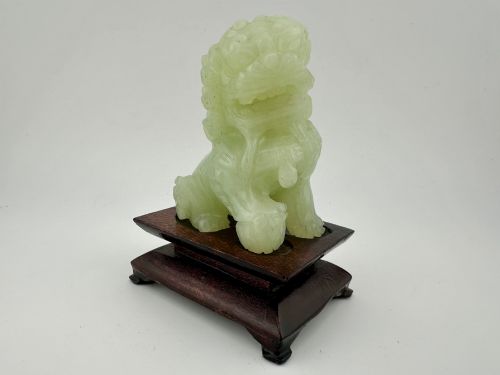





Decorative Carved Lion
These decorative carved lion pieces bring immediate power and historical weight to a room, ranging from fierce Regency mirrors to Chinese temple guardians.
Decorative Carved Lion
The pieces on this page span several distinct periods, with the nineteenth century heavily represented alongside eighteenth-century works and later twentieth-century interpretations. English oak and giltwood examples sit alongside Chinese carved Foo Dogs and Italian mirrors.
Makers and artisans approached the subject through diverse regional lenses, producing everything from domestic decorative boxes to life-size sculptures and folk art lionesses. Regency mirrors and Gothic revival side tables demonstrate how the motif adapted to different interior styles.
What varies in quality
Quality rests primarily on the depth and animation of the carving, where a master's hand delivers anatomical conviction rather than stiff repetition. The treatment of the mane, musculature, and facial expression separates a lively, characterful sculpture from a routine production piece.
The survival of original surfaces dictates the integrity of older items, distinguishing pieces retaining their first giltwood or paint layers from those heavily restored. The choice of material and the crispness of the original tool marks also separate standard domestic items from high-status commissions.
Decorative Carved Lion Retail Price Guide 2026
Typical asking prices for decorative carved lion among the pieces listed under this phrase on Sellingantiques today, from the lower quarter to the upper quarter. They describe what is for sale here now, not the wider market.
Even fierce guardian lions occasionally need a playmate, as proven by the trio of wooden toy lionesses waiting quietly in the archive.
Luigi Frullini
The Decorative Carved Lion Glossary
- Giltwood
- Wood that has been coated with gold leaf or gold dust over a prepared ground. This finish was widely used on mirrors and decorative frames to catch candlelight.
- Gesso
- A plaster-like mixture applied to wood surfaces as a smooth base for painting or gilding. It allows for sharp, crisp moulded or carved details.
- Pier Mirror
- A tall mirror designed to hang on the wall between windows, frequently featuring elaborate carved frames. They reflected light and added grandeur to period rooms.
- Rampant
- A heraldic term describing an animal standing on its hind legs with forelegs raised. This dynamic posture appears frequently in English and European armorial carvings.
Decorative Carved Lion: Frequently Asked Questions
Where should I place a lion sculpture?
Freestanding animal figures sit well on heavy side tables, console tops, or directly on the floor for larger scale works. They anchor a room by introducing a strong vertical focal point.
Wall masks and mirrors command attention above mantelpieces or along principal hallways where their carved details catch ambient light. Ensure the scale matches the surrounding furniture to maintain visual balance.
How do I care for carved wood?
Keep wooden carvings away from direct heat sources and strong sunlight to prevent the material from drying out and splitting over time. Maintain a stable indoor environment.
Dust gently with a soft, dry cloth rather than using liquid polishes or silicone sprays that can build up on gesso and gilt surfaces. Professional conservation is recommended for fragile gilding.
What is a Foo Dog?
A Foo Dog is the Western term for guardian lions originating in Chinese art and architecture. These mythical beasts symbolized protection and prosperity.
Unlike naturalistic European lions, Foo Dogs feature stylized curls, open jaws, and often rest a paw upon a brocade ball or cub. They were carved in wood, jade, and stone for domestic and temple use.
How do I date a carved lion?
Dating relies on stylistic clues, tool marks left by the maker, and the underlying material structure. Regency pieces often feature crisp gesso work and classical proportions, while nineteenth-century Gothic revivals lean toward heavier oak.
Examine the back of panels and the joinery methods to understand the age of the timber. Comparing the patina of the wood and the wear on gilding helps confirm the period.