



Large Wooden Animal Carving
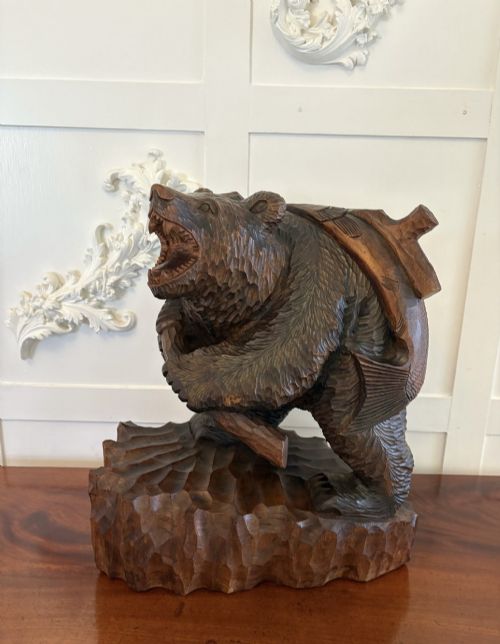
These large wooden animal carving pieces bring character and scale into a room, spanning bears, lions, and bears carrying fish.
Large Wooden Animal Carving
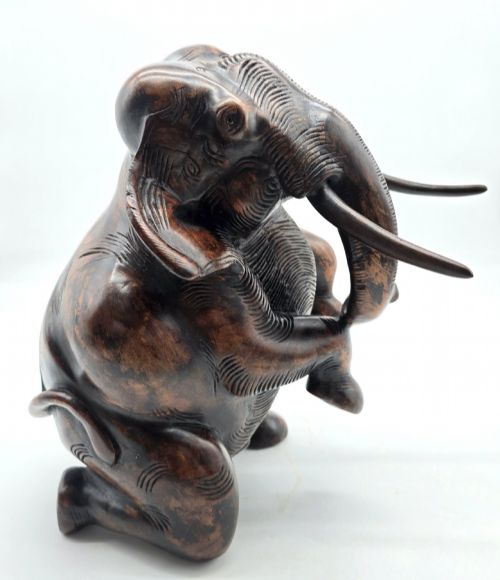
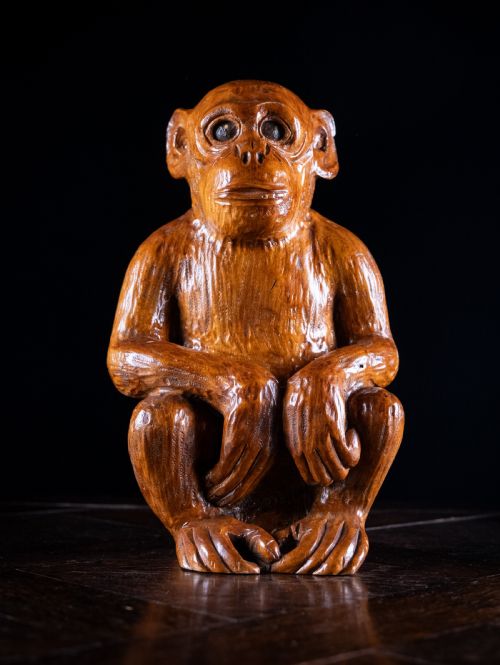
A large wooden animal carving represents sculptural subjects ranging from Black Forest bears and Medici lions to Chinese monkeys and French folk art cows. These works take the form of freestanding sculptures, wall carvings, bookends, and architectural salvage.
The pieces on this page originate predominantly from the nineteenth century, the Edwardian era, and the early twentieth century. Makers worked across various global traditions, including European folk art, Anglo-Indian craft, and Japanese styles.
Buyers most frequently encounter European woodland animal studies and monumental architectural figures among these listings. Each object captures natural form through traditional hand-tool methods applied to substantial blocks of timber.
Materials and construction
Carvers shaped these sculptures from dense timbers such as linden wood, walnut, and various hardwoods using traditional chisels and gouges. Linden wood offered a fine grain suited to intricate detail, while walnut and heavier hardwoods provided the structural integrity needed for monumental pieces.
Surfaces often retain their natural timber finish, though some examples incorporate historic paint, metal components, or leather elements. Tool marks frequently remain visible beneath the finish, recording the direct hand of the carver.
Large Wooden Animal Carving Retail Price Guide 2026
Typical asking prices for large wooden animal carving among the pieces listed under this phrase on Sellingantiques today, from the lower quarter to the upper quarter. They describe what is for sale here now, not the wider market.
Object forms represented here include freestanding animal sculptures, wall masks, bookends, and French shop display trolleys.
Distinctions in quality
Quality rests upon the anatomical conviction of the carving and the liveliness of the pose. A superior piece captures muscle tension, fur texture, and posture with naturalistic accuracy rather than stiff symmetry.
The choice of timber and the ambition of the scale dictate the distinction between workshop production and master craftsmanship. Deeply undercut forms and balanced compositions separate exceptional sculptural studies from standard decorative objects.
The Large Wooden Animal Carving Glossary
- Black Forest
- A style of wood carving originating from the mountainous region of central Europe, famous for realistic depictions of bears, deer, and owls. These pieces often function as practical items like bookends or umbrella stands.
- Medici Lion
- A classic sculptural form modelled after the ancient marble lions guarding the Loggia dei Lanzi in Florence. Pair groupings of these monumental beasts frequently served grand architectural or garden roles.
- Linden wood
- A pale, close-grained timber favoured by European carvers for its uniform texture and resistance to splitting. It allows for crisp detailing without splintering.
- Folk art
- Utilitarian or decorative objects made outside academic traditions by self-taught or regional makers. These works prioritise expressive charm and local character over strict naturalism.
Large Wooden Animal Carving: Frequently Asked Questions
How do I clean a large wooden animal carving?
Dust the surface regularly with a soft, dry lint-free brush to prevent particulate buildup in the carved recesses.
Avoid using water, chemical polishes, or modern sprays, as these can strip historic finishes and damage dry timber.
Where should I display a heavy wooden carving?
Place monumental sculptures on stable, load-bearing furniture or directly on the floor away from direct heat sources and sunlight.
Radicals in temperature and humidity can cause historic wood to expand, contract, or develop splits over time.
How can I tell a nineteenth-century carving from a later copy?
Examine the underside and hidden surfaces for tool marks, oxidation of the timber, and appropriate historic fixings.
Nineteenth-century pieces typically display hand-tooled surfaces and dry, oxidised grain that differs from modern machine production.
What is the difference between Black Forest carvings and other styles?
Black Forest carvings are distinguished by their naturalistic rendering of forest fauna, often integrated into functional household objects.
Other traditions, such as Chinese or Anglo-Indian works, employ distinct regional motifs, symbolic postures, and local hardwood species.