





Antique Wooden Lion Statue
An antique wooden lion statue brings centuries of carved power and presence to a room, ranging from grand European staircases to scholar's desks.
Antique Wooden Lion Statue
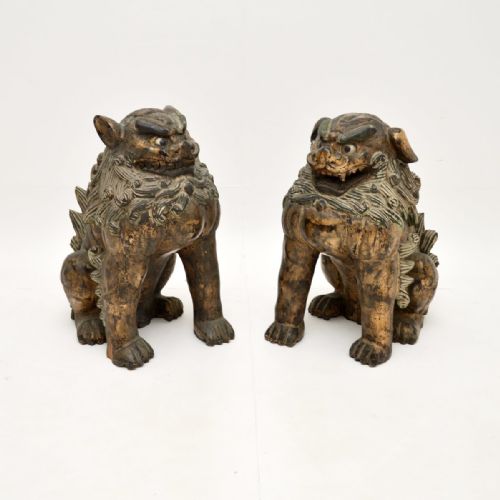
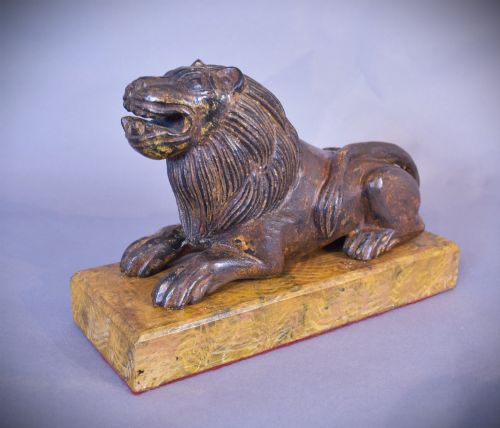
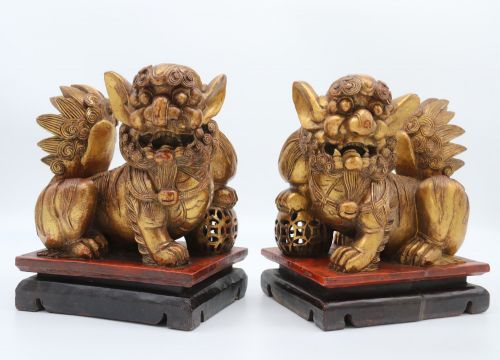
When you search for an antique wooden lion statue, you encounter a remarkable span of traditions, stretching from English country houses to Chinese workshops. These figures take many forms, including architectural elements like newel post finials, classical Grand Tour Medici pairs, and traditional Chinese Foo Dogs or Buddhist lions.
The pieces on this page cross multiple centuries, running from seventeenth-century English carvings to nineteenth-century examples. You will find both single figures mounted on dedicated plinths and matched pairs designed for mantelpieces or entrance halls.
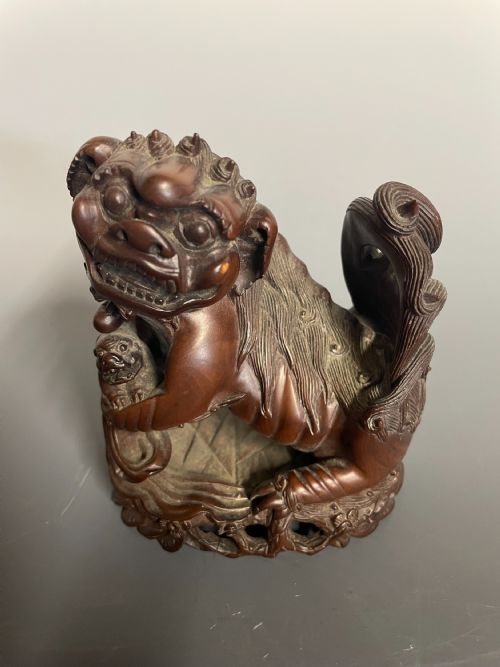
European interpretations tend to follow classical lines or Gothic revival tastes, whilst Asian works utilise boxwood, root wood, and lacquer. Each serves as a decorative ornament or sculptural centerpiece, shaped by the distinct aesthetic of its origin.
How they were made
Carvers shaped these sculptures from various hardwoods, including oak, boxwood, and root wood, employing traditional chisels and gouges to render musculature and manes. Many figures receive additional surface treatment, such as polychrome paint, intricate lacquer, or layers of gold leaf.
Architectural pieces like newel post finials were integrated directly into timber staircases, whereas decorative ornaments were carved separately and often mounted onto tiered plinths. Artisans matched the grain of the timber to the dynamic postures of the animals, ensuring both structural stability and visual impact.
Antique Wooden Lion Statue Retail Price Guide 2026
Typical asking prices for wooden lion statue among the pieces listed under this phrase on Sellingantiques today, from the lower quarter to the upper quarter. They describe what is for sale here now, not the wider market.
The listings span from the seventeenth century through to the twentieth century, incorporating both English architectural salvage and traditional Chinese hardwood carvings.
What varies in quality
Surface preservation significantly influences the standing of a piece, particularly with giltwood, lacquer, and polychrome finishes. Original undisturbed paint or gold leaf retains historical integrity, while clumsy later restoration alters the character of the wood beneath.
The Antique Wooden Lion Statue Glossary
- Newel Post Finial
- An ornamental carving mounted on the topmost or bottommost post of a staircase balustrade. Seventeenth-century examples frequently take the form of heraldic beasts.
- Giltwood
- Timber that has been coated with a thin layer of gold leaf or gold paint. This technique adds reflective brilliance to decorative ornaments and architectural carvings.
- Medici Lion
- A classical representation of a lion with one paw resting on a sphere, modelled after the marble sculptures in Florence. Grand Tour examples brought this Italian form into nineteenth-century British interiors.
Antique Wooden Lion Statue: Frequently Asked Questions
Where should I place a wooden lion statue?
These figures suit prominent positions such as mantelpieces, entrance tables, or dedicated pedestals where their sculptural form can be appreciated from multiple angles.
Pairs look particularly striking flanking a doorway or placed symmetrically on either side of a large piece of furniture.
How do I care for antique carved wood?
Keep wooden sculptures away from direct heat sources, strong sunlight, and rapid humidity fluctuations to prevent the material from drying out or splitting.
Dust gently with a soft, dry cloth rather than applying liquid polishes, which can harm delicate painted or gilt surfaces.
What is the difference between a Foo Dog and a Medici lion?
Foo Dogs derive from Chinese tradition, featuring stylized curls, expressive faces, and often a spiritual guardian role within the home.
Medici lions stem from European classical antiquity, offering a more naturalistic representation based on ancient Roman sculpture.
Are these statues sold as pairs or singles?
The selection includes both individual figures and matched pairs, depending on their original function and workshop design.
Pairs were frequently created to guard entrances or anchor symmetrical interior displays, while architectural finials often survive as single pieces.