
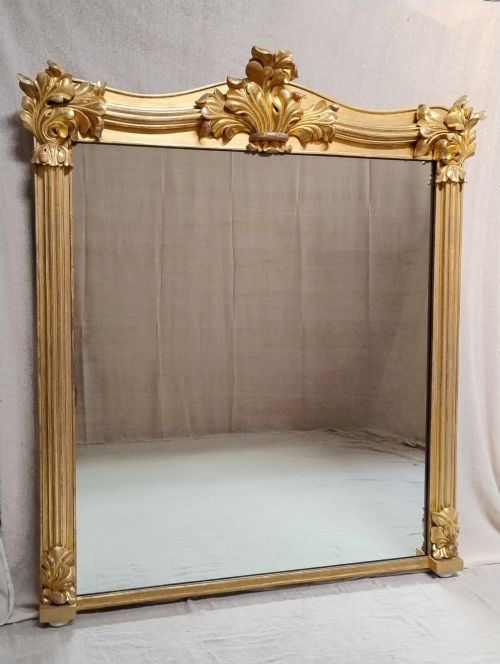
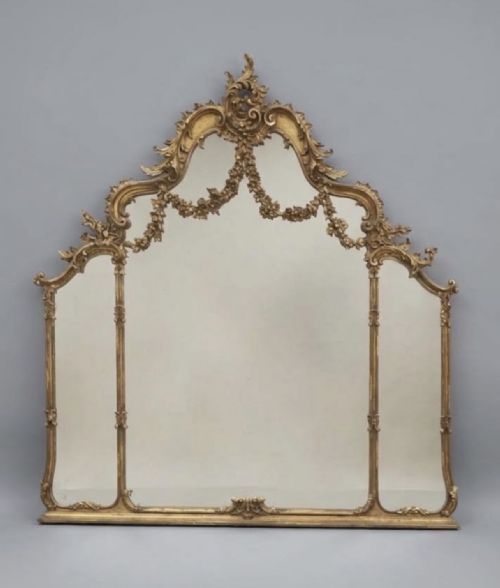
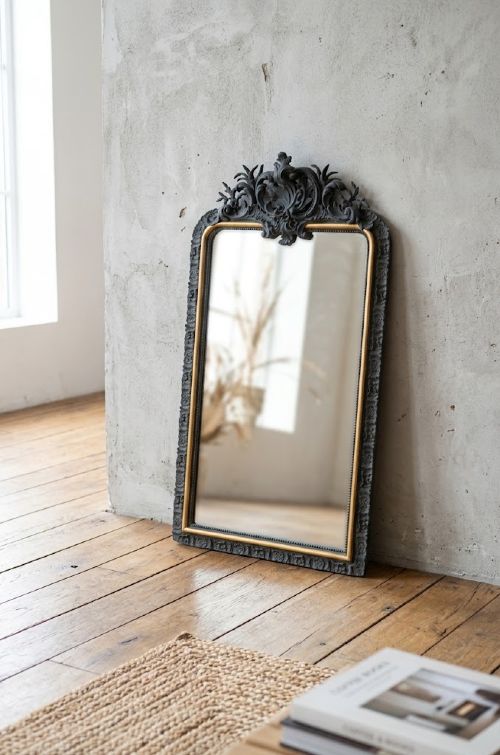
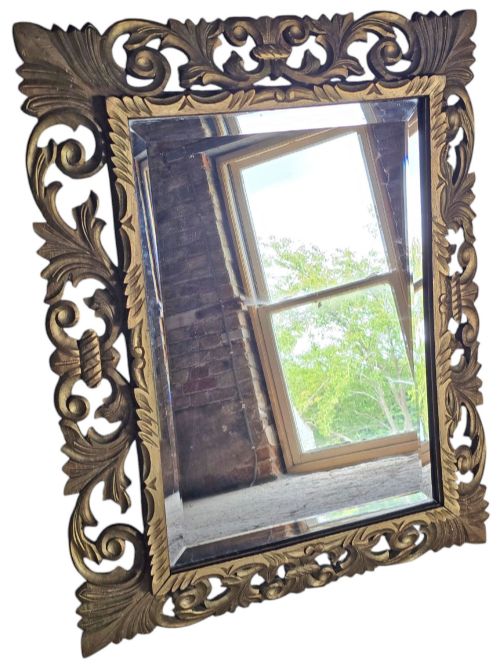
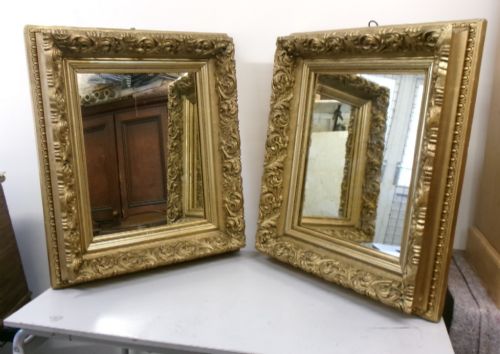


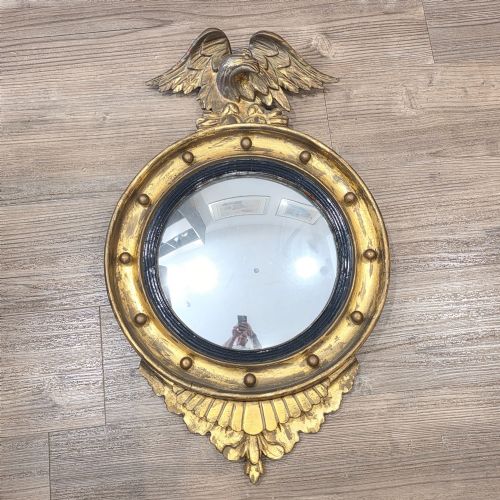
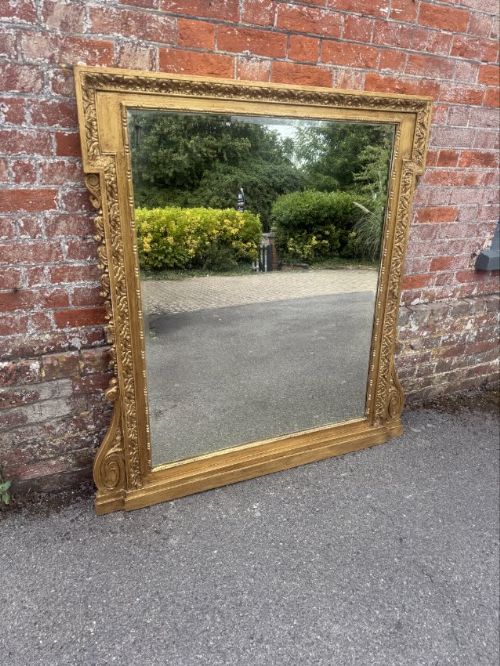
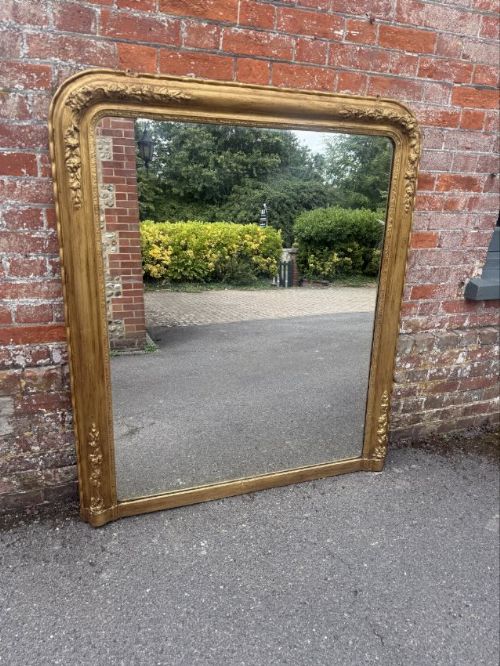
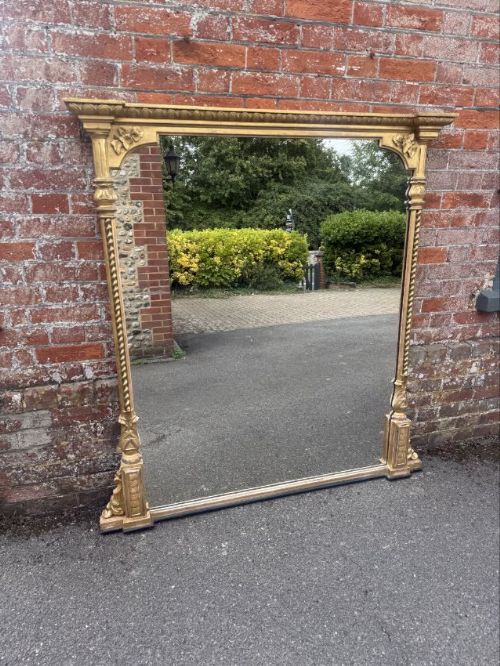
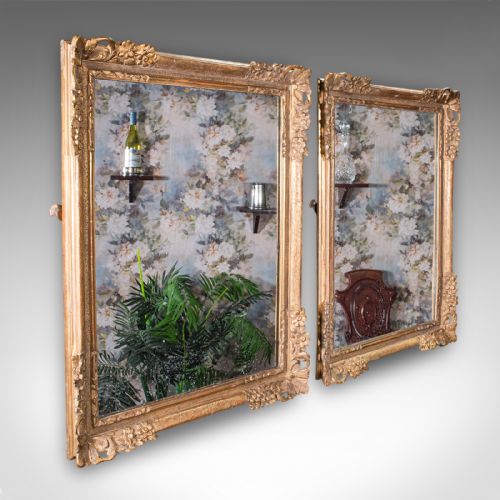
Large Carved Giltwood Mirror
A large carved giltwood mirror anchors a room with reflective light and gilded presence, drawing the eye through scale and historic detail.
Large Carved Giltwood Mirror
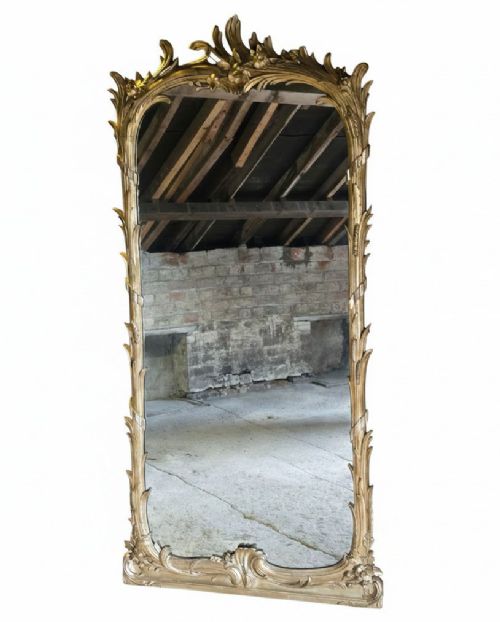
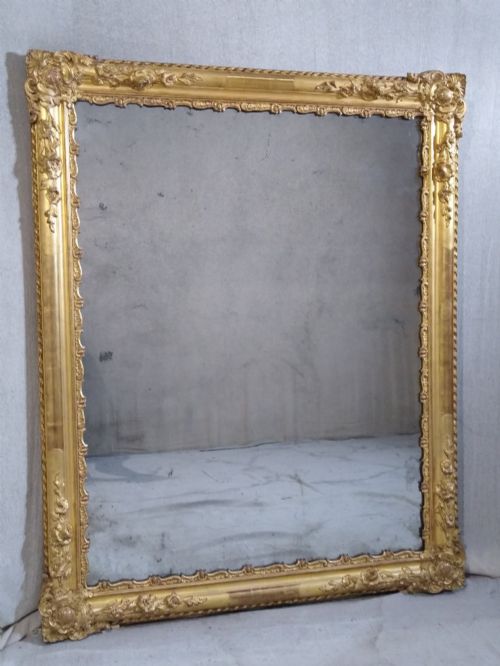
A large carved giltwood mirror serves primarily as an overmantle, pier, or wall glass designed to dominate a principal reception room or hallway. Buyers encounter substantial nineteenth-century examples frequently, alongside eighteenth-century and Regency pieces defined by grand vertical proportions or wide horizontal frames.
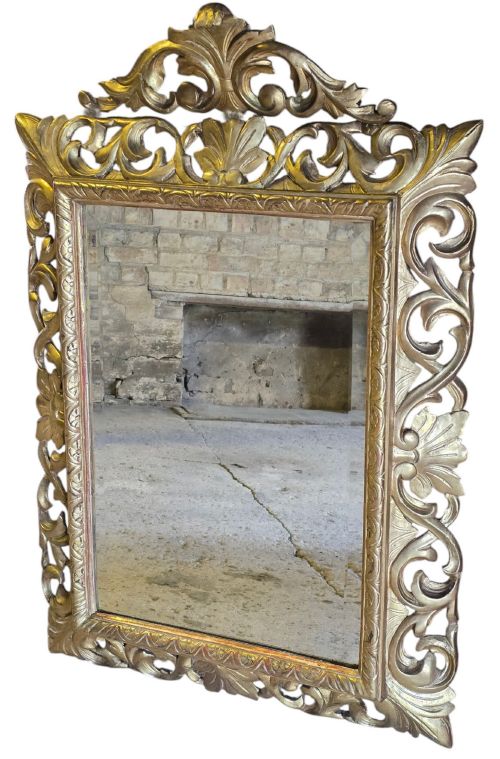
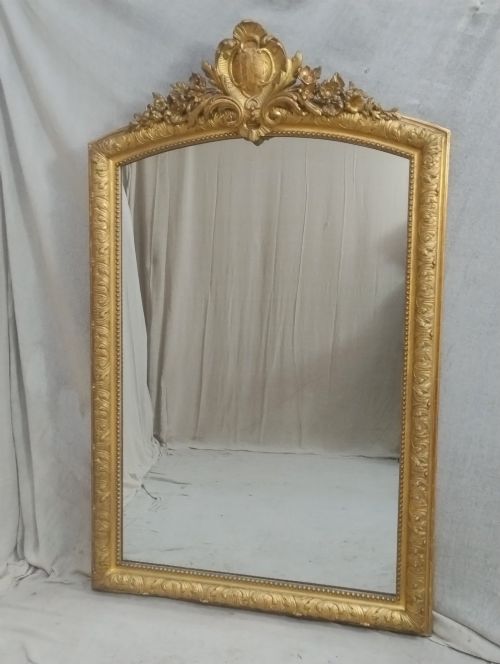
The assortment includes French chateau leaner mirrors, English overmantels with arched or rope-twist crests, and Italian Florentine designs displaying elaborate openwork carving. These pieces reflect specific historic revivals, notably Rococo, Louis XVI, and Chippendale styles, translated through nineteenth-century cabinet-making traditions.
Materials and Construction
Makers built the foundational frames using timber such as pine or mahogany, applying layers of gesso to create a smooth surface for intricate carving and relief work. Artisans then laid gold leaf or silver-gilt over the prepared gesso, sometimes combining painted wood elements with gilded surfaces.
Many specimens house original mirror plates, which include mercury glass on eighteenth-century examples or heavier bevelled float glass on Victorian and later iterations. The union of carved timber, gesso relief, and reflective glass defines the structural integrity of these large plates.
Listings feature eighteenth-century French and Regency pieces alongside numerous Victorian overmantels utilising glass, gesso, and gold leaf.
Craftsmanship and Proportion
Quality rests in the depth and crispness of the hand-carved ornamentation, where deeply undercut acanthus leaves, scrolls, and figurative motifs distinguish superior workshops from simpler moulded compositions. The handling of the gesso prior to gilding determines how well the surface catches and refracts light across the room.
Proportion and scale dictate the visual impact of the piece, with finer examples maintaining structural balance despite monumental dimensions. The preservation of the original gilt surface and untouched mirror plates further elevates the standing of an antique mirror.
The Large Carved Giltwood Mirror Glossary
- Giltwood
- Timber coated with gold leaf over a prepared base. This finish provides the characteristic warm metallic sheen seen on period frames.
- Gesso
- A plaster mixture applied to wood frames to create a smooth or raised surface for carving and gilding. It allows for sharp relief details.
- Overmantel mirror
- A large horizontal or arched glass designed to hang above a fireplace mantel. These pieces frequently anchor the decorative scheme of a drawing room.
- Pier mirror
- A tall, narrow glass made to fit the wall space between windows. They often feature matching console tables in period interiors.
- Mercury glass
- An early form of silvering using a mercury and tin amalgam behind the glass plate. It creates a characteristic mottled, dark reflective quality.
Large Carved Giltwood Mirror: Frequently Asked Questions
Where should I hang an overmantel mirror?
These large mirrors sit naturally above a fireplace mantel, where their horizontal or arched proportions balance the hearth below. They also function effectively along principal drawing room walls to amplify natural light.
Ensure the wall structure securely supports heavy frames, often utilising specialised brackets designed for monumental giltwood pieces.
How do I identify a nineteenth-century piece?
Examine the construction of the timber frame at the reverse, along with the composition of the gesso and the characteristics of the glass plate. Nineteenth-century examples often incorporate heavier moulded ornamentation and machine-rolled or thicker bevelled plates.
Stylistic cues such as Rococo Revival curves or French chateau proportions further anchor pieces within this era.
What is the difference between gesso and carved wood?
Carved wood involves shaping the actual timber foundation with chisels and gouges to form structural details. Gesso is a plaster mixture applied over the wood base to build up relief decoration and smooth the surface before gilding.
Finer antique mirrors utilise both techniques, employing hand-carved wooden elements enhanced by moulded gesso relief.